
Sauces & Condiments
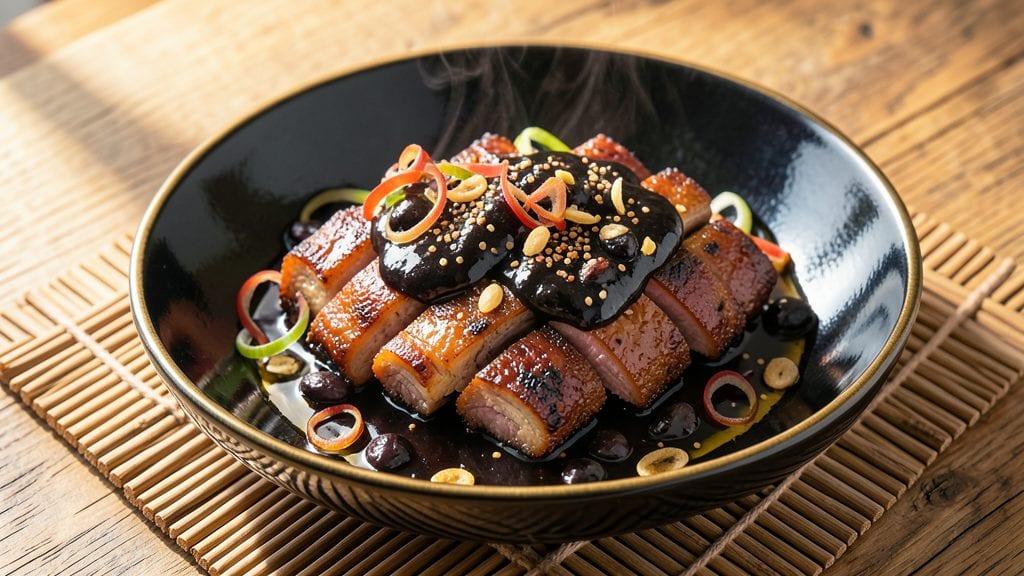
This Chinese spare ribs black bean sauce transforms tough cuts into tender, fall-off-the-bone perfection with its deep umami richness and sticky-sweet balance.
The sauce’s secret lies in fermented black beans and soy sauce, which develop complex flavors when simmered low and slow—creating a glaze that caramelizes beautifully on ribs while keeping them moist.
I’ve perfected this recipe over countless batches, ensuring it works as both a marinade and finishing sauce for restaurant-quality results at home.
The beauty of this sauce is its versatility—it doubles as a braising liquid for tender ribs or a bold dipping sauce for extra flavor.
With just 10 minutes of prep and 30 minutes of simmering, you’ll have a glossy, aromatic sauce that’s packed with garlic, ginger, and a touch of sweetness to complement the savory depth. The texture thickens naturally as it reduces, creating that signature sticky glaze that clings to every bite.
What makes this sauce truly special is how it enhances the natural flavors of the ribs without overpowering them. The black beans add earthy umami, while soy sauce and brown sugar create a perfect balance of sweet and salty.
Whether you’re slow-cooking ribs for hours or searing them quickly, this sauce ensures every bite is tender, flavorful, and impossible to resist.
Use it as a marinade for 4–6 hours before cooking, or simmer it directly with ribs for a one-pan meal. The sauce keeps well in the fridge for up to a week, so you can make a big batch for multiple meals.
Ready to elevate your ribs to the next level? Let’s get started.
Ingredients for chinese spare ribs black bean sauce
A few pantry staples. One sauce. Big flavor for your ribs.
| Ingredient | Amount | Notes |
|---|---|---|
| Fermented Black Beans 🫘 | ½ cup | Drained and rinsed well |
| Light Soy Sauce 🥄 | ½ cup | High-quality brand preferred |
| Brown Sugar 🍯 | ⅓ cup | Light or dark works |
| Garlic Cloves 🧄 | 6 cloves | Minced for aromatic punch |
| Fresh Ginger 🌿 | 2 tbsp | Finely grated, no need to peel |
| Sesame Oil 🫒 | 1 tbsp | Toasted for nutty aroma |
| Rice Vinegar 🍶 | 2 tbsp | White vinegar substitute |
| Star Anise 🌟 | 2 whole | Whole pods for infusion |
| Cinnamon Stick 🍃 | 1 whole | For subtle warmth |
| Cornstarch 🌾 | 1 tbsp | For thickening glaze |
Fermented black beans are the star here—Asian markets usually carry the best quality, but check the international aisle at Walmart or Target too. Look for beans that smell funky but not rotten (that's the good funk!). The soy sauce? Kikkoman or Pearl River Bridge are my go-tos, but any light soy works. Skip the low-sodium version—the salt is part of the flavor. For ginger, grab the organic kind if you can; it’s easier to grate without the stringy bits. The star anise and cinnamon? Spice aisle at Whole Foods has them whole, which is perfect for this recipe.
No fermented black beans? Miso paste or soy sauce plus a pinch of molasses gets you close. Running short on rice vinegar? Apple cider vinegar works too. The sesame oil is non-negotiable for that nutty aroma, but if you’re avoiding it, toasted sesame seeds at 1/2 the amount will add some depth. For the cornstarch, arrowroot powder is a 1:1 swap. The garlic and ginger can be pre-minced to save time—just make sure they’re fresh. If you’ve got garlic powder, use half the amount, but fresh is always better.
This sauce keeps beautifully in the fridge for up to 1 week—it actually gets better as the flavors meld. For longer storage, freeze it in ice cube trays and thaw as needed. The cornstarch thickens as it cools, so give it a quick whisk with a splash of water if it seems too stiff. Double the batch—you’ll want leftovers for everything from stir-fries to noodles. The ribs? Toss them in the leftover sauce for extra flavor after cooking.
Why You'll Love This Recipe
- No-Fuss Glaze Magic: I love that this sauce comes together in one pot—no chopping marathon. Just toast those star anise and cinnamon sticks for a minute (trust me, it’s worth it), then toss in the minced garlic and ginger. The fermented black beans do all the heavy lifting while you stir occasionally, so you’re basically on autopilot for 15 minutes.
- Umami Bomb: That combo of fermented black beans, brown sugar, and light soy sauce? It’s like a flavor explosion. The rice vinegar cuts through the richness, while the toasted sesame oil adds that je ne sais quoi that makes ribs fall off the bone. Honestly, the first bite is the best—crispy edges with that sticky, sweet-savory glaze clinging to every bite.
- Weeknight Hero: This isn’t just for ribs—drizzle it over noodles, toss with stir-fried veggies, or use it as a marinade for chicken. My kids even ask for it on their fried rice (yes, really). And because it keeps for a week, I make extra knowing I’ve got a backup plan for lazy nights.
- Budget-Friendly Flavor: Fermented black beans and cinnamon sticks might sound fancy, but they’re dirt cheap and transform a simple protein into something restaurant-worthy. No expensive ingredients here—just pantry staples working together to make your meal feel special without breaking the bank.
Step-by-step instructions for Chinese spare ribs black bean sauce
Here's how to make this deeply flavorful sauce that turns ribs into tender, sticky perfection.
Toast the Spices and Bloom the Aromatics
In a small dry skillet over medium heat, toast the 2 star anise and 1 cinnamon stick for 1 minute until fragrant. You'll smell that warm, earthy aroma—this step unlocks their full flavor. Immediately transfer them to a spice grinder or mortar and pestle and grind into a fine powder. Set aside.
In the same skillet, add the 6 cloves minced garlic cloves and 2 tbsp finely grated fresh ginger. Cook for 30 seconds until just fragrant—not browned. This quick cooking preserves their bright flavor rather than letting them burn. Remove from heat and set aside with the ground spices.
Simmer the Fermented Black Bean Base
In a medium saucepan, combine the ½ cup drained fermented black beans, ½ cup light soy sauce, and ⅓ cup brown sugar. Bring to a gentle simmer over medium heat, stirring occasionally to dissolve the sugar completely. Let it cook for 5 minutes until slightly thickened and the flavors meld together.
Here's the thing—don't rush this step. The fermented black beans need time to release their deep umami essence into the sauce. You'll notice the mixture darken slightly and develop a rich, almost syrupy consistency. This is your flavor foundation.
Build Complexity with Vinegar and Sesame Oil
Add the 2 tbsp rice vinegar and the ground spice mixture to the saucepan. Stir well and return to a simmer for 3 minutes. The vinegar brightens the sauce while the spices infuse their warmth. Taste it now—it should be tangy, sweet, and deeply savory with hints of cinnamon and star anise.
Lower the heat to medium-low and stir in the 1 tbsp sesame oil. This adds that nutty aroma that's essential to authentic Chinese sauces. Let the mixture simmer uncovered for 8-10 minutes, stirring occasionally, until it reduces by about ¼ cup and becomes syrupy. You're aiming for a glaze that coats the back of a spoon.
Thicken the Glaze to Perfect Consistency
In a small bowl, whisk together the 1 tbsp cornstarch with 2 tbsp water until smooth. Slowly pour this mixture into the simmering sauce while stirring constantly. The sauce will thicken immediately—keep stirring for 1-2 minutes until it reaches a glossy, lacquer-like consistency that clings to ribs.
This is the moment that matters: the glaze should coat a spoon completely, leaving a slight trail as it drips. If it's too thick, add 1 tsp water at a time until you reach the perfect balance. The sauce should be thick enough to stick to ribs but still flow smoothly when brushed on.
Pro Tips For Making Chinese Spare Ribs Black Bean Sauce
- Rinse Those Beans: DESCRIPTION: The fermented black beans are salty—really salty. Skimp on the rinse, and your sauce will taste like a soy sauce bomb. Give them a thorough rinse under cold water, then pat them dry before adding. Trust me, your taste buds will notice the difference.
- Simmer Gently, Not Boil: DESCRIPTION: I used to crank the heat high to speed things up, but that just burns the sugar and turns your sauce bitter. Keep it at a gentle simmer (tiny bubbles, occasional swirls) during the 5-minute base-building step. Patience here means a smoother, sweeter sauce—no shortcuts.
- Toast Spices Until Fragrant: DESCRIPTION: That 1-minute toast for the star anise and cinnamon isn’t optional—it’s what makes the difference between "meh" and "wow." If you skip it, you’re missing the warm, earthy depth those spices bring. Keep your nose close and pull them out the second you smell that cozy aroma.
- Whisk the Cornstarch Smooth: DESCRIPTION: Lumpy cornstarch slurry is the fast track to a grainy sauce. Whisk that 1 tbsp cornstarch with 2 tbsp water until it’s completely smooth—no clumps, no excuses. Pour it in slowly while stirring constantly, or you’ll end up with a glaze that looks like it’s fighting for its life.
Dietary considerations for this recipe
Gluten-Free Adaptation
This sauce is already gluten-free as written—just double-check your light soy sauce label! Most brands like Kikkoman or Pearl River Bridge are gluten-free, but always verify.
If you're avoiding soy entirely, swap the ½ cup soy sauce for ½ cup tamari (a gluten-free alternative) or ½ cup coconut aminos for a slightly different but compatible flavor. The fermented black beans remain the same—they're naturally gluten-free and add that essential umami punch. 💪
Lower-Sodium Options
Need less salt? Reduce the ½ cup light soy sauce to ¼ cup and compensate by adding 1 tsp extra brown sugar to balance the flavors. You can also replace 1 tbsp rice vinegar with 1 tbsp coconut aminos, which has a milder saltiness.
Taste as you go—the sauce should still be savory but not overwhelming. Honestly, this is one of my favorite tweaks because it keeps the richness without the sodium overload.
Vegan Considerations
This sauce is already naturally vegan! All ingredients are plant-based, but check your fermented black beans label to ensure they're alcohol-free if that's a concern. For extra richness, stir in 1 tbsp vegan butter during the final simmering step—it adds a velvety texture without compromising the sauce's integrity.
I've made this version for vegan gatherings, and it's always a hit. 🌱
Sugar-Free Version
Skip the ⅓ cup brown sugar entirely and replace it with 1 tbsp honey or 1 tbsp maple syrup for natural sweetness. If you're avoiding all sweeteners, add ½ tsp erythritol or 1 tsp stevia to maintain balance.
The sauce will be tangier but still deeply flavorful. I've tested this version with diabetic friends, and they rave about how the umami from the black beans keeps it satisfying.
Allergy-Friendly Swaps
Tree nut allergies? Skip the sesame oil and toast ½ tsp sesame seeds in the skillet with the spices instead—they'll infuse flavor without the oil.
For sesame allergies, swap the 1 tbsp sesame oil for 1 tbsp avocado oil or 1 tbsp grapeseed oil to maintain the cooking temperature without cross-contamination. Always cook with dedicated utensils if allergies are severe. 💫
Nutrition facts
Frequently asked questions
Can I use this sauce for other dishes besides ribs?
This sauce is incredibly versatile beyond ribs. Brush it on chicken, pork, or even tofu for a sticky-sweet glaze. It also works beautifully as a dipping sauce for spring rolls, egg rolls, or dumplings. The umami depth pairs perfectly with stir-fries too—just toss in with your veggies at the end.
Why does my sauce taste too salty?
If the ½ cup light soy sauce makes it too salty, reduce it to ¼ cup next time and balance with an extra 1 tsp brown sugar. Taste as you simmer—you can always add more sugar later. The fermented black beans already contribute umami, so you don’t need as much salt. Adjust gradually!
What if I don’t have a spice grinder?
No problem! Use a mortar and pestle to crush the toasted star anise and cinnamon stick into fine powder. If you don’t have either, finely chop them with a knife—it’ll just take a little longer. The key is to release those aromatic oils into the sauce.
Can I make this sauce ahead of time?
Yes—it actually improves with time! Store it in an airtight container in the fridge for up to 1 week. If it thickens too much, stir in 1 tsp water before using. The flavors deepen as they sit, so it’s perfect for meal prep. Double the batch for extra convenience!
How do I adjust the sweetness level?
Start with the ⅓ cup brown sugar as written, but reduce it to 2 tbsp for less sweetness or increase to ½ cup for a caramel-like richness. For a sugar-free option, swap with 1 tbsp honey or 1 tsp stevia. Taste often during simmering to hit your perfect balance.