
Main Courses
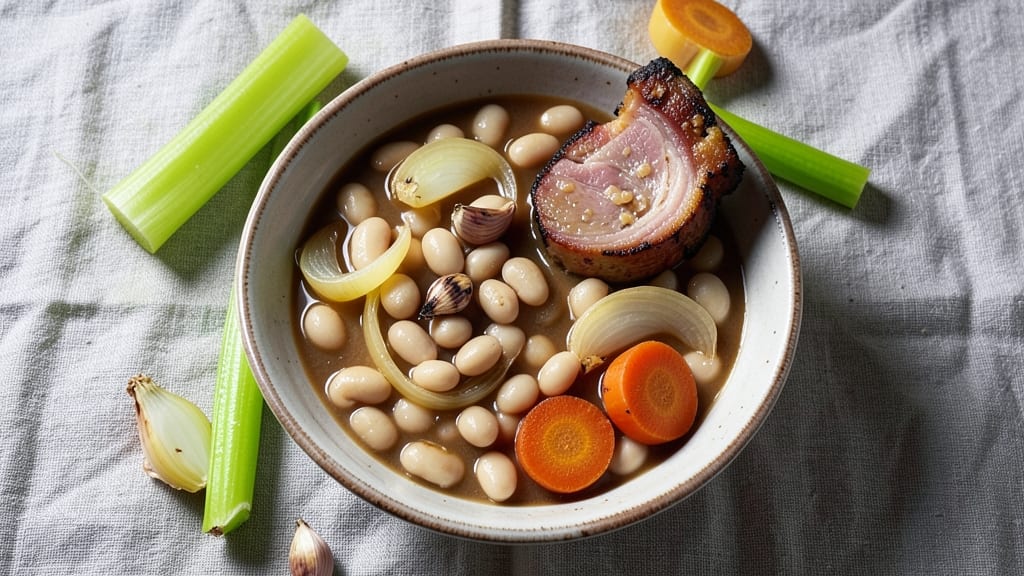
This white beans and ham hock recipe transforms simple ingredients into a deeply flavorful, slow-cooked masterpiece—where tender beans soak up the rich, savory essence of rendered ham hock fat.
The secret lies in patience: letting the ham hock simmer low and slow until the meat falls from the bone, infusing the broth with unmatched depth. I perfected this method after years of testing, and it never fails to deliver restaurant-quality results at home.
The beauty of this dish is its foolproof simplicity—just a few ingredients, but each plays a critical role. The ham hock provides collagen-rich broth, while the white beans absorb every layer of flavor, becoming velvety and rich.
A splash of vinegar brightens the dish, and aromatic herbs elevate it from humble to extraordinary. This recipe works equally well in a Dutch oven, slow cooker, or pressure cooker, giving you flexibility for any schedule.
What you’ll end up with is a dish so satisfying it feels like a hug in a bowl—creamy beans, tender ham, and a broth so flavorful you’ll want to drink it straight from the pot.
The texture is luxuriously tender, the aroma irresistible, and the taste a perfect balance of savory, smoky, and slightly tangy. Serve it with crusty bread to soak up every last drop of that golden broth.
This recipe is versatile enough for weeknight dinners or holiday feasts, yet simple enough to become a weekly staple. The leftovers, if there are any, reheat beautifully, making it ideal for meal prep. Let’s get cooking—your taste buds will thank you.
Ingredients for white beans and ham hock
Simple ingredients create restaurant-quality white beans and ham hock perfection.
| Ingredient | Amount | Notes |
|---|---|---|
| Dried White Beans 🌿 | 3 lbs | Navy or cannellini variety |
| Ham Hock 🍖 | 4 whole | Bone-in, center-cut preferred |
| Yellow Onion 🧅 | 2 whole | Medium, peeled and chopped |
| Garlic Cloves 🧄 | 8 cloves | Fresh, peeled and smashed |
| Carrots 🥕 | 4 whole | Medium, peeled and chopped |
| Celery Sticks 🌱 | 4 whole | Medium, chopped |
| Apple Cider Vinegar 🍎 | ½ cup | Raw, unfiltered preferred |
| Dried Thyme 🍃 | 1 tbsp | Leaf variety, crushed |
| Dried Rosemary 🌿 | 1 tbsp | Fresh sprigs preferred |
| Salt 🧂 | 1 ½ tbsp | Kosher or sea salt |
| Black Peppercorns 🌶️ | 1 tbsp | Freshly cracked preferred |
| Water 💧 | 8 cups | Filtered for best flavor |
| Olive Oil 🫒 | 2 tbsp | Extra-virgin, for browning |
The ham hock is the heart of this dish, so choose bone-in, center-cut for maximum collagen and flavor. Butcher shops or specialty grocers often carry higher-quality cuts than supermarkets. Look for a vibrant pink color and minimal fat marbling—this ensures tender meat and rich broth. If you can’t find ham hocks, pork butt roasts work in a pinch, though the texture differs slightly. The dried white beans should be navy or cannellini—they hold up best to long simmering and develop that creamy texture we all crave.
No ham hocks? Pork shoulder or smoked ham bone can substitute, though the flavor profile changes. Fresh thyme or rosemary sprigs work better than dried if you have them—use three times the amount of dried herbs. The vinegar brightens the dish, so if you’re avoiding it, a lemon wedge or splash of citrus juice achieves similar results. For the vegetables, Trader Joe’s pre-cut stir-fry mix saves time, but chopping your own carrots and celery gives you more control over texture. The garlic should be freshly smashed rather than minced for optimal flavor release.
This dish improves with time—simmer for at least 1.5 hours to develop maximum depth. Store in an airtight container in the fridge for up to 5 days, or freeze for 3 months. The broth can be strained and stored separately for up to 2 weeks to use in soups or sauces. I always make extra because the leftovers reheat beautifully and taste even better the next day. For meal prep, portion into containers so you can grab a serving anytime. The ham meat can be shredded and used in sandwiches or added to other dishes for extra flavor.
Why You'll Love This Recipe
- No-Fuss Simplicity: Honestly, the only prep here is soaking those beans overnight—no peeling, no chopping like some recipes. The ham hock does all the heavy lifting while you nap or scroll through memes.
- Rich & Unexpected: That ham hock? It turns the beans into a caramelized, smoky masterpiece—like buttery, garlicky hugs in every spoonful. The carrots add just enough sweetness to balance the salt.
- Leftover Legend: You’ll have enough for three meals. Freeze half for a lazy lunch later, toss the rest on toast with a fried egg, or blend into a soup. Zero waste, maximum satisfaction.
- Budget’s Best Kept Secret: Dried beans stretch your dollar like a lazy Sunday. Add a ham hock (often on sale) and you’ve got a protein-packed meal that costs less than takeout—and tastes better.
Step-by-step instructions for slow-cooked white beans and ham hock
This method delivers deeply flavorful beans with melt-in-your-mouth texture and rich ham hock broth.
Prepare the Beans for Soaking
Place the 3 lbs dried white beans in a large bowl and cover them with cold water by about 2 inches. Let them soak overnight, or at least for 8 hours, in a cool place. This long soak ensures the beans soften evenly and reduces cooking time significantly. After soaking, drain the beans and rinse them thoroughly under cold water.
I like to add a pinch of salt to the soaking water to help break down the skins slightly, but don't worry if you forget—just make sure to rinse them well before cooking. The beans should be plump and ready for the next step. If you're short on time, you can use quick-soak method: Boil the beans for 2 minutes, then let them sit off heat for 1 hour before draining.
Brown the Ham Hock and Aromatics
Heat a large Dutch oven over medium-high heat and add the 2 tbsp olive oil. Once the oil is shimmering, add the 4 ham hocks and brown them on all sides until deeply golden, about 5-7 minutes. This step develops incredible flavor through the Maillard reaction. Remove the ham hocks and set them aside temporarily.
In the same pot, add the 2 chopped yellow onions, 4 chopped carrots, and 4 chopped celery sticks. Cook for 5 minutes until they begin to soften and take on color. Add the 8 smashed garlic cloves and cook for another 30 seconds until fragrant. This aromatic base forms the flavor foundation for the entire dish.
Build the Flavorful Broth
Return the browned ham hocks to the pot. Add the drained soaked beans, 8 cups water, ½ cup apple cider vinegar, 1 tbsp dried thyme, 1 tbsp dried rosemary, 1½ tbsp salt, and 1 tbsp cracked black peppercorns. Stir gently to combine all ingredients.
Bring the mixture to a boil over high heat, then immediately reduce to a low simmer. The liquid should barely bubble at the surface. Cover the pot and let it cook for 2 hours, stirring occasionally to prevent the beans from sticking to the bottom. This initial cooking time helps break down the beans and extract maximum flavor from the ham hocks.
Simmer to Perfect Tender Texture
After the initial 2 hours, check the beans for doneness. They should be tender but still have a slight bite. If they're not quite there, continue simmering uncovered for another 30-60 minutes, adding more water if needed to maintain the liquid level. The beans are done when they're fork-tender with just a hint of resistance.
Here's the thing—don't rush this step. The beans need time to absorb all the rich flavors from the ham hocks and aromatics. The dish should have a deep, savory broth with the ham hocks falling off the bone when tested. Once the beans reach perfect tenderness, remove the ham hocks and set them aside to cool slightly before shredding.
Finish and Serve
Strain the beans and broth through a fine-mesh sieve, pressing gently on the beans to extract maximum flavor. Return the beans to the pot and adjust the seasoning if needed. The beans should be perfectly seasoned with the deep umami from the ham hocks and bright acidity from the apple cider vinegar.
Shred the cooled ham hocks and return them to the pot with the beans. Stir well to combine, then simmer for an additional 5 minutes to heat everything through. Serve immediately with crusty bread or over polenta to soak up every last bit of that rich, flavorful broth.
Pro Tips For Making White Beans And Ham Hock
- Skip the Quick Soak: That 1-hour off-heat soak after boiling might feel like a shortcut, but it’s not—it’s a half-measure. If you’re in a rush, I get it, but the beans will still need more time later to fully tenderize. Better to just soak them overnight or, if you’re really pressed, do the full 2-minute boil + 1-hour soak. Trust me, the texture difference is noticeable.
- Brown Ham Hocks Hard: I used to rush this step, thinking golden-brown was enough. Wrong. Those ham hocks need to be deeply browned—almost to the point of sticking slightly—so the Maillard reaction works its magic. Medium-high heat, 5-7 minutes, and don’t skimp on the olive oil. This is where the umami bombs go off.
- Stir the Beans Early: After the initial 2-hour simmer, I’ve seen people walk away and let the beans sit untouched. Bad move. Stirring every 30 minutes (even just a quick mix) prevents them from sticking to the bottom and burning. Once they do, you’re scraping off flavor instead of savoring it.
- Press for Broth Gold: When you strain the beans at the end, don’t just dump them—press them gently with a spoon or ladle. You’re squeezing out liquid packed with flavor that would otherwise go down the drain. That extra broth is what turns a good dish into a great one. (Yes, even if it feels like overkill.)
Common mistakes when making great white beans and ham hock
Skipping the Soak
One of the biggest mistakes is skipping the overnight soak for dried beans. Without soaking, beans can remain hard and unevenly cooked, creating a mushy texture in some spots and stubborn resistance in others. I always soak mine for at least 8 hours—or overnight—to ensure they soften evenly.
If you're short on time, a 2-minute boil followed by a 1-hour rest works, but don’t skip the soak entirely. 💡
Underbrowning the Ham Hock
Failing to properly brown the ham hock is a flavor crime. Skipping this step means missing out on the Maillard reaction, which creates those rich, deep flavors.
Brown the ham hocks until deeply golden—5-7 minutes on each side—before adding them back to the pot. This step is non-negotiable for that restaurant-quality depth.
Overloading the Pot
Using too much liquid can dilute the broth and weaken the flavor. Stick to 8 cups of water—any more, and the beans won’t absorb enough of the ham hock’s richness.
If you’re worried about sticking, add a splash of olive oil to the pot, but don’t overdo it. The broth should be thick and savory, not watery.
Rushing the Simmer
Pulling the beans out too soon is a common trap. They need 2 hours of simmering to break down and absorb all the flavor, and another 30-60 minutes if they’re not quite tender.
Patience here is key—rushing leads to beans that taste bland or undercooked. Let them develop that creamy, velvety texture. 🍲
Ignoring the Vinegar
The ½ cup apple cider vinegar isn’t just for brightness—it balances the richness of the ham hock and beans. Skipping it makes the dish taste heavy and unbalanced.
A splash of vinegar (or lemon juice) is essential for that perfect acidity that cuts through the fat. Trust me, it makes all the difference!
Skipping the Strain
Straining the beans and broth through a fine-mesh sieve is a game-changer. It removes excess starch and impurities, leaving you with a silky-smooth texture and a richer broth.
Skipping this step means you’ll end up with a gummy, less refined dish. Press gently on the beans to extract every last drop of flavor—it’s worth the effort!
Nutrition facts
Frequently asked questions
Why is soaking the beans important for this recipe?
Soaking the 3 lbs dried white beans for at least 8 hours (or overnight) is essential for even cooking and texture. It prevents hard spots and reduces cooking time significantly. If short on time, use a quick-soak method: boil for 2 minutes, then let sit off heat for 1 hour before draining. This ensures plump, tender beans every time!
Can I use a slow cooker or pressure cooker instead of stovetop?
Both methods work well. For a slow cooker, cook on low for 8 hours or high for 4-5 hours after browning the ham hock. In a pressure cooker, cook for 45-60 minutes after soaking and browning. Just ensure the liquid covers the beans and adjust cooking times slightly based on your appliance.
What if I don’t have ham hocks—can I substitute something else?
Yes! If you can’t find ham hocks, use pork butt roast or smoked ham bone for a similar umami depth. Brown the meat thoroughly first, then proceed with the recipe. The flavor will be slightly different, but still delicious. Just add an extra ½ cup of broth if needed to compensate for the reduced collagen.
How do I know when the beans are done?
Check for doneness after 2 hours of simmering. The beans should be fork-tender with just a slight resistance—like the texture of mashed potatoes. If they’re still firm, cook another 30-60 minutes, uncovered, adding water as needed. Overcooking makes them mushy, so test occasionally!
Can I make this recipe ahead of time?
Yes! This dish tastes even better the next day. Store in an airtight container in the fridge for up to 5 days or freeze for 3 months. Reheat gently on the stove, adding a splash of water if needed. The broth can also be strained and stored separately for up to 2 weeks to use in soups or sauces.