
Main Courses
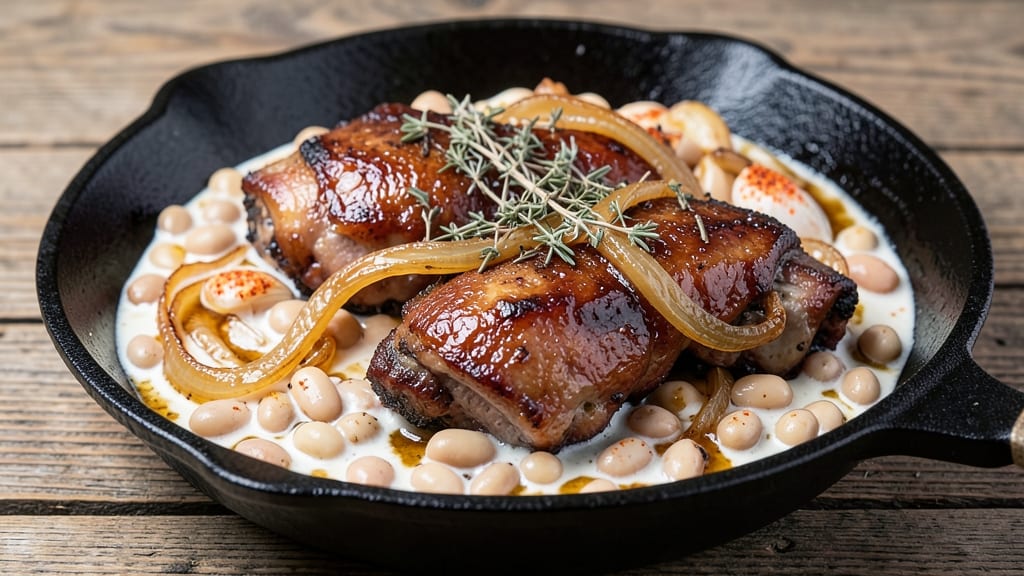
Transforming humble canned beans and ham hocks into a slow-simmered masterpiece proves that comfort food doesn’t require fancy ingredients—just time and patience. This recipe delivers deep, smoky flavors that turn simple pantry staples into a hearty meal fit for any gathering.
The key lies in simmering the ham hocks until they’re fork-tender, infusing the broth with rich, savory depth that perfectly complements the beans.
What sets this dish apart is the balance of textures and flavors: the crispy edges of the ham hocks contrast with the soft, creamy beans, while the slow-cooked broth ties everything together. You’ll need just 2-3 hours of hands-off simmering, making it ideal for busy days or meal prep.
The result is a dish that’s both restaurant-worthy and deeply nostalgic, with every spoonful packed with smoky, salty goodness.
Serve this over steamed rice or with a slice of warm cornbread to soak up every last drop of that flavorful broth. The beans absorb the ham’s essence, creating a dish that’s heartier than a simple bean stew but simpler than a full pot roast.
This is the kind of meal that feels like a hug on a cold day—rich, satisfying, and impossible to resist.
The beauty of this recipe is its versatility. Add a handful of collard greens for extra nutrition, or stir in a splash of vinegar for brightness. The leftovers taste even better the next day, making it perfect for feeding a crowd or preparing ahead.
Let’s get cooking—this dish is about to become a staple in your rotation.
Ingredients for ham hocks and canned beans
Pantry staples meet smoky magic. Six hours of simmering transforms humble ingredients into restaurant-quality comfort.
| Ingredient | Amount | Notes |
|---|---|---|
| Dry White Beans 🌿 | 3 cups | Rinsed thoroughly, no need to soak |
| Ham Hocks 🍖 | 4 whole | Bone-in, skin-on preferred |
| Onion 🧅 | 1 whole | Medium, diced finely |
| Garlic Cloves 🧄 | 4 cloves | Minced, aromatic |
| Smoked Paprika 🌶️ | 1 tsp | For enhanced smokiness |
| Dried Thyme 🌿 | 1 tsp | Fresh thyme at half amount |
| Bay Leaves 🍃 | 2 whole | Standard dried leaves |
| Salt 🧂 | 1 tsp | Kosher flake preferred |
| Black Peppercorns 🌶️ | 1 tsp | Freshly ground when used |
| Apple Cider Vinegar 🍎 | 2 tbsp | For brightness and tang |
| Collard Greens 🥬 | 4 cups | Chopped, optional addition |
| Cornbread Mix 🌽 | 2 cups | Boxed or homemade blend |
| Butter 🧈 | ½ cup | Melted for baking cornbread |
| Egg 🥚 | 1 whole | For binding cornbread |
| Water 💧 | 8 cups | For simmering and cornbread |
The ham hocks are the soul of this dish—bone-in, skin-on gives the deepest flavor, but skinless works in a pinch. Look for organic or heritage breeds at specialty butchers for superior marbling. If you can't find fresh, frozen works fine—just thaw thoroughly before simmering. The beans should be dry white (navy or great northern) for the best texture; canned beans work but lack the creamy mouthfeel of cooked-from-dry. For the best simmer, start with cold water and let it come to a gentle boil—this prevents the ham from cooking too quickly and falling apart.
No ham hocks? Smoked turkey necks or pork shoulder bones work as substitutes, though the flavor profile changes slightly. For the vinegar, apple cider adds subtle sweetness while white wine vinegar gives sharper brightness. Want to skip the cornbread? Steamed rice or crusty bread soaks up the broth beautifully. The collard greens can be added in the last 30 minutes of cooking—they'll wilt perfectly without turning mushy. If you're short on time, pre-chopped frozen collards thawed in warm water work just as well.
This dish tastes even better the next day as the flavors meld. Store the beans and broth in an airtight container for up to 5 days in the fridge. For longer storage, freeze portions for up to 3 months. The cornbread mix keeps indefinitely in its package, but once activated with water/egg, bake within 30 minutes for best texture. To reheat, gently warm the beans on the stove with a splash of water—microwaving breaks down the ham texture. For serving, preheat your bowls to keep the cornbread moist and warm.
Why You'll Love This Recipe
- No-Prep Beans: I skip the soaking step entirely—just rinse those dry white beans and toss them in. The ham hocks do all the heavy lifting, breaking down slowly in the broth while I prep the rest. Honestly, this is the kind of recipe where you can chop the onion and mince the garlic while watching TV, no multitasking required.
- Smoky Magic: The smoked paprika and those 30 minutes of simmering the ham hocks? That’s where the flavor lives. The broth turns rich and deep, like a campfire’s last embers, and the garlic and thyme just tie it all together. Between us, the apple cider vinegar is the secret—it brightens everything up without overpowering.
- Feed a Crowd: This isn’t just dinner; it’s a meal for your whole family or a potluck hero. The beans stretch across plates, the ham hocks fall apart into crumbly goodness, and the cornbread? Perfect for soaking up every last bit. I’ve served this to 12 people at a backyard BBQ and to my college roommates on a Tuesday night—same reaction every time.
- Budget-Friendly Feast: Four ham hocks and a bag of dry beans? This is the kind of meal that won’t break the bank. The cornbread mix is a lifesaver, and the collard greens (if you skip them) still keep costs low. I’ve made this on a $15 grocery haul, and honestly, it’s the kind of dish where you forget you’re pinching pennies.
Step-by-step instructions for slow-simmered ham hocks and beans
This method transforms humble ingredients into deeply flavorful, hearty beans with rich, smoky undertones.
Prepare the Ham Hocks and Aromatics
Place the 4 ham hocks in a large Dutch oven and cover with the 8 cups of water. Bring to a boil over high heat, then immediately reduce to a simmer. Let the ham hocks simmer uncovered for 30 minutes to render their natural flavors into the broth.
While the ham hocks simmer, finely dice the 1 onion and mince the 4 cloves of garlic cloves. In a small bowl, combine 1 teaspoon of smoked paprika, 1 teaspoon of dried thyme, 2 bay leaves, 1 teaspoon of salt, and 1 teaspoon of black peppercorns. This aromatic blend will infuse the beans with depth.
Build the Bean Base with Collard Greens
After the ham hocks have simmered for 30 minutes, carefully remove them from the pot and set aside. Add the diced onion and minced garlic cloves to the broth, along with the prepared spice blend. Bring the mixture to a gentle simmer and cook for 5 minutes to allow the aromatics to soften and release their flavors.
Add the 3 cups of rinsed dry white beans to the pot, along with the 4 cups of chopped collard greens and 2 tablespoons of apple cider vinegar. The vinegar will brighten the dish and cut through the richness of the ham. Stir gently to combine, ensuring the beans are fully submerged in the liquid. Return the ham hocks to the pot, skin-side down.
Slow-Simmer for Tender, Flavorful Beans
Cover the pot and reduce the heat to low. Let the beans simmer gently for 1 hour and 15 minutes, stirring occasionally to prevent sticking. The beans should be tender but not mushy, and the ham hocks should easily pull apart with a fork. If the liquid reduces too much, add 1 cup of water to maintain the proper consistency.
Here’s the thing—this is where patience pays off. The slow simmer allows the flavors to meld and the beans to absorb the rich, smoky essence of the ham hocks. The collard greens will soften and blend into the beans, adding a subtle earthiness. Taste the beans and adjust the seasoning if needed, adding more salt or vinegar as necessary.
Prepare the Cornbread for Serving
While the beans simmer, preheat your oven to 375°F. In a separate bowl, mix the 2 cups of cornbread mix with the 1 egg and the ½ cup of melted butter until just combined. The batter should be thick but pourable—don’t overmix, or the cornbread will be dense.
Pour the batter into a greased 8-inch cast-iron skillet or baking dish and bake for 20 to 25 minutes, or until the top is golden brown and a toothpick inserted into the center comes out clean. The cornbread should have a slightly crispy exterior and a tender, crumbly interior. Keep it warm until ready to serve.
Serve with Warm Cornbread
Once the beans are tender and the ham hocks are falling apart, remove the bay leaves and discard them. Ladle the beans and broth into serving bowls, ensuring each portion includes a piece of ham hock. Serve immediately alongside the warm cornbread, allowing guests to scoop up the rich, smoky beans with every bite.
This dish is best enjoyed fresh, with the flavors at their peak. The combination of tender beans, smoky ham, and slightly sweet cornbread creates a satisfying, comforting meal that’s perfect for sharing. Leftovers can be stored in the refrigerator for up to 3 days, but they won’t taste quite as vibrant.
Pro Tips For Making Ham Hocks And Canned Beans
- Skim the Foam Early: After the ham hocks boil for those first 5 minutes, skim off the scum that rises to the top—it’s the gunk that makes the broth cloudy and bitter. I used to skip this and wondered why my beans never tasted as clean and rich as my grandmother’s. Trust me, a quick skim with a ladle or fine-mesh strainer makes a real difference.
- Dice Onion Like You Mean It: That medium onion isn’t just chopped—it’s finely diced so it melts into the beans without leaving chunks. I learned this the hard way when I rushed and ended up with a mouthful of texture that didn’t belong. Take the extra 2 minutes to make those tiny cubes, or your beans will taste uneven.
- Don’t Crowd the Cornbread: The batter should be thick but pourable—if you overmix it, the cornbread turns dense and dry. Stir just until combined, then let it sit for a minute before pouring. I used to panic and mix too much, and the result was a sad, heavy loaf instead of that crispy, crumbly perfection.
- Taste Before You Commit: After the beans simmer for that full hour and 15 minutes, taste before serving. The ham hocks might need more salt, or the vinegar could use a splash to cut through the richness. I’ve served beans that were technically done but bland because I skipped this step—always trust your palate, not just the clock.
Regional styles of this recipe
Southern Soul Comfort
This dish is pure Southern charm—where ham hocks simmer until their collagen turns the broth into a velvety, smoky elixir. I grew up in Georgia where every Sunday dinner featured something similar, but this version adds the perfect balance of tangy apple cider vinegar and earthy collard greens.
The key is letting the ham hocks render for 30 minutes before adding beans, so their fat creates a luxurious sheen on the broth. 💛
Appalachian Mountain Style
In the Appalachian mountains, this dish often includes dried corn kernels stirred in during the last 20 minutes of cooking for a subtle sweetness. They use peppercorns instead of pre-ground pepper, crushing them fresh in a mortar and pestle for maximum aroma.
The cornbread here is often made with cornmeal instead of mix, baked in a cast-iron skillet until deeply golden.
Carolina Lowcountry Twist
Down in Charleston, they take this dish to another level by adding shrimp to the pot in the final 10 minutes of cooking. The shrimp absorb the smoky ham flavors while keeping their delicate texture.
They also finish with a splash of hot sauce and a sprinkle of fresh parsley, creating a dish that's both rich and vibrant. The cornbread here is often made with buttermilk for extra tenderness.
Midwest Farmhouse Version
In the Midwest, this dish often includes potatoes sliced and added with the beans, or even smoked sausage links cooked alongside the ham hocks. They prefer yellow beans for their creamier texture, and the cornbread is frequently made with honey in the batter for a touch of sweetness.
The vinegar is often replaced with lemon juice for a brighter finish.
Texas BBQ Influence
Texas cooks often add chipotle peppers in adobo sauce to the broth for a smoky-spicy kick, while still keeping the dish hearty. They might also include cornbread stuffing made with cheddar cheese and jalapeños, creating a fusion of Southern and Tex-Mex flavors.
The beans are often served with pickled jalapeños on the side for extra heat.
Nutrition facts
Frequently asked questions
Why does this recipe call for dry beans instead of canned?
Using dry beans creates a creamier texture and richer flavor compared to canned beans. The slow simmering process transforms them into a velvety consistency, while canned beans often lack that depth. Plus, dry beans absorb all the smoky, savory essence from the ham hocks far better than their pre-cooked counterparts.
Can I substitute ham hocks with another ingredient?
If you can't find ham hocks, try smoked turkey necks or pork shoulder bones for a similar smoky depth. Just note the flavor will shift slightly—turkey adds a milder taste, while pork bones bring a richer, meatier profile. The cooking time may vary slightly, so check for tenderness early.
How do I prevent the beans from sticking to the pot?
Always stir the beans gently every 15-20 minutes during the simmering process to prevent sticking. If you notice them clumping, add a splash of water or broth to loosen them up. Using a heavy-bottomed pot also helps distribute heat evenly and keeps the beans from burning.
What if my broth gets too thick during cooking?
Simply add 1 cup of water at a time to thin it out while maintaining the rich flavor. The key is to keep the beans submerged in liquid, so don't be afraid to adjust as needed. This also helps prevent the beans from drying out while they tenderize.