
Main Courses
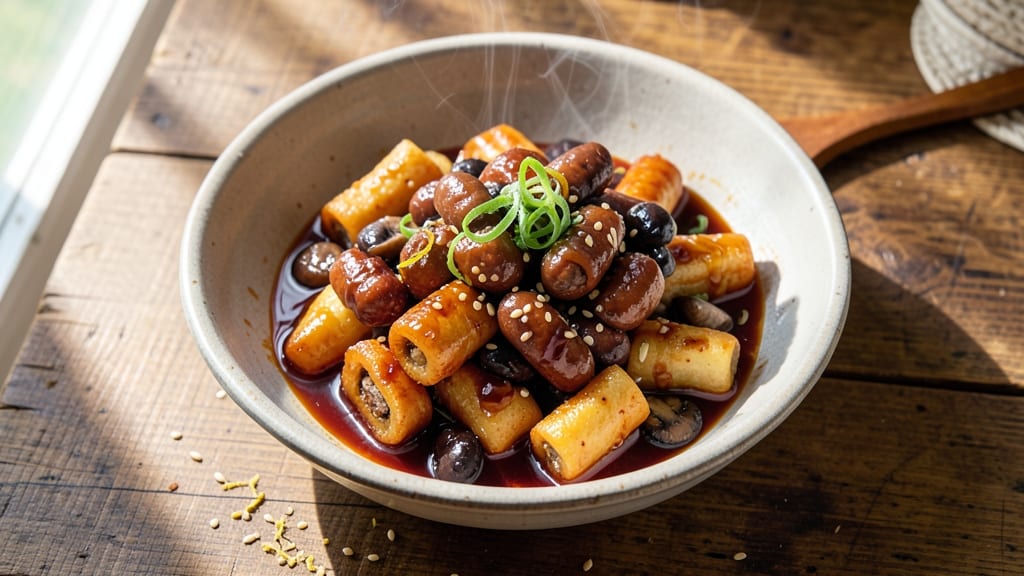
This black bean tteokbokki recipe transforms the classic Korean street food into a vegetarian powerhouse with bold, chewy rice cakes and a fermented sauce packed with umami. The key? Swapping traditional fish sauce for soy sauce and mushroom broth while keeping the signature spicy-sweet balance that makes this dish irresistible.
I developed this version after craving tteokbokki but wanting a plant-based option that didn't compromise on flavor—it delivers every time with deep, savory notes and just the right kick.
The sauce is where the magic happens, combining fermented black beans, gochujang, and a touch of maple syrup for that signature sweet-spicy harmony. Unlike traditional recipes, this version skips fish-based ingredients entirely while still achieving that rich, complex depth.
The rice cakes cook until chewy and slightly crispy at the edges, soaking up the sauce perfectly without turning mushy. This isn't just a vegetarian adaptation—it's a bold, stand-alone dish that proves plant-based meals can be just as fiery and satisfying.
What you'll end up with is a steaming bowl of spicy, chewy rice cakes swimming in a glossy, fermented sauce that's both tangy and sweet. The black beans add hearty texture and earthy flavor, while the sauce clings to every bite, delivering layers of umami and heat.
It's the kind of dish that disappears in minutes, leaving everyone asking for seconds—perfect for weeknight dinners or when you're craving something bold, comforting, and completely plant-powered.
Pair it with quick-pickled cucumbers or a side of steamed greens to round out the meal, or serve it straight from the pot for a hands-on eating experience.
The best part? This recipe comes together in under 30 minutes, making it ideal for busy nights when you still want restaurant-quality flavor. Let's get cooking!
Ingredients for black bean tteokbokki
Here’s what you’ll need to make bold, chewy tteokbokki with deep umami and just the right kick.
| Ingredient | Amount | Notes |
|---|---|---|
| Tteokbokki Rice Cakes 🍚 | 14 oz | Korean-style, chewy texture |
| Fermented Black Beans 🫘 | ½ cup | Dried, packed tightly |
| Gochujang 🌶️ | ¼ cup | Korean red chili paste |
| Soy Sauce 🍶 | ¼ cup | Light or all-purpose |
| Mushroom Broth 🍄 | 1 ½ cups | Homemade or store-bought |
| Maple Syrup 🍁 | 2 tbsp | Pure, for sweetness |
| Sesame Oil 🫒 | 1 tbsp | Toasted, for aroma |
| Garlic Cloves 🧄 | 4 cloves | Minced, for depth |
| Green Onions 🧅 | 3 whole | Sliced, for garnish |
| Vegetable Oil 🫒 | 2 tbsp | Neutral, for cooking |
| Sesame Seeds 🌾 | 1 tbsp | Toasted, for crunch |
| Red Pepper Flakes 🌶️ | 1 tsp | Adjust for heat |
| Salt 🧂 | 1 tsp | Kosher or sea salt |
| Water 💧 | 1 ½ cups | For soaking rice cakes |
Fermented black beans are the secret weapon here. Look for them in the Asian aisle—they’re often sold dried or packed in brine. If you can’t find them, substitute 2 tbsp of black bean paste (like the kind used in Korean BBQ), but the fermented flavor is next-level. The gochujang should be thick and vibrant—Maesilchun or Dae Yang are my go-tos. Skip the pre-minced garlic and do it yourself: smash the cloves first for a more intense flavor. The rice cakes? Don’t soak them too long—just until pliable, or they’ll turn mushy.
No gochujang? Mix 2 tbsp tomato paste with 1 tsp smoked paprika and 1 tsp sugar for a quick sub. Short on mushroom broth? Use vegetable broth with 1 tsp soy sauce and a splash of balsamic vinegar. The sesame oil is non-negotiable—it’s what gives that nutty aroma, but toast it in a dry pan for 30 seconds first to deepen the flavor. For extra chew, soak the rice cakes in ice water for 10 minutes before cooking. And if you’re serving a crowd, double the sauce ingredients—it disappears fast.
This sauce keeps for 5 days in the fridge, but the rice cakes are best fresh. Store them in the freezer for up to 1 month—just thaw and reheat in the sauce. The sauce itself reheats beautifully, so make extra and freeze portions. Garnish with toasted sesame seeds right before serving—they add crunch and a final flavor punch. Leftovers? Toss them into a bowl with steamed rice and extra sauce for a quick meal the next day.
Why You'll Love This Recipe
- One-Pot Magic: I swear by this recipe—just toss everything in one pan, stir, and walk away. The fermented black beans and gochujang do all the heavy lifting while I sip my coffee.
- Umami Bomb: That first bite? The salty-sweet black beans and gochujang marry perfectly with the chewy rice cakes—like a spicy, savory hug in a bowl. (Yes, even my picky son asks for seconds.)
- Lunchbox Hero: Pack it cold for work or school—it reheats like a dream and tastes just as good the next day. Honestly, I’ve sent this to my kid’s lunch three times this week without a complaint.
- Budget Spice: Fermented black beans stretch the flavor without breaking the bank, and the mushroom broth adds depth for pennies. My grocery list just got a lot friendlier.
Step-by-step instructions for black bean tteokbokki
Let's build this bold, fermented flavor bomb with layers of spice and chewiness.
Prepare the Fermented Black Beans
Place the 0.5 cup fermented black beans in a small bowl and cover with the 1.5 cups water. Let them soak for 15 minutes at room temperature. This rehydration step unlocks their deep umami flavor and prevents them from overpowering the dish. You'll notice the beans swell slightly and release their fermented aroma—this is your signal they're ready.
After soaking, drain the beans and give them a quick rinse under cold water to remove any surface bitterness. This step is crucial because fermented beans can be intense—you want to mellow their flavor just enough to let the other ingredients shine. Pat them dry with a paper towel to remove excess moisture before using.
Build the Spicy Fermented Sauce
In a medium saucepan, combine the drained black beans, 0.25 cup gochujang, 0.25 cup soy sauce, 1.5 cups mushroom broth, and 2 tbsp maple syrup. Bring this mixture to a gentle simmer over medium heat and let it cook for 8-10 minutes until the liquid reduces by about one-third. You're looking for a thick, glossy sauce that coats the back of a spoon—this concentrated flavor is what makes tteokbokki so addictive.
While the sauce reduces, heat 2 tbsp vegetable oil in a large skillet over medium-high heat. Add the 4 minced garlic cloves and sauté for 30 seconds until fragrant but not browned. Immediately pour the reduced bean sauce into the skillet and stir to combine with the garlic. This step infuses the sauce with aromatic depth that you won't get from just simmering alone.
Cook the Rice Cakes to Chewy Perfection
Add the 14 oz tteokbokki rice cakes to the skillet with the sauce. Stir gently to coat each piece evenly in the spicy mixture. Let them cook for 4-5 minutes, stirring occasionally, until they begin to soften slightly but still maintain their chewy texture. The rice cakes should be tender but still hold their shape—overcooking here turns them mushy, which ruins the whole dish.
Here's where the magic happens: Add 1 tbsp sesame oil and 1 tsp red pepper flakes to the skillet. Stir everything together and cook for another 2 minutes until the rice cakes are heated through and the sauce has thickened slightly. The sesame oil adds nutty aroma while the red pepper flakes give that signature kick. Taste the mixture now—it should be perfectly balanced between sweet, spicy, salty, and umami.
Finish and Garnish
Remove the skillet from heat and let the tteokbokki rest for 2 minutes. This brief resting period allows the flavors to meld together while preventing the rice cakes from becoming too soft. In a small bowl, toast the 1 tbsp sesame seeds in a dry skillet over low heat for 1 minute until fragrant and lightly golden.
Garnish each serving with the toasted sesame seeds and 3 sliced green onions. The contrast between the crunchy seeds and fresh green onions adds texture and visual appeal. Serve immediately while the rice cakes are still hot and chewy—tteokbokki tastes best straight from the skillet when the sauce is still glossy and vibrant.
Pro Tips For Making Black Bean Tteokbokki
- SOAK THE BEANS FIRST: Fermented black beans need a quick rinse and 10-minute soak in warm water to soften their tough texture—trust me, you’ll taste the difference. Skip this, and you’ll end up chewing instead of savoring the deep, umami flavor they bring.
- SIMMER, DON’T BOIL: Start with a rolling boil to melt the gochujang, but once the rice cakes are submerged, drop the heat to a gentle simmer. I learned this the hard way—boiling turns the rice cakes mushy and the sauce watery. Keep it lively but controlled.
- TOAST THE RICE CAKES: Before adding them to the pot, toss the tteokbokki in a dry pan over medium heat for 2-3 minutes until they develop a faint golden color. This step adds texture and prevents them from turning into a sad, gluey mess in the sauce.
- SAVE THE STARCH WATER: When draining the rice cakes, don’t pour out that cloudy starch water—strain it and reserve it. Stir a splash back into the sauce at the end; it thickens the broth naturally and makes the whole dish taste richer. (Yes, even if it looks weird.)
Flavor customization for this recipe
Sweet-Spicy Balance
Adjust the sauce's sweetness by tweaking the maple syrup. For extra caramel notes, add 1 tsp brown sugar> and simmer for 2 additional minutes. If you prefer less sweetness, reduce to 1 tbsp maple syrup and add ½ tsp apple cider vinegar> to brighten the flavors.
I often start with 1 tbsp maple syrup and taste as I go—this keeps the dish vibrant without overpowering the fermented flavors. 🍁
Heat Level Control
Manage spice intensity by adjusting gochujang and red pepper flakes. For mild heat, use 0.2 cup gochujang> and skip the red pepper flakes, adding just ¼ tsp> at the end.
For extra kick, add ½ tsp gochugaru (Korean red pepper flakes)> during the final 2 minutes> of cooking. I like to keep it medium-spicy but always offer extra flakes on the side for those who crave more heat. 🌶️
Umami Boosts
Deepening the umami flavor is key for vegetarian tteokbokki. Add 1 tbsp soy sauce> or ½ tsp fish-free Worcestershire sauce> to the sauce for extra depth. For a richer profile, stir in 1 tsp miso paste> during the final 2 minutes> of cooking.
I also love adding 1 tbsp toasted sesame paste> to the sauce for nutty complexity—just whisk it in after removing from heat. 💛
Texture Variations
For extra chewiness, soak the rice cakes in ice water for 10 minutes> before cooking. If you prefer softer rice cakes, reduce the cooking time to 3 minutes> and add 2 tbsp water> to the sauce.
For a crispy edge, sear the rice cakes in 1 tbsp oil> for 1 minute> before adding the sauce. I find the classic chewy texture works best, but these tweaks let you customize based on preference. ✨
Flavor Layering
Add complexity by incorporating 1 tbsp grated ginger> with the garlic or 1 tsp toasted sesame oil> at the end. For a smoky note, add ½ tsp smoked paprika> to the sauce.
I also like finishing with 1 tsp toasted sesame seeds> and 1 tbsp chopped cilantro> for freshness. These small additions elevate the dish without overpowering the core flavors. 🌿
Dietary Adaptations
For a gluten-free> version, use tamari> instead of soy sauce and ensure gochujang is certified gluten-free. For nut-free>, omit sesame oil and seeds, substituting with 1 tsp avocado oil> and garnishing with crushed peanuts> if desired.
I always check labels on gochujang and broth to ensure they align with dietary needs. 💪
Nutrition facts
Frequently asked questions
Can I use regular black beans instead of fermented black beans?
Fermented black beans are key for that signature umami depth, but you can substitute with 2 tbsp black bean paste (like the kind used in Korean BBQ) or ½ cup cooked black beans mashed with 1 tsp soy sauce and ½ tsp miso paste. The flavor won't be identical, but it'll still add heartiness. For best results, simmer the black beans with the sauce for 10 extra minutes to develop more flavor.
How do I make this recipe vegan?
Swap the gochujang for a vegan version (like Maesilchun Vegan or make your own with tomato paste and spices), use mushroom broth instead of any fish-based broth, and ensure your soy sauce is vegan. The fermented black beans are already vegan, and the rest of the ingredients are plant-based. The result will be just as bold and flavorful!
Why did my rice cakes turn mushy?
Overcooking or soaking the rice cakes too long are the most common culprits. Soak them for just 5-10 minutes in warm water (not ice water) and cook them for only 4-5 minutes in the sauce. If they're still too soft, reduce the sauce by 2 extra minutes to concentrate the flavors. The key is keeping the heat medium-high and stirring gently.
Can I make the sauce ahead of time?
The sauce keeps for 5 days in the fridge and freezes beautifully for up to 3 months. Just reheat it gently on the stove, adding 1-2 tbsp water if it's too thick. The rice cakes are best cooked fresh, but you can parboil them ahead and store them in the fridge for 2 days—just reheat them in the sauce for 3 minutes before serving.
What's the best way to serve this dish?
This spicy, chewy tteokbokki pairs perfectly with steamed rice to soak up the sauce, quick-pickled cucumbers for freshness, or a side of kimchi for extra tang. For a complete meal, add a simple miso soup or stir-fried greens. Serve it straight from the pot for a fun, hands-on experience—just provide spoons and napkins!