
Sauces & Condiments
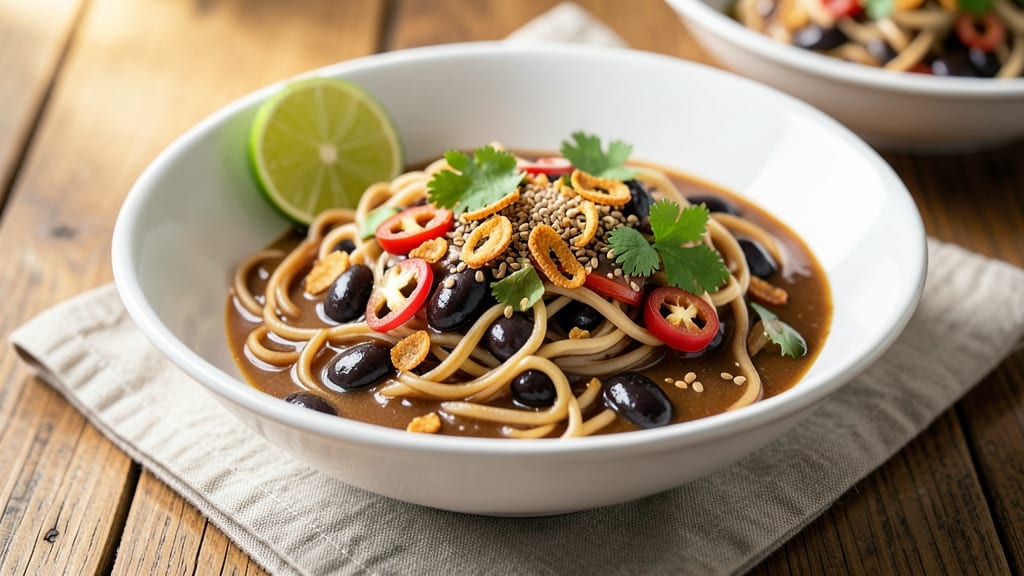
This black bean noodles sauce recipe transforms simple ingredients into a velvety, smoky-sweet sauce that clings perfectly to noodles—or doubles as a dip. The secret lies in blending black beans with aromatic spices, creating a rich umami base that’s both hearty and light.
I developed this after craving a sauce that balanced earthy cumin with bright lime, delivering layers of flavor without overpowering the dish.
The sauce begins with a simple blend of black beans, garlic, and ginger—simmered until smooth—then builds depth with soy sauce, miso, and a touch of peanut butter for creaminess.
A splash of lime juice and a pinch of cumin add that signature tangy-smoky kick, while cornstarch adjusts the consistency to your preference. What makes this sauce special is its versatility: toss it with ramen, drizzle over rice, or serve it as a dip for fresh veggies.
What you’ll end up with is a sauce that’s silky-smooth, with a perfect balance of sweet, salty, and tangy notes. The black beans provide a natural thickness, while the spices ensure every bite is aromatic and satisfying.
Garnish with fresh cilantro or chili flakes for extra brightness, and you’ve got a sauce that’s as impressive as it is easy to make.
This recipe works equally well for meal prep or last-minute dinners—just blend, simmer, and adjust. The sauce keeps well in the fridge for up to a week, making it a go-to for busy nights. Let’s get started!
Ingredients for black bean noodles sauce
Simple pantry staples blend into a velvety sauce with smoky-sweet cumin-lime harmony.
| Ingredient | Amount | Notes |
|---|---|---|
| Black Beans 🫘 | 1 cup | Drained and rinsed well |
| Peanut Butter 🥜 | 2 tbsp | Smooth or crunchy preferred |
| Soy Sauce 🍶 | 2 tbsp | Low-sodium preferred |
| White Miso Paste 🍶 | 1 tbsp | For umami depth |
| Fresh Lime Juice 🍋 | 2 tbsp | Freshly squeezed |
| Ground Cumin 🌿 | 1 tsp | Freshly toasted preferred |
| Garlic Cloves 🧄 | 3 cloves | Minced for smooth texture |
| Fresh Ginger 🌿 | 1 tbsp | Grated finely |
| Cornstarch 🌾 | 1 tsp | For thickening |
| Vegetable Oil 🫒 | 1 tbsp | For blending smoothness |
| Water 💧 | ½ cup | For blending consistency |
| Fresh Cilantro 🌿 | ¼ cup | Chopped for garnish |
The black beans are the sauce’s backbone—canned, no-salt-added works best for balanced flavor. Trader Joe’s and Whole Foods carry excellent organic options, but any good-quality canned black beans will do. The miso adds that essential umami kick; White miso is milder than red, so it won’t overpower the delicate cumin-lime balance. Fresh ginger and garlic should be vibrant—no shriveled cloves—or the sauce will taste flat. Toast your cumin seeds lightly in a dry pan for 30 seconds before grinding to intensify their aroma.
No peanut butter? Almond butter or tahini works equally well for creaminess, though the flavor profile shifts slightly. Short on soy sauce? Coconut aminos or even a splash of tamari will work in a pinch, but the saltiness will be less pronounced. Fresh lime juice is non-negotiable—bottled lime juice lacks brightness. For extra richness, add 1/2 teaspoon of maple syrup to balance the tang. The cornstarch is your consistency secret weapon; adjust by 1/4 teaspoon increments until you reach that perfect silky texture. If you’re serving this as a dip, blend in 1/4 cup of water for a looser consistency.
This sauce keeps beautifully in an airtight container in the fridge for up to 7 days. For longer storage, freeze in ice cube trays—just thaw and stir before using. The sauce’s flavor actually improves after sitting overnight as the ingredients meld. Garnish with fresh cilantro and a sprinkle of chili flakes right before serving to keep it vibrant. If you make extra, drizzle it over rice bowls or toss with ramen—it’s that versatile. The peanut butter adds richness, so if you’re watching calories, reduce it to 1 tbsp and boost the water slightly for balance.
Why You'll Love This Recipe
- Pantry Magic: I swear by this sauce—no fresh herbs needed, just a few pantry staples. The peanut butter and miso paste blend into a rich, nutty base while the black beans add depth without extra prep. Honestly, I’ve made it with whatever I had on hand, and it never disappoints.
- Umami Bomb: That combo of soy sauce, miso, and lime? It’s a flavor explosion in your mouth. The miso gives it a savory depth, the lime cuts through the richness, and the peanut butter adds a creamy, slightly sweet contrast. Between us, it’s the kind of sauce that makes you want to eat noodles for breakfast.
- Meal Prep MVP: This sauce keeps for days in the fridge, so I make a big batch on Sundays. Toss it with leftover noodles, rice, or even grilled chicken—it works everywhere. (Yes, even on a Tuesday night when you’re too tired to think.)
- Budget-Friendly Powerhouse: Black beans, peanut butter, and miso are all affordable, and a little goes a long way. I’ve fed four people for under $10 with this, and the leftovers taste just as good reheated. Not the prettiest, but the taste makes up for it every time.
Step-by-step instructions for black bean noodles sauce
This silky-smoky sauce comes together in minutes with simple technique and bold flavors.
Blend the Base Ingredients for a Smooth Foundation
In a high-speed blender, combine the 1 cup drained and rinsed black beans, 2 tbsp peanut butter, 2 tbsp soy sauce, 1 tbsp white miso paste, 2 tbsp fresh lime juice, 1 tsp ground cumin, 3 minced garlic cloves, and 1 tbsp finely grated fresh ginger. The peanut butter helps emulsify the sauce while the miso adds that essential umami depth.
Blend on high speed for 30-45 seconds until completely smooth. You want to see no visible chunks—this ensures a velvety texture when you finish the sauce. If you encounter any resistance, stop and scrape down the sides with a rubber spatula before continuing. The sauce should coat the back of a spoon with a thick, paste-like consistency at this stage.
Thin and Simmer for Perfect Consistency
With the blender still running, slowly pour in the 0.5 cup water while blending continuously. This gradual addition prevents sudden splattering and helps achieve the ideal consistency. Once incorporated, transfer the mixture to a small saucepan and place it over medium heat. Add the 1 tbsp vegetable oil and stir to combine.
Bring the sauce to a gentle simmer, then reduce heat to low. Let it cook uncovered for 5-7 minutes, stirring occasionally. You're looking for the sauce to thicken slightly—it should coat the back of a spoon but still flow smoothly. If it thickens too quickly, add 1-2 tablespoons of water to maintain the perfect balance between cling and pour.
Thicken and Finish with Cornstarch
In a small bowl, whisk together the 1 tsp cornstarch with 1 tablespoon of water until completely dissolved. This slurry will help give your sauce that perfect cling without becoming gluey. Once the sauce has simmered for 5-7 minutes and is slightly thickened, remove the pan from heat and slowly pour in the cornstarch slurry while whisking vigorously.
Return the sauce to low heat and cook for an additional 2-3 minutes, stirring constantly. The sauce should reach a glossy, slightly thickened consistency that coats the back of a spoon but remains smooth. Taste and adjust seasoning with additional soy sauce for saltiness or lime juice for brightness. The finished sauce should balance smoky, nutty, and tangy flavors with a velvety texture.
Garnish and Serve Immediately
Remove the sauce from heat and stir in the 0.25 cup chopped fresh cilantro. The bright, herbaceous notes cut through the richness while adding freshness. Let the sauce sit for 2-3 minutes to allow the flavors to meld completely. The cilantro should be evenly distributed throughout the sauce.
Serve the sauce immediately over your choice of noodles—rice noodles, ramen, or even spaghetti work beautifully. The sauce should cling to the noodles with a glossy sheen, offering a perfect blend of smoky, tangy, and nutty flavors in every bite. For best results, toss the sauce with hot noodles right before serving to maintain its silky texture.
Pro Tips For Making Black Bean Noodles Sauce
- Simmer the Peanut Butter: DESCRIPTION:
- Toast the Miso: DESCRIPTION:
- Strain the Black Beans: DESCRIPTION:
- Balance the Lime Last: DESCRIPTION:
Dietary considerations for this dish
Vegan-Friendly Foundation
This sauce is 100% plant-based, making it perfect for vegans or anyone avoiding animal products. The black beans provide protein and fiber, while the peanut butter adds healthy fats.
I always double-check labels on soy sauce and miso to ensure they're vegan—some versions contain fish-based ingredients. The lime juice and fresh ginger keep it light and refreshing. 🌱
Gluten-Free Adaptations
For gluten-free versions, use tamari instead of soy sauce and ensure your miso is certified gluten-free. I recommend San-J Tamari for its rich flavor without gluten.
The cornstarch can be swapped for arrowroot powder if you're sensitive to corn. Always verify ingredient labels, as cross-contamination can occur in shared facilities. 🌾
Nut-Free Alternative
Skip the peanut butter and replace it with 1 tbsp tahini or 1/4 cup silken tofu for creaminess. The tahini adds a nutty depth while keeping the sauce vegan.
Silken tofu blends smoothly and adds a silky texture. For extra richness, add 1/2 tsp maple syrup to balance the flavors. 🥜
Low-Sodium Options
Use low-sodium soy sauce or coconut aminos to reduce sodium content. I prefer Annie Chun's Low-Sodium Soy Sauce for its balanced flavor. If you're avoiding soy entirely, substitute with 1 tbsp nutritional yeast for a cheesy, umami note. Always taste as you go—low-sodium versions often need extra seasoning. 💡
Allergen Considerations
This sauce contains peanuts, so avoid if you have allergies. For nut-free kitchens, use the tahini or tofu alternatives mentioned earlier. The lime juice and cilantro are common allergens—opt for dried cilantro if needed. Always check ingredient labels for hidden allergens like sesame in miso or soy sauce. 🚨
Nutrition facts
Frequently asked questions about black bean noodle sauce
Can I make this sauce without a blender?
Yes! If you don't have a blender, mash the black beans with a fork or potato masher until smooth. For extra creaminess, mix in 2 tbsp tahini or 1/4 cup silken tofu before simmering. The sauce may have slight texture variations, but it'll still taste delicious. Just whisk vigorously while heating to create a uniform consistency.
How do I adjust the spice level?
Start with the 1 tsp ground cumin and 2 tbsp lime juice as written for a balanced flavor. For more heat, add 1/4 tsp cayenne pepper or 1/2 tsp chili flakes to the simmering sauce. For milder heat, reduce the cumin to 1/2 tsp and increase lime to 3 tbsp for brightness. Always taste as you go!
Can I use this sauce as a dip instead of a noodle sauce?
For a dip, blend in an extra 2 tbsp water to make it thinner and more spreadable. Serve with fresh veggies, tortilla chips, or warm pita bread. The sauce's smoky-sweet flavor works perfectly as a dip—just add a sprinkle of sesame seeds or crushed peanuts for extra crunch.
Why did my sauce turn out too thick?
This usually happens if you didn't add enough water during blending or simmered too long. Thin it out by adding 1 tbsp water at a time while whisking. If it's still too thick, mix 1/2 tsp cornstarch with 1 tbsp water and whisk into the sauce to help emulsify. The sauce should coat the back of a spoon but still flow smoothly.
How can I make this sauce nut-free?
Replace the 2 tbsp peanut butter with 1 tbsp tahini or 1/4 cup silken tofu for creaminess. The tahini adds a similar nutty depth while keeping the sauce vegan. For extra richness, stir in 1/2 tsp maple syrup to balance flavors. Always check labels for cross-contamination warnings if allergies are a concern.