
Breakfast & Brunch
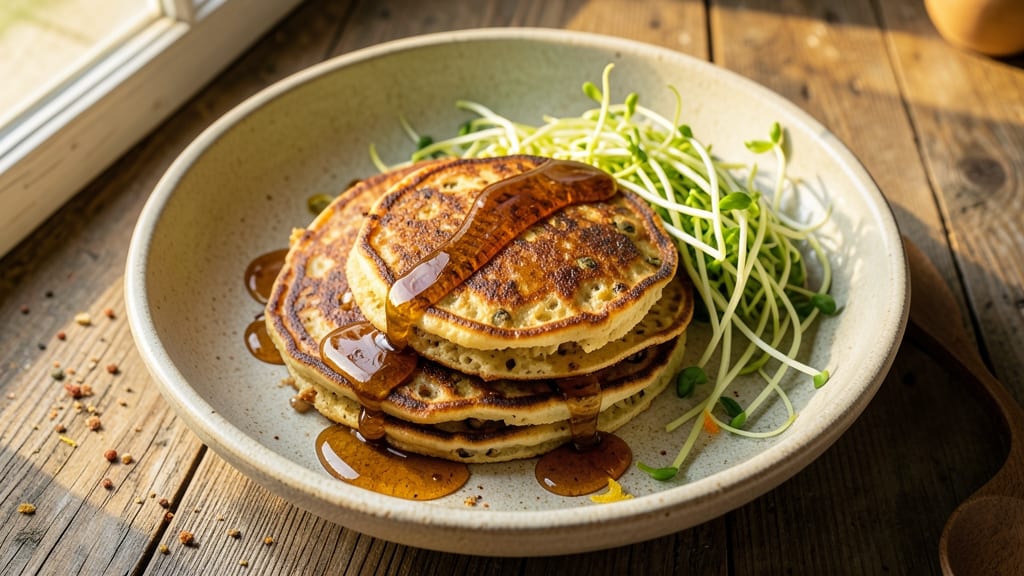
This bean sprout pancake recipe transforms a simple breakfast into a crispy-edged, plant-based masterpiece with a surprising mung bean flavor twist. The secret lies in finely chopped bean sprouts, which add subtle earthiness while creating a delicate, almost nutty depth that pairs perfectly with the fluffy pancake texture.
I developed this recipe after realizing how versatile bean sprouts could be beyond salads—turns out, they're a game-changer in batter too.
The pancakes achieve that coveted crispy exterior through a simple technique: pressing the batter slightly thinner in the pan and cooking over medium heat until golden.
The bean sprouts contribute a light, fresh crunch that contrasts beautifully with the tender interior, while the batter's airy quality comes from a combination of baking powder and aquafaba (chickpea brine) as the egg substitute. This recipe proves plant-based breakfasts can be just as satisfying as traditional ones.
What you'll end up with is a stack of golden pancakes with perfectly caramelized edges and a subtle mung bean aroma that lingers delightfully. The texture is what truly sets these apart—crispy enough to hold up to toppings while remaining soft enough to melt in your mouth.
These pancakes work beautifully with maple syrup, fresh berries, or a dollop of coconut yogurt for a complete vegan breakfast experience.
Perfect for weekend brunch gatherings or quick weeknight meals, this recipe makes eight generous pancakes that disappear faster than you can say "crispy edges." The batter comes together in minutes, and with no special equipment needed, it's an accessible way to elevate your morning routine while keeping it completely plant-based.
Let's get cooking!
Ingredients for bean sprout pancake
Eight ingredients transform simple flour into crisp-edged, mung-flavored pancakes with surprising depth.
| Ingredient | Amount | Notes |
|---|---|---|
| Mung Bean Sprouts 🌱 | 2 cups | Finely chopped, fresh preferred |
| All-Purpose Flour 🌾 | 1 ½ cups | Gluten-free blend if needed |
| Aquafaba 🥜 | ½ cup | Chickpea brine, unsalted |
| Maple Syrup 🍁 | ¼ cup | Grade B for depth of flavor |
| Plant-Based Milk 🥛 | 1 cup | Unsweetened almond or oat |
| Baking Powder 🧂 | 2 tsp | Aluminum-free preferred |
| Salt 🧂 | ½ tsp | Fine sea salt |
| Vanilla Extract 🌿 | 1 tsp | Pure alcohol-free preferred |
| Coconut Oil 🥥 | 2 tbsp | Melted for cooking |
| Ground Cinnamon 🌶️ | ½ tsp | Freshly ground preferred |
| Fresh Blueberries 🫐 | ½ cup | Optional for topping |
| Coconut Yogurt 🥛 | ½ cup | For serving, optional |
The mung bean sprouts are the star here—look for bright green, fresh sprouts from the produce section, not the wilted kind at the back. I always buy mine from Whole Foods or a local Asian market where they're kept refrigerated. Freshness is key; if they smell even slightly off, toss them. The flour should be all-purpose, not self-rising, and for extra crispiness, I recommend Bob's Red Mill for its fine grind. The aquafaba comes from a can of chickpeas—save the brine when you open the can, or buy it separately from specialty stores. For the maple syrup, Grade B has more caramel notes, which pairs perfectly with the mung bean flavor.
No aquafaba? Flax eggs work too—mix 1 tbsp ground flaxseed with 3 tbsp water per egg substitute. Swap plant-based milk for unsweetened soy or oat milk if needed, but avoid almond milk if you want a richer texture. The coconut oil is non-negotiable for crispy edges—butter substitutes like Earth Balance work in a pinch, but coconut oil gives that authentic golden-brown finish. Want more sweetness? Add 1 extra tbsp maple syrup. For a nutty twist, fold in 1 tbsp almond butter to the batter. The blueberries should be fresh or frozen—thaw them first if using frozen.
Store leftover batter in an airtight container in the fridge for up to 3 days, or freeze portions for 3 months. The pancakes reheat beautifully in a toaster or skillet—just add a touch of coconut oil to the pan. For make-ahead prep, cook the pancakes completely, then freeze between parchment paper. Reheat in a toaster until crispy again. The coconut yogurt topping keeps for 1 week in the fridge, but I always use it fresh for the best texture. These pancakes are best served immediately after cooking for that perfect crispy edge.
Why You'll Love This Recipe
- I swear by this trick: just toss in raw mung bean sprouts straight from the jar—no chopping, no prep. They add that fresh crunch without stealing the spotlight from the fluffy pancakes.
- No-Fuss Mix-In: I swear by this trick: just toss in raw mung bean sprouts straight from the jar—no chopping, no prep. They add that fresh crunch without stealing the spotlight from the fluffy pancakes.
- Maple-Aquafaba Magic: Between us, this combo is ridiculously good. The aquafaba keeps them light and airy while the maple syrup gives a caramelized depth that’s way better than plain syrup. (Yes, even on a Tuesday night.)
- Breakfast or Snack: Honestly, these pancakes work for everything. Stack ‘em for brunch, cut into strips for a kid-friendly snack, or freeze them for a grab-and-go protein boost. My daughter picks out the sprouts but still asks for seconds.
Step-by-step instructions for bean sprout pancakes
Master the balance of crispy edges and tender centers with this precise method.
Prepare the Mung Bean Sprout Base
In a food processor, pulse the 2 cups of finely chopped mung bean sprouts until you achieve a coarse, pea-sized texture. You're aiming for a consistency that preserves some texture while still allowing the batter to flow smoothly. Transfer the processed sprouts to a mixing bowl and set aside.
This step is crucial for achieving that signature mung flavor without making the pancakes too dense. If you're using store-bought sprouts, give them a quick rinse first to remove any dirt or debris that might affect the batter's texture. The sprouts will add moisture and a subtle freshness that complements the sweetness of the pancakes.
Combine Wet Ingredients for Optimal Texture
In a separate bowl, whisk together the 1 cup of plant-based milk, 0.5 cup of aquafaba, 0.25 cup of maple syrup, 1 tsp of vanilla extract, and 0.5 tsp of salt. The aquafaba acts as our egg substitute, providing structure and stability to the batter. Whisk vigorously for 1-2 minutes until the mixture is completely smooth and homogeneous.
This combination creates the perfect balance of moisture and binding properties. The aquafaba will help create those coveted crispy edges while keeping the interior light and fluffy. If your plant-based milk is particularly thick, strain it through a fine-mesh sieve first to remove any sediment that could affect the pancake texture.
Incorporate Dry Ingredients with Precision
In the bowl with the sprouts, add the 1.5 cups of all-purpose flour, 2 tsp of baking powder, and 0.5 tsp of ground cinnamon. Gently stir with a spatula just until combined, being careful not to develop the gluten. Then, slowly pour in the wet ingredient mixture while folding gently with a rubber spatula.
You're looking for a thick but pourable batter consistency—similar to heavy cream. If it's too thick, add 1-2 tablespoons of plant-based milk to loosen it. The key here is to maintain the integrity of the aquafaba's binding properties while incorporating enough air for light pancakes. Overmixing will make your pancakes tough, so fold just until the dry ingredients are moistened.
Rest the Batter for Perfect Rise
Cover the mixing bowl with a damp kitchen towel and let the batter rest at room temperature for 15-20 minutes. This resting period allows the flour to fully hydrate and the baking powder to activate, ensuring maximum rise and tenderness in your pancakes.
During this time, melt the 2 tbsp of coconut oil in a small saucepan over low heat. The oil should be fully melted but not smoking—you want it hot enough to create crispy pancakes but not so hot that it burns before the pancakes are fully cooked. Keep the melted oil warm while you prepare the pancakes.
Cook for Crispy Edges and Tender Centers
Heat a non-stick skillet over medium heat and add 1 tbsp of melted coconut oil, swirling to coat the bottom evenly. Pour ¼ cup of batter for each pancake, immediately smoothing the top with the back of a spoon to create an even surface. Cook until bubbles form on the surface and the edges turn golden brown, about 2-3 minutes.
Flip carefully using a thin spatula and cook the other side for another 1-2 minutes, until the second side is golden brown and the pancake releases easily from the pan. The key to crispy edges is maintaining that medium heat—too high and they'll burn before the centers cook through. For 8 pancakes, you'll need to work in batches, keeping the first batch warm in a 200°F oven while you cook the rest.
Serve with Fresh Toppings
Transfer the cooked pancakes to a serving platter and keep them warm. Top each pancake with fresh blueberries and a dollop of coconut yogurt for serving. The blueberries add a bright contrast to the earthy mung flavor, while the coconut yogurt provides a creamy, tangy element that balances the sweetness.
Serve immediately while the pancakes are still warm and crispy. The contrast between the crispy exterior and tender interior should be perfect, with just the right amount of mung bean flavor shining through. If making ahead, stack cooked pancakes between parchment paper and reheat in a 350°F oven for 5-10 minutes to restore crispiness before serving.
Pro Tips For Making Bean Sprout Pancake
- CHOP SPROUTS SMALL: I learned this the hard way—big chunks of bean sprouts turn your pancakes into a weird, chewy mess. Aim for pieces no bigger than a grain of rice; a sharp knife and quick strokes work best. (Yes, even if you’re impatient like me, take the extra 30 seconds.)
- WHISK AQUAFABA FIRST: Mix the aquafaba until it’s glossy and holds stiff peaks before folding it into the batter. I used to skip this, and the pancakes ended up dense and flat. A hand mixer for 2-3 minutes makes all the difference—no one wants a pancake that collapses like a sad soufflé.
- LOW AND SLOW FOR CRISPY EDGES: Start with medium heat, then drop it to low once the pancakes hit the pan. Too-hot heat burns the outside before the center cooks, leaving you with a crispy shell and a raw middle. A nonstick skillet helps, but don’t skimp on the oil—about 1 teaspoon per pancake.
- MAPLE SYRUP LAST: Fold in the maple syrup right before cooking, not during mixing. I was skeptical until I tried it—adding it early makes the batter too sticky and gummy. A splash of plant-based milk thinned out the syrup just enough to keep the pancakes tender without turning them into syrup-soaked paper.
Pro cooking tips for this recipe
Crispy Edge Secret
For that perfect golden-brown crust, use a non-stick skillet heated to medium heat—never high. I swear by coconut oil (melted) because it creates a crispier edge than butter substitutes.
The trick is to let the pancakes cook 2-3 minutes per side until edges are deep golden and bubbles form on top. If your pan isn't hot enough, the edges will stay pale and soggy. 🔥
Batter Consistency
Your batter should be thick but pourable—like heavy cream. If it's too thick after mixing, add 1 tbsp plant-based milk at a time. I've ruined pancakes by overmixing, so fold just until combined.
The aquafaba (chickpea brine) is key here—it mimics eggs perfectly, giving structure without density. Let the batter rest 15-20 minutes before cooking for best results.
Mung Sprout Texture
Pulse the sprouts to pea-sized pieces—too fine and they'll make pancakes dense; too coarse and they won't blend well. Rinse them first to remove dirt.
The freshness matters! Wilted sprouts add bitterness. I like to add ½ tsp cinnamon to complement the mung flavor—it rounds out the earthy notes beautifully. 🌱
Heat Control
Medium heat is non-negotiable. Too hot and they burn before cooking through; too low and they steam instead of crisp. Watch for golden brown edges—that's your cue. If your first pancake turns out uneven, adjust the heat slightly.
A 200°F oven keeps finished pancakes warm while you cook the rest. Never stack them directly—they'll get soggy.
Flipping Technique
Use a thin spatula to flip when bubbles form and edges are set. A quick shake of the pan helps release stubborn pancakes. I've learned the hard way—don't press down!
That flattens them and ruins the texture. Cook the second side 1-2 minutes until golden. The secret to perfect flipping? Patience—rushing makes them fall apart. ✨
Make-Ahead Tips
Cooked pancakes reheat best in a toaster or skillet with fresh coconut oil. For freezing, stack between parchment paper in an airtight bag. Reheat in a 350°F oven for 5-10 minutes until crispy again.
The batter keeps 3 days in the fridge—just give it a stir before using. I double the recipe and freeze half for lazy mornings! 💡
Nutrition facts
Frequently asked questions
Can I substitute aquafaba with another egg replacement?
Yes! For 1 egg, use either 1 tbsp ground flaxseed + 3 tbsp water (let sit for 5 minutes) or ¼ cup unsweetened applesauce. Both work well, but aquafaba gives the best crispy edges. If using applesauce, reduce the plant-based milk by 2 tbsp to maintain proper batter consistency.
How do I make these pancakes gluten-free?
Replace the all-purpose flour with a 1:1 gluten-free blend like Bob's Red Mill or King Arthur. Add ½ tsp xanthan gum to the dry ingredients to improve texture. The batter may be slightly thicker, so adjust with 1 tbsp extra plant-based milk if needed. Cooking time remains the same at medium heat.
Why did my pancakes turn out dense instead of fluffy?
Overmixing the batter develops gluten, making pancakes tough. Also check these: baking powder must be fresh (test by mixing with water—it should fizz), and the batter needs to rest 15-20 minutes before cooking. Too much aquafaba or sprouts can also make them dense. For next time, pulse sprouts coarser and reduce by ¼ cup.
What's the best way to store leftover pancakes?
Keep cooked pancakes in an airtight container in the fridge for 4 days or freeze between parchment paper for 3 months. To reheat: toaster for crispy edges or skillet with coconut oil over medium-low heat for 2-3 minutes. Never microwave—it makes them soggy. For make-ahead meals, freeze cooked pancakes and reheat in a 350°F oven for 5 minutes.
Can I make these pancakes without a food processor?
Finely chop the 2 cups of mung bean sprouts by hand with a sharp knife. Aim for pea-sized pieces—cut them on a cutting board while holding the stems to prevent slipping. For extra freshness, pulse in a blender if available, but hand-chopping works perfectly. The texture will be slightly less uniform but still delicious!