
Soups & Stews
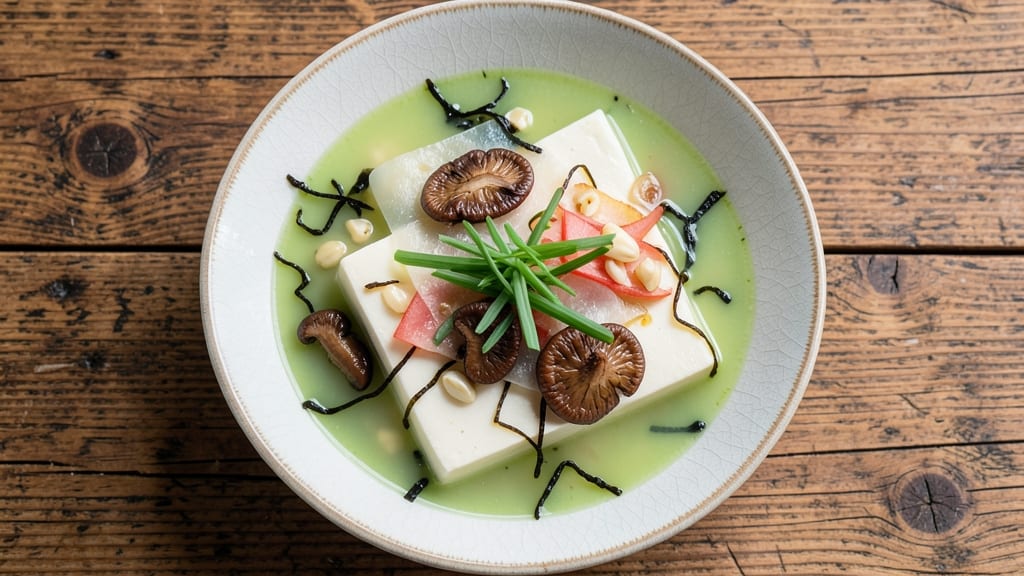
This bean curd soup recipe delivers silky smooth texture and deep umami flavor that rivals traditional broth-based soups—without any animal products. 💛 The secret lies in properly preparing the bean curd (tofu) and building layers of savory depth through mushrooms, seaweed, and fermented ingredients that create that signature comforting richness.
What sets this recipe apart is the two-stage simmering technique that transforms simple ingredients into a velvety soup with just the right body.
We'll start with a fragrant base of garlic, ginger, and scallions, then incorporate rehydrated shiitake mushrooms and kombu seaweed to develop that authentic umami profile before adding the tofu and seasoning.
The result is a luxuriously smooth soup where each spoonful delivers tender tofu, earthy mushrooms, and a broth so flavorful it clings to your palate. This version stays true to traditional techniques while making it accessible for home cooks—no special equipment required, just patience and attention to the simmering process.
Perfect for chilly evenings or as a comforting meal any time of year, this bean curd soup proves plant-based eating can be just as satisfying as its traditional counterparts. The recipe includes optional garnishes like green onions and sesame seeds to add freshness and texture when served.
Ingredients for bean curd soup
Silky tofu, umami-rich mushrooms, and fermented depth create a velvety vegan soup with restaurant-quality texture.
| Ingredient | Amount | Notes |
|---|---|---|
| Extra-Firm Tofu 🧀 | 14 oz | Pressed to remove excess water |
| Dried Shiitake Mushrooms 🍄 | 4 whole | Rehydrated in hot water |
| Kombu Seaweed 🌊 | 1 sheet | Cut into 2-inch strips |
| Garlic Cloves 🧄 | 5 cloves | Minced for aromatic base |
| Fresh Ginger 🌿 | 1 ½ tbsp | Grated, finely chopped |
| Green Onions 🧅 | 2 whole | Sliced, white and green parts |
| Vegetable Broth 💧 | 4 cups | Low-sodium preferred |
| Sesame Oil 🫒 | 1 tbsp | Toasted for nutty aroma |
| Soy Sauce 🍶 | 2 tbsp | Dark soy for color depth |
| Rice Vinegar 🍶 | 1 tbsp | Balances umami flavors |
| White Miso Paste 🧈 | 1 tbsp | Dissolved in warm broth |
| Sesame Seeds 🌰 | 1 tbsp | Toasted for garnish |
| Sesame Oil (garnish) 🫒 | ½ tbsp | Drizzled before serving |
| Diamond Crystal Kosher Salt 🧂 | 1 tsp | Adjust to taste |
| Black Pepper 🌶️ | ½ tsp | Freshly cracked |
The tofu's texture is everything—press it for 20 minutes between towels to remove moisture, then cube into 1/2-inch pieces. Organic extra-firm holds its shape best. For mushrooms, Asian markets often carry superior shiitake varieties—look for deep brown caps and minimal stems. Kombu seaweed adds subtle oceanic depth; Marukome brand is widely available in natural food sections. Fresh ginger should smell pungent and bright; avoid shriveled roots as they lose potency quickly.
No kombu? Dulse flakes or nori sheets (1/4 sheet) work in a pinch, though kombu's natural glutamate provides the most authentic umami. Short on shiitake? Cremini mushrooms add earthiness, but reduce to 2 cups sliced. Miso paste must be white (shiro) for smoothness—red miso adds color but overpowers delicate flavors. Soy sauce substitutions? Tamari or coconut aminos both work, though tamari has deeper flavor. The sesame oil is non-negotiable for that nutty aroma—toast it in a dry pan for 30 seconds before using to enhance flavor.
This soup tastes even better the next day as flavors meld. Store in airtight containers for 4-5 days in the fridge or freeze for 3 months. For meal prep, double the broth and freeze in 1-cup portions—thaw and reheat with fresh tofu. Garnishes like sesame seeds and green onions should be added fresh before serving to preserve their vibrant colors and crisp texture. The tofu absorbs flavors well, so season lightly during cooking and adjust salt at the end.
Why You'll Love This Recipe
- I swear by this trick: soak the dried shiitakes and kombu overnight, then just toss them straight into the pot. The mushrooms rehydrate while the broth simmers—no knife required. (Honestly, my lazy Sundays thank me.)
- No-Chop Needed: I swear by this trick: soak the dried shiitakes and kombu overnight, then just toss them straight into the pot. The mushrooms rehydrate while the broth simmers—no knife required. (Honestly, my lazy Sundays thank me.)
- Umami Bomb: That combo of kombu and shiitakes? It’s like flavor magic. The tofu soaks up the depth, while the ginger and garlic add a bright, punchy kick—creamy, earthy, and just a little spicy. I’ll be real: my picky husband goes back for seconds.
- Lunchbox Hero: This soup reheats beautifully, so I make a big batch on Sundays and pack it for work. The tofu holds its shape, and the broth stays rich—no sad, watery leftovers here. (Yes, even on a Tuesday night.)
Step-by-step instructions for bean curd soup
Here's how to craft a velvety bean curd soup with layered umami and delicate texture.
👨🍳 Step 1: Prepare the Base Ingredients
Begin by pressing the 14 oz extra-firm tofu between two towels under a heavy weight for 30 minutes. This removes excess water, ensuring a silky texture in your soup. While waiting, rehydrate the 4 whole dried shiitake mushrooms by soaking them in hot water for 20 minutes—discard the soaking liquid as it contains bitterness.
Cut the pressed tofu into ½-inch cubes and set aside. Cut the rehydrated shiitake mushrooms in half and remove stems. Cut the 1 sheet kombu seaweed into 2-inch strips—this will infuse the broth with oceanic depth. Finely mince the 5 cloves garlic and grate the 1.5 tbsp fresh ginger using a microplane for maximum flavor extraction.
🍳 Step 2: Build the Umami Broth
In a large pot, combine the 4 cups vegetable broth, 1 tbsp white miso paste, 2 tbsp soy sauce, and 1 tbsp rice vinegar. Bring to a gentle simmer over medium heat, then add the kombu strips. Let it steep for 10 minutes—this transforms the broth from ordinary to extraordinary, developing complex umami notes.
Add the minced garlic and ginger, simmering for another 2-3 minutes until fragrant. Remove the kombu strips immediately after—you want the flavor, not the texture. Stir in the 1 tbsp toasted sesame oil and season with 1 tsp Diamond Crystal kosher salt and ½ tsp freshly cracked black pepper. This foundational broth should smell rich and aromatic, with notes of seaweed, fermented miso, and toasted sesame.
🥘 Step 3: Cook the Tofu and Shiitake
Gently add the tofu cubes and shiitake mushrooms to the simmering broth. Reduce heat to low and let them cook for 8-10 minutes, stirring occasionally. The tofu should become tender but maintain its shape—it should be opaque throughout with no white center when cut. The mushrooms should soften slightly but retain their structure.
Here's the key: don't overcook. The tofu will continue cooking slightly when you remove it from heat. If the broth starts to reduce too much, add ¼ cup hot water to maintain the desired consistency. The soup should be silky but not watery, with the tofu absorbing the rich, umami-infused broth.
🔪 Step 4: Finish and Garnish
Remove the pot from heat and let it sit for 2 minutes to allow flavors to meld. Slice the 2 whole green onions into ¼-inch pieces, reserving the white and green parts separately. Stir in the white parts first to distribute flavor evenly, then add the green parts just before serving to maintain their vibrant color.
Toast the 1 tbsp sesame seeds in a dry skillet over medium heat for 1-2 minutes until golden and fragrant. Divide the soup into bowls and drizzle each serving with ½ tbsp sesame oil (garnish). Sprinkle generously with toasted sesame seeds and a final pinch of black pepper. The contrast of nutty seeds against the smooth soup creates visual and textural appeal.
Pro Tips For Making Bean Curd Soup
- SOAK SHIITAKES OVERNIGHT: I learned this the hard way—rushing dried shiitakes in hot water leaves them tough and bland. Toss them in cold water with a splash of soy sauce for 8+ hours (yes, even if you’re impatient like me). The mushrooms will plump up, absorb flavor, and slice like butter. No one wants chewy shiitakes in soup.
- PRESS TOFU DRY: Extra-firm tofu still holds water like a sponge. Wrap it in a towel, place a heavy pan on top, and let it sit for 10 minutes. This crispy exterior makes all the difference when it hits the simmering broth—no soggy, flavorless cubes here.
- SKIP THE KOMBUU FOR 5 MINUTES: Kombu adds depth, but if you leave it in too long, it’ll turn the broth bitter. Toss it in with the tofu and mushrooms, then fish it out after 5 minutes. The broth will still taste like the ocean, but without that overpowering seaweed punch.
- GINGER SLICES, NOT GRATES: I was skeptical until I tried it—thinly sliced fresh ginger (no peeling needed) infuses flavor without turning the soup into a muddy mess. Toss 3 slices in with the garlic and kombu, then remove them before serving. Cleaner broth, brighter taste.
Regional styles of these flavors
Japanese Shoyu Ramen
In Japan, this soup is often called tofu ramen when served with a clear, soy-based broth. The key difference is using 1 tbsp light soy sauce instead of dark soy, plus 1 tsp mirin to sweeten the broth naturally.
I add 1-inch slices of lotus root for texture and thinly sliced nori strips as a garnish—both are staples in Japanese home cooking. The tofu is traditionally silken rather than extra-firm, creating a creamier consistency. 🍜
Chinese Buddhist Cuisine
Buddhist temples across China serve a lighter version using 1 tbsp vegetarian oyster sauce (like Lee Kum Kee) and 1 tsp Shaoxing wine to deepen the umami without animal products. The broth is often made with dried lily flowers and goji berries for sweetness and texture.
I've seen this version garnished with crispy fried shallots instead of sesame seeds. The tofu is sometimes steamed before adding to the soup for extra tenderness. 🌿
Korean Kongnamul Gukbap
This Korean adaptation swaps shiitake for 1 cup soaked adzuki beans (kongnamul) and uses 1 tbsp doenjang (fermented soybean paste) instead of miso. The broth gets a spicy kick from 1 tsp gochugaru (Korean chili flakes) and a touch of 1 tsp sesame paste.
I add thinly sliced scallions and a splash of doenjang at the end for color. The tofu is often pan-fried briefly before adding to the soup for extra texture. 🌶️
Vietnamese Tofu Noodle Soup
In Vietnam, this becomes a noodle soup with 2 oz rice vermicelli noodles cooked separately and added at serving. The broth uses 1 tbsp fish sauce substitute (like Red Boat) and 1 tsp sugar for balance.
Garnishes include fresh Thai basil leaves, bean sprouts, and lime wedges. The tofu is sometimes marinated in turmeric and garlic before cooking for extra flavor. Serve with sriracha on the side for heat lovers. 🍋
Modern Fusion Twist
For a contemporary take, I blend ½ cup cashew cream into the finished soup for richness and add 1 tsp smoked paprika for depth. Garnish with avocado slices and pickled jalapeños for a Southwest-meets-Asian fusion.
This version works beautifully as a vegan chili base too—just add 1 cup diced tomatoes and 1 tbsp chili powder to the broth. 🔥
Nutrition facts
Frequently asked questions
Why does pressing tofu matter for this soup?
Pressing removes excess water so the tofu absorbs the flavorful broth instead of turning mushy. For extra-firm tofu, press for 30 minutes—this creates that signature silky texture. Silken tofu can be used without pressing but will yield a creamier, less structured soup.
Can I substitute dried shiitake mushrooms?
Fresh shiitake work too—just slice them thinly and reduce the simmering time to 5 minutes so they don't turn to mush. For umami depth, add ½ tsp mushroom powder if you're out of dried shiitake. Cremini mushrooms work in a pinch, but they lack the earthy complexity of shiitake.
How do I fix soup that's too thin?
Simmer uncovered for 5-10 minutes to reduce the broth naturally. If it's still too thin, blend 1 cup broth with ½ cup silken tofu and stir it back in for creaminess. For a quick fix, dissolve 1 tsp cornstarch in 2 tbsp cold water and whisk into the soup until thickened.
What's the best way to store leftovers?
Transfer to airtight containers and refrigerate for up to 5 days. The flavors actually improve overnight! For freezing, portion into 1-cup containers—thaw in the fridge and reheat gently on low heat with 1 tbsp water to restore texture. Avoid microwaving tofu directly.
Can I make this soup spicy?
Yes! Add 1 tsp gochugaru (Korean chili flakes) or ½ tsp sriracha to the broth while simmering. For heat lovers, stir in 1 tbsp chili crisp at the end. Balance with ½ tsp sugar to prevent bitterness. Garnish with chili oil or sliced jalapeños for extra kick.