
Soups & Stews
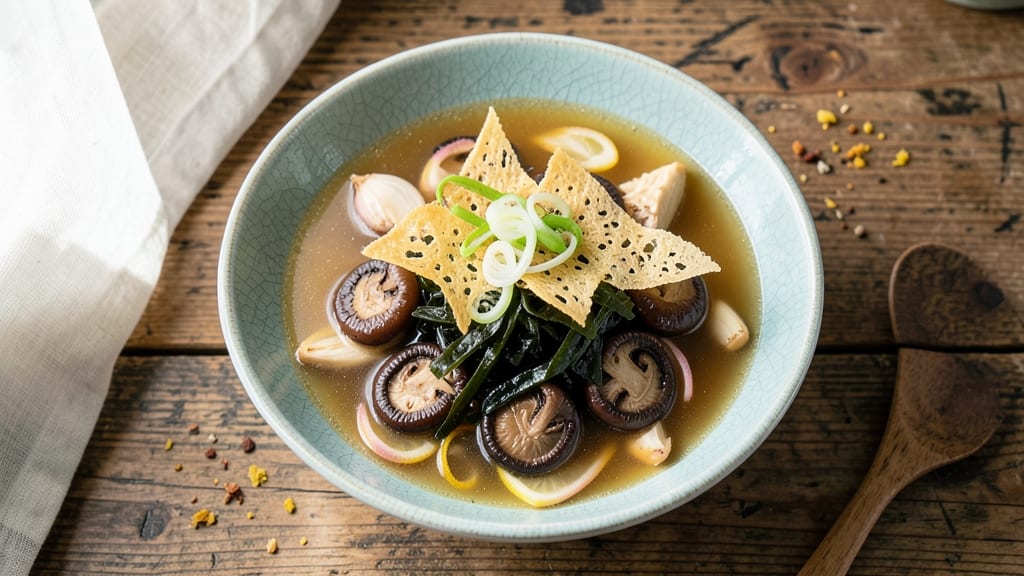
This bean curd skin soup recipe transforms humble ingredients into a velvety umami masterpiece with delicate, crispy edges that defy expectations. The secret lies in properly preparing the bean curd skin—soaking it to remove bitterness, then simmering it just long enough to create that signature textural contrast.
What begins as a simple broth evolves into a restaurant-worthy dish where each spoonful delivers layers of savory depth and satisfying crunch.
The preparation process is surprisingly straightforward, requiring only 30 minutes of active time but yielding a soup that tastes like it simmered all day. We start by creating a fragrant base of ginger, garlic, and scallions, then build complexity with mushrooms and kombu that infuse the broth with umami richness.
The bean curd skin, properly prepared, becomes the star—adding both visual appeal and that essential textural element that makes this soup unforgettable.
What you'll achieve is a silky, golden broth with delicate wisps of bean curd skin that maintain their crisp edges even after simmering. The aroma alone will have everyone gathering at the table, while the first sip delivers that perfect balance of savory, slightly sweet, and umami-rich flavors.
This is the kind of soup that transforms ordinary weeknights into special occasions.
Serve this soup with steamed rice for a complete meal, or pair it with fresh herbs and sesame seeds for added brightness. The leftovers actually improve overnight as flavors meld further, making it perfect for meal prep.
Let's create this comforting yet sophisticated dish that proves plant-based cooking can be both elegant and deeply satisfying.
Ingredients for bean curd skin soup
This velvety soup relies on umami-rich ingredients that transform simple broth into restaurant-worthy elegance.
| Ingredient | Amount | Notes |
|---|---|---|
| Dried Bean Curd Skin (Yuba) 🧄 | ½ oz | Cut into 1-inch strips, soaked 10 mins |
| Dried Shiitake Mushrooms 🍄 | ¼ oz | Rehydrated in hot water |
| Kombu Seaweed 🌊 | 2 pieces | Cut into 1-inch squares |
| Fresh Ginger 🌿 | 1 tbsp | Finely grated, peeled |
| Garlic Cloves 🧄 | 3 cloves | Minced, peeled |
| Green Onions (Scallions) 🧅 | ¼ cup | White and green parts separated |
| Dashi Powder (Vegan) 🌊 | 1 tbsp | Kombu-based, no fish |
| White Miso Paste 🧈 | 1 tbsp | High-quality, non-GMO |
| Sesame Oil 🫒 | 1 tsp | Toasted, for finishing |
| Vegetable Oil 🫒 | 1 tbsp | High smoke point |
| Water 💧 | 4 cups | Filtered preferred |
| Low-Sodium Soy Sauce 🍶 | 1 tbsp | Organic preferred |
| Rice Vinegar 🍶 | 1 tsp | For brightness |
| Sesame Seeds 🌾 | ½ tbsp | Toasted, for garnish |
| Fresh Cilantro 🌿 | 2 tbsp | Chopped, for garnish |
The bean curd skin is non-negotiable for texture—Asian grocery stores carry it dried, often in the tofu section. Look for vibrant, slightly translucent sheets without yellowing. Kombu seaweed from Japanese markets delivers deeper umami than supermarket versions. Rehydrate the shiitake mushrooms in hot water for 20 minutes before using, reserving the soaking liquid for added depth. Fresh ginger and garlic should be organic when possible to avoid bitterness, and always grate the ginger while it's cold to preserve its potency.
No kombu? Dried wakame works at half the amount, though the flavor profile shifts slightly. Substitute miso with white soy sauce at 1.5 times the quantity, but you'll lose some complexity. For the bean curd skin, if you can't find dried, store-bought tofu skin (yuba) from the refrigerated section is acceptable, though texture differs. The dashi powder must be vegan—check labels for fish-based ingredients. For extra brightness, rice vinegar can be swapped with lemon juice, though sesame oil's nutty notes will dominate if overdone.
This soup improves with time—flavors meld beautifully overnight, making it ideal for meal prep. Store in airtight containers with a thin layer of oil on top to preserve the bean curd skin's crispness. Reheat gently on low heat, adding a splash of water if needed. Garnishes like sesame seeds and cilantro should be added fresh before serving, as they wilt quickly. Portion into individual bowls with steamed rice for a complete meal, or freeze broth-only portions for up to 3 months.
Why You'll Love This Recipe
- No-Chop Needed: I swear, the dried shiitake and kombu do all the work—just soak, simmer, and let the broth work its magic. That crispy yuba? It’s pre-cut and ready to fold in like a cheat code.
- Umami Bomb: Between the shiitake’s deep earthiness, kombu’s briny punch, and garlic-ginger hitting like a flavor grenade, this soup tastes like a hug from a Japanese grandma. The yuba adds this silky contrast—like biting into a cloud with a crunch.
- Lunchbox Hero: Between us, this is my go-to for meal prep. The broth stays rich for days, and I slice the yuba into strips for easy packing—no soggy salads here. My kids (yes, even the picky one) fight over it.
- Pocketbook Performer: Dried ingredients mean I’m not draining my wallet, and a single batch stretches for three lunches. Honestly? The kombu alone adds so much depth for pennies. Leftovers taste better the next day—proof it’s worth making twice.
Step-by-step instructions for bean curd skin soup
Master the delicate balance of texture and flavor in this umami-rich soup.
Rehydrate and Prepare Key Ingredients
Begin by soaking the 0.5 oz dried bean curd skin (yuba) in warm water for 10 minutes—this softens it enough for easy handling while maintaining its signature crunch. Cut the soaked yuba into 1-inch strips using kitchen shears or a sharp knife. In a separate small bowl, rehydrate the 0.25 oz dried shiitake mushrooms by pouring ½ cup hot water over them and letting them sit for 15 minutes. Drain, reserving the soaking liquid.
Cut the 2 pieces kombu seaweed into 1-inch squares and set aside. Peel and finely grate the 1 tbsp fresh ginger, then mince the 3 cloves garlic. Separate the 0.25 cup green onions (scallions) into white and green parts—you'll use the whites for cooking and the greens for garnish later. This preparation ensures every component contributes its unique texture and flavor to the broth.
Build the Umami Broth Base
Heat the 1 tbsp vegetable oil in a clean soup pot over medium heat. Add the kombu seaweed and toast for 1 minute until fragrant. Add the grated ginger and minced garlic, cooking for 30 seconds until the garlic turns golden—this prevents bitterness and deepens the flavor. Pour in the 4 cups water and bring to a gentle boil.
Reduce heat to low and add the 1 tbsp dashi powder (vegan) and 1 tbsp white miso paste, stirring until fully dissolved. The miso will give the broth its signature depth, while the dashi enhances the umami without overpowering. Add the reserved shiitake soaking liquid and simmer for 10 minutes to meld the flavors. This step is where the soup's complexity develops—don't rush it.
Incorporate Aromatics and Season
Add the white parts of the 0.25 cup green onions (scallions) and the rehydrated shiitake mushrooms to the simmering broth. Cook for 5 minutes to allow the mushrooms to absorb the flavors. Stir in the 1 tbsp low-sodium soy sauce and 1 tsp rice vinegar, then taste and adjust seasoning—you should detect a balance of saltiness, acidity, and umami. The vinegar brightens the broth without overpowering the delicate flavors.
Remove the pot from heat and let the broth steep for 5 minutes. This resting period allows the kombu and miso to fully infuse the liquid, creating a silky texture. Skim off any foam that rises to the surface—this ensures a clean, velvety broth. The soup should now have a rich, aromatic quality that fills the kitchen.
Finish with Crispy Edges and Garnish
Gently add the prepared yuba strips to the broth and let them warm through for 2 minutes—they should remain firm but pliable. The yuba's crisp edges contrast beautifully with the silky broth. Remove the pot from heat and stir in the 1 tsp sesame oil and 1 tsp rice vinegar to add a final layer of brightness and aroma.
Ladle the soup into bowls, garnishing each serving with the 0.5 tbsp sesame seeds and 2 tbsp chopped fresh cilantro. The sesame seeds add a nutty crunch, while the cilantro provides a fresh herbal note. Serve immediately to enjoy the perfect balance of textures and flavors—crisp yuba, tender mushrooms, and a velvety broth that coats every spoonful.
Pro Tips For Making Bean Curd Skin Soup
- Bloom the Shiitakes: Toss dried shiitakes in very hot water (not boiling) for 10 minutes first—this opens their caps and draws out dirt. I learned this the hard way when I skipped it and ended up with gritty soup. Drain, then rehydrate in fresh water for 20 minutes. The difference in texture and cleanliness is noticeable.
- Simmer Kombu Low: Kombu releases its umami punch best at a gentle simmer—hard boil and it turns bitter. Once the water hits a whisper-bubble (just below a full boil), add the kombu and let it steep for 5 minutes before removing. This keeps the broth clean and flavorful, not muddy.
- Rinse the Yuba: Dried yuba hides dust and debris—rinse it under cold water before soaking to avoid a gritty mouthful. I used to skip this and wondered why my soup felt "off." A quick shake in a colander fixes it. Soak in cold water for 30 minutes (not hot), then drain well before adding to the broth.
- Toast Ginger Thin: Slice ginger paper-thin (almost translucent) and toast it in the broth for 30 seconds—it mellows the sharpness and adds depth. I was skeptical until I tried it: the soup tastes more complex, like a cross between ginger and caramel. Skip the crowding; lay the slices flat so they crisp evenly.
Storing and reheating this dish
Refrigerator Storage
Store your bean curd skin soup in an airtight container for up to 4 days—the flavors actually deepen overnight as the kombu and miso continue to infuse. Let it cool completely before refrigerating to prevent condensation that could soften the yuba strips.
I like using glass containers with tight-sealing lids to maintain freshness. Add a thin layer of vegetable oil on top before sealing to preserve the crisp edges of the bean curd skin. 🥫
Freezer Storage
For longer storage, freeze the soup in portioned containers for up to 3 months. Use quart-sized freezer bags or glass containers with at least 1 inch of headspace to prevent expansion cracks. Freeze the broth without the yuba strips—add them fresh when reheating to maintain their crisp texture.
Label with the date and portion size for easy tracking. Thaw overnight in the fridge before reheating. ❄️
Reheating Methods
For best results, reheat on the stovetop over low heat—this prevents the yuba strips from overcooking. Add 2-3 tablespoons of water if the soup appears too thick.
If using the microwave, cover with a damp paper towel and heat in 30-second intervals, stirring between each, until reaching 165°F. Avoid boiling to preserve the delicate texture of the bean curd skin. 🔥
Preserving Crisp Edges
The key to maintaining crisp yuba edges is minimal reheating time. If the soup sits too long before serving, add the yuba strips fresh just before eating. For extra insurance, store them separately in a damp paper towel in the fridge and add them to reheated soup.
This trick keeps them crisp while the broth stays warm. ✨
Meal Prep Tips
Prepare the broth base ahead of time and store it separately from the yuba strips and garnishes. When ready to serve, simply reheat the broth, add fresh yuba, and garnish with sesame seeds and cilantro.
This approach saves time while keeping the texture perfect. I often make a double batch of broth to use in multiple meals throughout the week. 📅
Garnish Refresh
Always add sesame seeds and cilantro fresh before serving—they wilt quickly when reheated. Toast the sesame seeds in a dry pan for 30 seconds before sprinkling for maximum flavor.
The bright green color of the cilantro also enhances the soup's visual appeal. This final touch elevates the dish from homemade to restaurant-quality. 🌿
Nutrition facts
Frequently asked questions about bean curd skin soup
What makes bean curd skin (yuba) special in this soup?
The yuba provides that signature crispy edge that contrasts beautifully with the silky broth. When properly prepared—soaked just 10 minutes and cut into 1-inch strips—it maintains its texture even after simmering. This texture contrast is what makes the soup so satisfying!
Can I substitute dried bean curd skin with tofu skin?
Yes, but there will be texture differences. Store-bought tofu skin (yuba) from the refrigerated section works in a pinch, though it's usually softer and less crisp. For the best results, stick with dried yuba—its delicate, crisp edges are key to this dish. If you must substitute, add the tofu skin at the very end to preserve texture.
How do I know when the broth is ready?
The broth should be silky and fragrant with no visible foam after simmering for 10 minutes with kombu and miso. Taste it—you should detect a balance of umami depth and subtle sweetness from the mushrooms. If it's too bland, add a pinch more miso or soy sauce. The aroma should fill your kitchen!
What if I don't have kombu seaweed?
Use dried wakame at half the amount (1 piece instead of 2), though the flavor will be slightly milder. For a non-seaweed option, increase the miso to 1.5 tablespoons and add ½ teaspoon nori flakes for umami depth. The kombu is what gives the broth its signature depth, so these substitutes won't be identical but still delicious.
Can I make this soup spicy?
Add ½ teaspoon red pepper flakes when incorporating the aromatics, or stir in 1 teaspoon gochujang (Korean chili paste) at the end for a smoky kick. For heat control, start with less and adjust to taste. The spice will complement the umami flavors beautifully while keeping the yuba's crisp edges intact.