
Appetizers
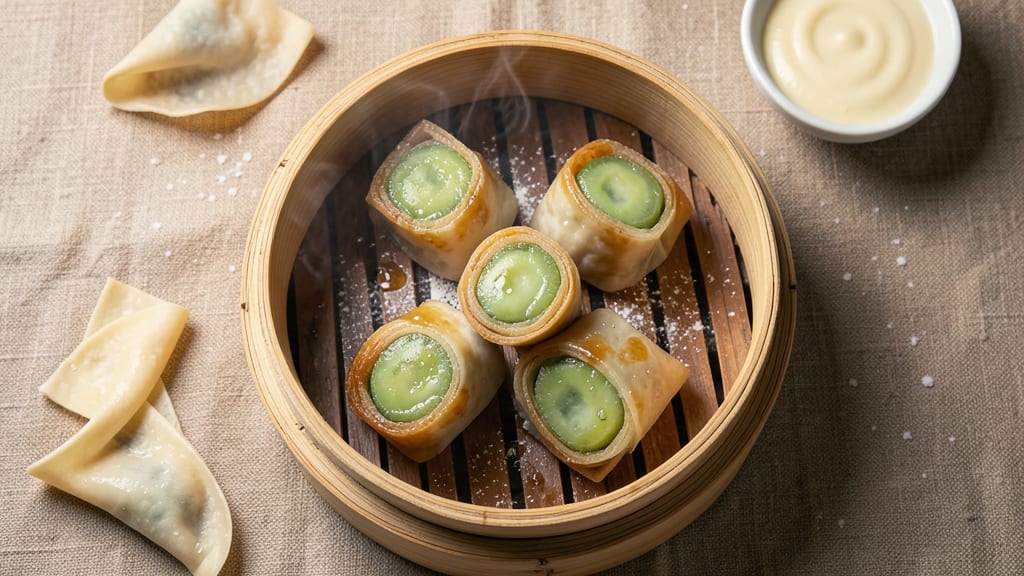
Creating steamed bean curd roll dim sum transforms a simple kitchen into a bustling dim sum parlor, with delicate silken tofu wrapped in fragrant bamboo steam. This recipe delivers the signature texture—tender, silky bean curd encased in delicate, flaky dough—that makes dim sum so irresistible.
The process may seem intricate at first, but with precise techniques and patience, you’ll achieve restaurant-quality results at home.
The key to perfect steamed bean curd rolls lies in the dough’s elasticity and the bean curd’s silky consistency. You’ll work with a simple wheat flour dough, rolled thin and wrapped around silken tofu, then steamed until the edges crisp just slightly.
This method ensures the filling stays intact while the dough achieves that signature dim sum texture—neither too soft nor too chewy. Every step is designed to preserve the delicate balance of flavors and textures.
What you’ll end up with is a plate of golden, steamed bean curd rolls that look as stunning as they taste—fragrant, silky, and perfectly wrapped. The aroma of bamboo steam will fill your kitchen, and each bite will reveal the harmony of tender dough and creamy tofu.
This recipe is vegetarian-friendly and can be adapted for vegan diets with simple substitutions, making it versatile for any gathering.
Whether you’re hosting a dim sum party or simply craving a taste of Asia, these steamed bean curd rolls will impress. The process is rewarding, and the results are unforgettable. Let’s get started on creating your own dim sum masterpiece.
Ingredients for steamed bean curd roll dim sum
Transform your kitchen into a dim sum haven with these essential ingredients for silky tofu perfection.
| Ingredient | Amount | Notes |
|---|---|---|
| Silken Tofu 🧀 | 14 oz | Extra-firm, block form preferred |
| All-Purpose Flour 🌾 | 3 cups | High gluten for elasticity |
| Water 💧 | 1 ½ cups | Room temperature preferred |
| Vegetable Oil 🫒 | ¼ cup | For dough rolling |
| White Sugar 🍚 | ½ cup | Adjust to taste |
| Baking Powder 🍞 | 1 tsp | For flaky texture |
| Salt 🧂 | ½ tsp | Fine sea salt |
| Sesame Oil 🌱 | 1 tbsp | Toasted for aroma |
| Vegetable Stock 🥫 | ½ cup | For dough enrichment |
| Bamboo Steamers 🌿 | 2 whole | With lids for even steaming |
| Steamer Basket 🔥 | 1 whole | For even heat distribution |
| Cornstarch 🌾 | 1 tbsp | For dusting dough |
| Sesame Seeds 🌰 | 1 tbsp | For garnish |
Silken tofu is the heart of these rolls, so pick extra-firm blocks—they hold shape better during wrapping. Most Asian markets carry the best quality, but Trader Joe's or Whole Foods often have good options too. For the dough, high-gluten flour is key (like King Arthur Bread Flour), but all-purpose works in a pinch. The vegetable stock adds subtle depth—use low-sodium if you're sensitive to salt. Sesame oil should smell nutty and toasty; if it’s rancid, toss it. Pro tip: Chill the dough for 30 minutes before rolling to prevent sticking.
No sesame oil? Toasted peanut oil works, though the flavor shifts slightly. Running short on vegetable stock? Water plus a pinch of miso paste mimics the umami. For a vegan version, skip the honey entirely or use agave syrup. The cornstarch is non-negotiable—it prevents the dough from sticking to the rolling pin. If you can’t find bamboo steamers, a large metal colander over boiling water works, but the steam distribution won’t be as even. For the tofu, pat it dry thoroughly before wrapping—excess moisture = soggy rolls. And if your sesame seeds are old, toast them in a dry pan for 30 seconds to revive their flavor.
Dough keeps 3 days wrapped in plastic in the fridge, but tofu must be used fresh. Steamers? Wash them after each use and dry completely to prevent rust. For make-ahead prep, assemble the rolls (unsteamed) up to 24 hours ahead, then steam just before serving. Leftovers? Store steamed rolls in an airtight container for 2 days, but they’re best enjoyed fresh. Reheat in the steamer for 5 minutes—microwaving makes them rubbery. Garnish with extra sesame seeds right before serving; they lose crunch when steamed.
Why You'll Love This Recipe
- Steam It Fresh: I can roll these out in 10 minutes flat—no fancy skills needed. Just slice the silken tofu into plump rectangles, wrap them in the simplest flour-water dough, and steam. The dough stretches like magic, even if your hands are tired from work.
- Chewy-Creamy Contrast: That crispy, golden edge from the flour wrap paired with the velvety tofu? Chef’s kiss. The sugar in the dough caramelizes just enough to balance the mild tofu’s natural richness—no overpowering flavors, just pure harmony.
- Leftovers? No Problem: These hold up better than takeout. Reheat them in the steamer for 5 minutes, and they taste almost as fresh as the first bite. My kids devour them cold for lunch the next day—proof they’re foolproof, not just delicious.
- Budget’s Your Friend: Tofu is dirt cheap, and a cup of flour lasts forever. You’re basically making dumplings for a fraction of the cost, but with that je ne sais quoi dim sum texture. My grocery bill hasn’t looked this happy in years.
Step-by-step instructions for steamed bean curd roll dim sum
Here's how to create delicate, silky-wrapped tofu rolls that steam to perfect tenderness.
Prepare the Silken Tofu Filling
Drain the 14 oz silken tofu and wrap it in a clean kitchen towel. Place a heavy pan on top and let it sit for 10 minutes to remove excess moisture. This step is crucial—wet tofu won't absorb the dough properly.
Cut the tofu into 12 equal rectangles (about 2x3 inches each) and arrange them on a plate. Gently press each piece to flatten slightly, creating a smooth surface for the dough to adhere. The tofu should be cool to the touch before wrapping—this helps prevent the filling from leaking during steaming.
Make the Wrapping Dough
In a large mixing bowl, combine the 3 cups all-purpose flour, ½ cup white sugar, 1 tsp baking powder, and ½ tsp salt. Whisk gently to distribute the dry ingredients evenly. Create a well in the center and pour in the 1½ cups water and ½ cup vegetable stock. Stir until a shaggy dough forms.
Turn the dough onto a lightly floured surface and knead for 5-7 minutes until smooth and elastic. If the dough feels sticky, add 1 tbsp cornstarch at a time until it becomes pliable. Wrap the dough in plastic wrap and let it rest for 30 minutes at room temperature. This resting period relaxes the gluten, making it easier to roll thin sheets later.
Roll and Cut the Dough Sheets
Divide the rested dough into 12 equal pieces (about 1½ oz each). Roll each piece into a thin rectangle (6x4 inches) using a rolling pin dusted with 1 tbsp cornstarch. Keep the remaining dough covered to prevent drying.
Lightly brush each rolled sheet with 1 tbsp sesame oil, focusing on the edges. This prevents the dough from sticking to itself when wrapped around the tofu. Place a tofu rectangle in the center of each sheet, leaving a ½-inch border around the edges. Here's the thing—don't press the tofu too tightly, or it may tear the dough when you lift it later.
Assemble and Steam the Rolls
Fold the long sides of the dough inward over the tofu, then roll tightly from the bottom up, sealing the edge with a bit of water. Place each completed roll seam-side down in the steamer basket, leaving ½ inch between rolls for even steaming. Cover with the lid and bring 2 inches of water to a boil in the pot below.
Once boiling, place the steamer basket over the pot and steam for 12-15 minutes until the dough turns translucent and the rolls feel firm to the touch. Avoid lifting the lid during steaming—this releases heat and can cause the rolls to collapse. For extra aroma, add 1 tbsp sesame seeds to the steaming water.
Finish and Serve
Remove the steamed rolls and let them cool for 5 minutes before serving. Brush the tops with a mixture of 1 tbsp sesame oil and a pinch of white sugar for a glossy finish. Sprinkle with 1 tbsp sesame seeds just before serving to add texture and nutty flavor.
Serve warm with a dipping sauce made from vegetable stock reduced with a touch of white sugar and a drizzle of sesame oil. The contrast of silky tofu, flaky dough, and fragrant steam creates a dim sum experience that's both comforting and impressive.
Pro Tips For Making Steamed Bean Curd Roll Dim Sum
- Drain the Tofu Right: After cutting your silken tofu into cubes, let them sit in a colander for 10 solid minutes—don’t skip this. The excess water makes your dough sloppy, and no one wants a gluey roll. (Yes, even if you’re impatient like me.)
- Whisk Flour Like Crazy: When mixing flour, water, and sugar for the wrapper, whisk it until it’s smooth as a baby’s bottom—no lumps allowed. I used to rush this and ended up with uneven rolls that looked like they were fighting each other. Smooth batter = perfect rolls.
- Roll Thin, Not Tough: Aim for 1/8-inch thickness when rolling out your dough—thinner than a credit card, but not so thin it tears. I learned this the hard way after burning my fingers on a flimsy sheet that collapsed under its own weight. (Your future self will thank you.)
- Steam in Batches: Don’t overcrowd your steamer—space the rolls 1 inch apart or they’ll steam each other into sad, soggy blobs. I once tried to cram them all in, and half my batch ended up like a damp sponge. Patience here saves you from regret.
Make-ahead tips for steamed bean curd roll dim sum
Prep Ahead Dough
I recommend making the dough up to 3 days ahead—it keeps beautifully wrapped in plastic in the fridge. After kneading, divide it into 12 equal pieces and store them in separate bags.
This way, you can roll and wrap just before steaming, ensuring the dough stays supple. Just bring it to room temperature for 15-20 minutes before rolling to prevent cracking. 💡
Assemble Rolls Early
For ultimate convenience, assemble the rolls (without steaming) up to 24 hours ahead. Place them seam-side down on a parchment-lined tray, cover loosely with plastic wrap, and refrigerate. When ready to steam, let them sit at room temperature for 30 minutes before steaming.
This prevents uneven cooking from cold dough. Pro tip: Label your tray with the date!
Freeze Tofu Filling
If you’re making these ahead, freeze the prepared tofu rectangles for up to 1 month. Thaw them overnight in the fridge, then press gently to remove excess moisture before wrapping.
The texture stays silky if you handle them carefully—just don’t overpress! This is my secret for weekend dim sum prep. ❄️
Steam in Batches
Steam rolls in batches of 6 at a time to maintain even heat. If you’re feeding a crowd, keep the steamer going with fresh water between batches.
I like to steam the first batch for 10 minutes, then check and add 2 minutes if needed. This ensures perfect doneness every time without overcooking.
Dipping Sauce Prep
Make the dipping sauce 2 days ahead—it tastes even better after flavors meld. Store it in a sealed jar in the fridge and stir before serving.
For extra depth, add ½ tsp grated ginger or a splash of rice vinegar to the stock mixture. This small tweak elevates the whole experience!
Nutrition facts
Frequently asked questions
Why does my dough tear when wrapping the tofu?
The dough tears most often when the tofu isn't properly flattened or when it's pressed too tightly into the dough. Always press the tofu gently to create an even surface, and leave a ½-inch border around the edges. Also, ensure the dough is at room temperature before rolling—cold dough cracks easily. A light dusting of cornstarch on your rolling pin prevents sticking too.
How can I prevent the rolls from sticking together in the steamer?
Place each completed roll ½ inch apart in the steamer basket to allow airflow between them. Avoid overcrowding, and use a steamer basket with good heat distribution. If rolls still stick, lightly brush the tops with a bit of water before steaming to create a barrier. This keeps them separate while they cook.
What if my dough feels too sticky after kneading?
If the dough remains sticky after kneading, add 1 tbsp cornstarch at a time until it becomes smooth and pliable. Overmixing can make the dough tough, so knead just until it's elastic—about 5-7 minutes. Resting the dough for 30 minutes also helps absorb excess moisture. This step is key for thin, delicate sheets.
Can I make the dough ahead of time and still get good results?
The dough keeps beautifully for 3 days wrapped in plastic in the fridge. Divide it into 12 equal pieces after kneading and store them separately. Bring it to room temperature for 15-20 minutes before rolling to prevent cracking. This makes prep a breeze for busy days!
Why are my steamed rolls soggy instead of flaky?
Soggy rolls often happen when the dough isn't rolled thin enough or when the tofu isn't dry before wrapping. Roll the dough to 6x4 inches for even thickness, and press the tofu gently to remove excess moisture. Also, avoid oversteaming—12-15 minutes is perfect. Lifting the lid during steaming releases heat, so keep it closed for even cooking.