
Main Courses
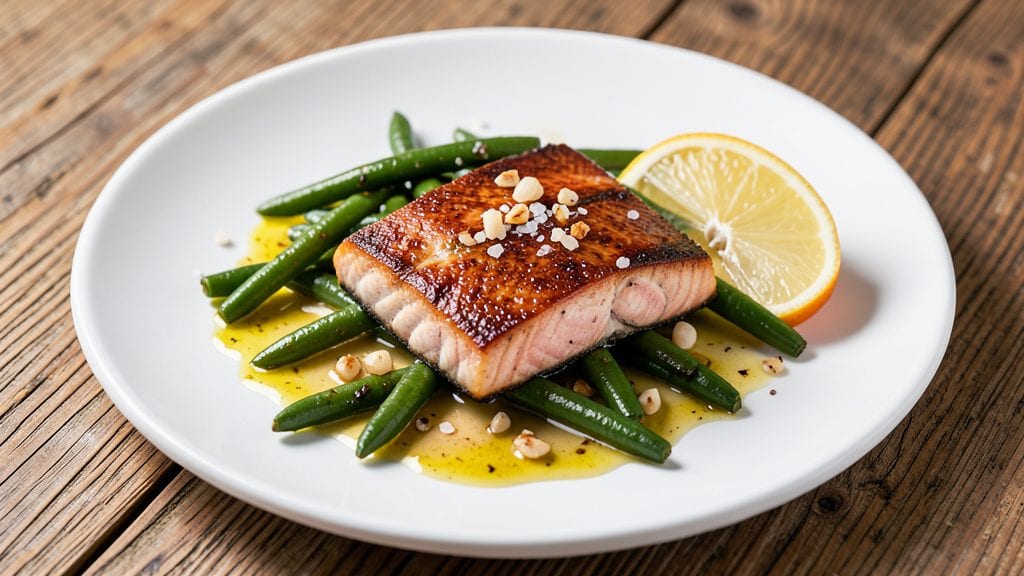
Pan-seared salmon with crisp-tender green beans delivers a restaurant-quality meal in under 30 minutes—no fancy techniques required. The secret lies in high-heat searing for salmon with a golden crust while keeping the center perfectly tender, paired with green beans sautéed just until they yield to a satisfying bite.
I developed this recipe after realizing most home-cooked salmon either turns rubbery or stays undercooked, and these green beans solve the common problem of overcooking or leaving them limp.
This dish balances rich, buttery salmon with bright, savory green beans using just five key ingredients: fresh salmon fillets, green beans, garlic, butter, and lemon.
The salmon achieves its signature crust through a precise 3-4 minute sear, while the green beans cook in the same pan for maximum flavor without losing their crisp texture. A squeeze of lemon at the end brightens both components, creating harmony in every bite.
What you’ll end up with is a plate that’s elegant yet effortless—flaky salmon with a caramelized edge, green beans that stay crisp with just a hint of garlic aroma, and a clean, fresh finish from the lemon.
The method ensures tender protein and vibrant vegetables without requiring advanced skills, making it perfect for weeknight dinners or special occasions. Serve with a sprinkle of fresh dill or parsley for added freshness.
This recipe scales beautifully for two or four, and leftovers reheat well for lunch the next day. The combination of textures—crisp-tender greens and melt-in-your-mouth salmon—makes it a standout dish that feels indulgent yet balanced. Let’s get cooking with this foolproof method that delivers professional results at home.
Ingredients for salmon green beans
Restaurant-quality salmon and green beans made effortless with precise pan-searing techniques.
| Ingredient | Amount | Notes |
|---|---|---|
| Wild-Caught Salmon Fillets 🐟 | 1 ½ lb | Skin-on, center-cut preferred |
| Fresh Green Beans 🥦 | 2 lb | Trimmed, uniform thickness |
| Garlic Cloves 🧄 | 6 cloves | Freshly minced, aromatic |
| Unsalted Butter 🧈 | ½ cup | High-fat, European-style |
| Extra-Virgin Olive Oil 🫒 | 2 tbsp | Stable smoke point |
| Lemon 🍋 | 1 whole | Zest + juice reserved |
| Flaky Sea Salt 🧂 | 1 tsp | Diamond Crystal preferred |
| Fresh Dill 🌿 | ¼ cup | Chopped, for garnish |
| Ground Black Pepper 🌶️ | ½ tsp | Freshly cracked |
For optimal results, prioritize wild-caught salmon with visible marbling—this ensures both tenderness and flavor. Costco or high-end seafood markets like Whole Foods carry premium fillets, but even mid-range grocery stores offer acceptable options if stored properly. The green beans should be freshly harvested—look for vibrant green color and crisp stems; avoid any with yellowing tips. For the butter, European-style unsalted (like Plugrá) delivers superior melt and flavor compared to standard American varieties. Always use high-fat content—the extra richness contributes to the dish's luxurious finish.
Substitutions are possible but may impact texture. For the salmon, fresh Atlantic salmon works but lacks the omega-3 richness of wild-caught. Dried dill at half the amount can replace fresh, though the aroma won't be as pronounced. If you're short on time, pre-minced garlic is acceptable, but fresh is always superior. The olive oil should have a stable smoke point—avoid flavored varieties that may overpower the dish. For the lemon, substitute lime juice in a pinch, though the acidity profile differs slightly. Always ensure your sea salt is Diamond Crystal or similar coarse grain—fine table salt won't dissolve properly for even seasoning.
Store the salmon in the coldest part of your fridge, wrapped in parchment paper to prevent moisture buildup, and use within 2 days. Green beans keep 5-7 days in a sealed container with a paper towel to absorb moisture. The butter should be refrigerated, and the lemon can be stored at room temperature until juiced. This dish reheats beautifully—microwave with a splash of water for 30 seconds to restore moisture. For optimal presentation, garnish with fresh dill immediately before serving to preserve its vibrant color and aroma. Leftovers maintain their quality for 3-4 days in the refrigerator, making it ideal for meal prep.
Why You'll Love This Recipe
- One-Pan Magic: Honestly, this is the kind of dish where you’re not cleaning three separate pans—just tossing everything into one skillet. The green beans blister in their own oil while the salmon sears, then you toss them together with the butter-lemon sauce. My kitchen stays spotless, and I’m still serving something that feels fancy.
- Buttery Lemon Bliss: That half cup of European-style butter mixed with garlic and lemon zest? It’s like a flavor hug for the salmon. The acidity from the lemon cuts through the richness, and the crispy skin on the salmon? Chef’s kiss. I’ll be real: I’ve never met a salmon dish that didn’t make me want seconds after this.
- Leftover Hero: Salmon and green beans are the ultimate leftovers. I pack the salmon in parchment paper (no soggy mess) and reheat it gently in the microwave—still tender, still delicious. The green beans? Toss them in a container with a paper towel for up to a week, and they’re ready to reheat in minutes. Weeknight dinner, lunch the next day, and even a packed lunch for work—this recipe covers it all.
- Budget-Friendly Luxury: Wild-caught salmon might sound pricey, but it’s worth every penny for that melt-in-your-mouth texture. And since you’re using the skin-on fillets, you’re getting the most out of the fish without wasting anything. Plus, fresh green beans are often cheaper than frozen, and a whole lemon and bunch of dill stretch further than you’d think. It’s the kind of dish that makes you feel like you’re dining out without the restaurant price tag.
Step-by-step instructions for pan-seared salmon with crisp-tender green beans
Here's how to achieve perfectly tender salmon and vibrant green beans in one elegant pan.
Prepare the Green Beans for Crisp-Tenderness
Trim the 2 lb fresh green beans by snapping off the ends where they naturally bend. Cut any particularly thick stems lengthwise to ensure even cooking. In a large skillet, heat the 2 tbsp extra-virgin olive oil over medium-high heat until shimmering. Add the green beans in a single layer and cook undisturbed for 4-5 minutes until they develop golden-brown spots.
Here's the thing—you want them to blister slightly while maintaining their crisp texture. Stir occasionally to promote even browning, then reduce heat to medium and continue cooking for another 6-8 minutes until tender-crisp but still vibrant. Remove from heat and set aside, reserving the rendered oil in the pan.
Season and Sear the Salmon Fillets
Pat the 1½ lb wild-caught salmon fillets dry with paper towels—this ensures maximum crispiness. Season both sides generously with the ½ tsp ground black pepper and 1 tsp flaky sea salt. Let them sit at room temperature for 10 minutes while you prepare the butter-lemon mixture.
In a small bowl, melt the ½ cup unsalted butter with the zest of 1 lemon until just combined. Add the freshly minced 6 cloves garlic and stir for 30 seconds until fragrant. Keep this mixture warm over low heat while you finish the salmon.
Create the Perfect Sear and Finish
Working in batches if needed, add the salmon fillets to the skillet with the reserved green bean oil over medium-high heat. Press down gently on each fillet during the first minute to prevent curling and ensure even contact with the pan. You'll know it's ready to flip when the edges release easily from the pan and the underside is golden brown.
Flip carefully and cook for another 3-4 minutes until the salmon reaches an internal temperature of 125-130°F at its thickest point. The flesh should appear opaque and pull away cleanly from the skin. Immediately spoon the warm butter-lemon mixture over each fillet, letting it baste for 30 seconds.
Garnish and Serve for Maximum Impact
Return the green beans to the same skillet and toss with the cooked salmon fillets. Sprinkle evenly with the chopped ¼ cup fresh dill and finish with a squeeze of lemon juice from the same lemon used for zesting. The acidity brightens both the salmon and green beans, cutting through their richness.
Serve immediately while the salmon remains tender and the green beans maintain their crisp texture. The combination of crispy skin on the salmon, vibrant green beans, and aromatic butter-lemon sauce creates a restaurant-quality dish that's surprisingly simple to prepare at home.
Pro Tips For Making Salmon Green Beans
- Press for Flat Salmon: That first minute of searing is where the magic happens—press down hard with a spatula to keep the fillets from curling. I used to skip this and end up with uneven browning and sad, floppy edges. The skin-on side should stay flat as a board, or you’ll regret it later.
- Don’t Rush the Green Beans: Those 4-5 minutes of undisturbed cooking at medium-high heat are non-negotiable. Stir too soon, and you’ll steam them instead of getting that blistered, golden crust. I learned this the hard way—my beans turned mushy after I got distracted. Let them blister, then stir gently.
- Mince Garlic Like You Mean It: Freshly minced garlic is the difference between "meh" and "wow" in that butter-lemon sauce. Use the flat side of your knife to smash the cloves first, then mince into tiny, even pieces. No food processor—it turns garlic into paste, and you’ll taste the difference.
- Keep the Butter Warm: That butter-lemon-garlic mixture should be just melted, not simmering, when you spoon it over the salmon. If it’s cold, the salmon will cool down and turn rubbery. Keep it warm over low heat, and it’ll baste the fillets like a pro—no second-guessing the timing.
Regional styles of these flavors
Pacific Northwest Style
In the Pacific Northwest, this dish often incorporates local flavors like fresh Dungeness crab or smoked salmon alongside the green beans. I’ve seen home cooks add ½ cup chopped chives and a splash of white wine to the butter-lemon sauce for extra brightness.
The region’s emphasis on fresh, local ingredients makes this dish feel even more vibrant—think wild-caught salmon paired with baby green beans from nearby farms. 🌿
Southern California Fusion
California chefs often put a Mediterranean twist on this dish by adding sun-dried tomatoes and feta cheese to the green beans. I’ve tried tossing the cooked beans with ¼ cup crumbled feta and 1 tbsp chopped Kalamata olives before serving.
The lemon zest in the butter sauce becomes even more complex when balanced against the salty, tangy feta. This version feels like a coastal getaway in every bite.
Japanese-Inspired Teriyaki Twist
For a Japanese-inspired variation, I swap the butter-lemon sauce for a light teriyaki glaze made with 2 tbsp soy sauce, 1 tbsp honey, and 1 tsp grated ginger.
The salmon is brushed with this glaze during the last minute of cooking, while the green beans are stir-fried with ½ tsp sesame seeds and a drizzle of sesame oil. It’s a sweet-savory contrast that keeps the dish exciting. 🍣
Alaskan Wild Style
In Alaska, where salmon is king, this dish often incorporates local herbs like wild mountain parsley or Alaskan sweet pea instead of dill. I’ve also seen cooks add ½ cup cooked quinoa to the green beans for extra heartiness.
The butter-lemon sauce is sometimes enhanced with chives and a touch of cream for a richer finish. This version feels rustic and deeply connected to the land.
Mediterranean Herb Variation
For a Mediterranean flair, I replace the dill with a mix of 2 tbsp chopped parsley, 1 tbsp chopped mint, and 1 tsp dried oregano.
The green beans are sautéed with 1 minced shallot alongside the garlic, and the salmon is finished with a sprinkle of flaky sea salt and crushed red pepper flakes for a subtle kick. This version feels like a sunny afternoon by the sea. 🌞
Nutrition facts
Frequently asked questions
Why does patting the salmon dry matter?
Patting the 1½ lb wild-caught salmon fillets dry with paper towels is critical for achieving crispy skin. Moisture on the surface prevents the salmon from developing that coveted golden-brown crust. It also helps the seasoning adhere better, ensuring maximum flavor on every bite. Skip this step, and you’ll end up with steamed salmon instead of perfectly seared fish.
How do I know when the salmon is done?
Your salmon is ready when it reaches an internal temperature of 125-130°F at its thickest point. The flesh should appear opaque and easily pull away from the skin. If you don’t have a thermometer, check for 3-4 minutes of cooking after the edges release from the pan—this ensures it’s cooked through without drying out.
Can I make this dish ahead of time?
While the salmon and green beans taste best served immediately, you can prep components ahead. Trim and store the 2 lb fresh green beans in the fridge for up to 2 days, and season the salmon fillets in advance. Cook the green beans first, then reheat them gently before adding the salmon. Just avoid overcooking the beans—they’ll turn mushy if reheated too long.
What if my green beans aren’t uniform in thickness?
No problem! Cut any thicker stems lengthwise to ensure even cooking. This prevents some beans from becoming tough while others stay undercooked. The key is to cook them in a single layer over medium-high heat until they develop golden-brown spots before tenderizing. Stirring occasionally helps balance the cooking time.
Can I use frozen green beans instead of fresh?
Frozen green beans work in a pinch, but they won’t achieve the same crisp-tender texture as fresh. Thaw them first, then pat dry thoroughly before sautéing. Expect them to cook slightly faster—monitor closely to avoid sogginess. Fresh beans are always preferred for this recipe, but frozen is a backup when fresh isn’t available.