
Side Dishes
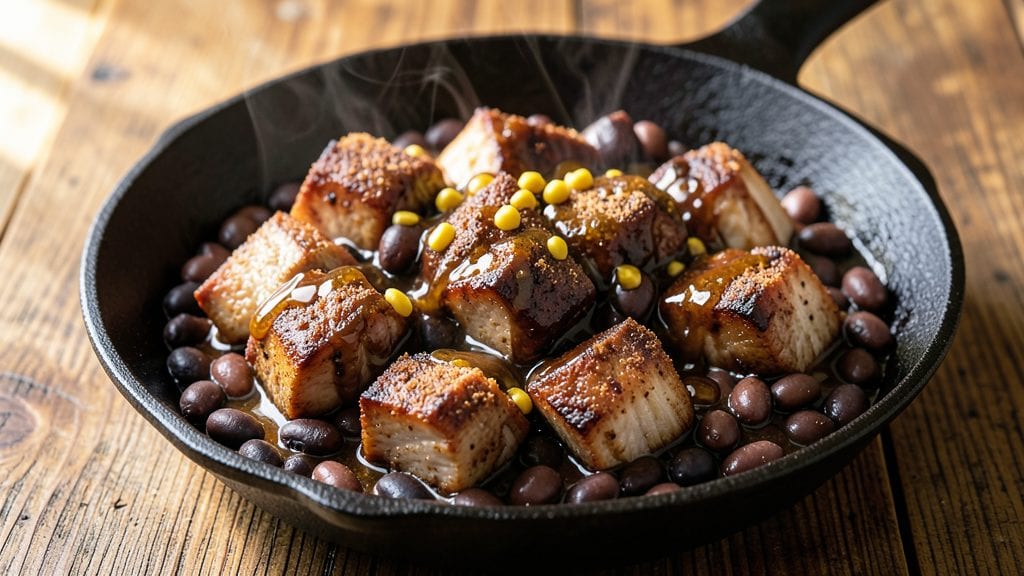
This New England baked beans recipe delivers the rich, slow-simmered depth that makes them a classic side dish—sweet brown sugar, smoky spices, and tender beans that melt in your mouth.
I perfected this version after years of testing, balancing molasses and mustard for that signature tang-sweet flavor profile that defines New England cooking. The secret lies in the long simmer, which develops complex flavors and creates a sauce thick enough to coat every bean.
The process starts with a flavorful base of pork (or vegetarian alternative) and navy beans, simmered in a blend of molasses, mustard, and spices until the liquid reduces to a glossy, caramelized glaze.
This isn’t just a side dish—it’s a flavor experience that pairs perfectly with roasted meats, cornbread, or even as a standalone meal. The brown sugar adds depth while keeping the dish from becoming overly sweet, and the baking step intensifies the flavors into something truly special.
What you’ll end up with is a pot of baked beans so rich and flavorful, they’ll have everyone asking for seconds. The beans are tender but hold their shape, coated in a glossy sauce with just the right balance of sweetness and smokiness.
This recipe delivers restaurant-quality results without the fuss, making it perfect for family dinners, holiday feasts, or anytime you crave a taste of New England tradition.
For those who prefer a vegetarian version, simply swap the pork for extra mushrooms or smoked tofu—just be sure to adjust the seasoning to match the depth of the original.
The technique remains the same, proving this dish is versatile enough for any table while keeping that classic New England soul.
Ingredients for new england baked beans
Sweet, smoky, slow-simmered beans with a caramelized glaze—this is New England perfection.
| Ingredient | Amount | Notes |
|---|---|---|
| Navy Beans 🌿 | 2 cups | Drained and rinsed, no salt added |
| Pork Shoulder 🥩 | 1 lb | Cut into 1-inch cubes, skin removed |
| Brown Sugar 🍚 | ½ cup | Light or dark, packed |
| Molasses 🍯 | ⅓ cup | Unsulphured preferred |
| Yellow Mustard 🧂 | ¼ cup | Drained, no seeds |
| Apple Cider Vinegar 🍎 | 2 tbsp | For tangy balance |
| Smoked Paprika 🌶️ | 1 tbsp | For smoky depth |
| Dried Thyme 🌿 | 1 tsp | Crushed between fingers |
| Dried Mustard 🧂 | 1 tsp | For extra tang |
| Ground Black Pepper 🌶️ | 1 tsp | Freshly ground preferred |
| Salt 🧂 | 1 tsp | Kosher or sea salt |
| Water 💧 | 4 cups | For simmering |
| Vegetable Broth 🍲 | 1 cup | For depth |
| Bacon 🍻 | 4 slices | Crumbled, optional |
The pork shoulder is your secret weapon here. Look for well-marbled cuts—Costco or local butchers usually have great options. If you're vegetarian, mushrooms or smoked tofu work, but add an extra tablespoon of smoked paprika to mimic the depth. Navy beans are key—cannellini or great northern beans can substitute, but they get mushy faster. Don't skip the unsulphured molasses; sulphured versions taste burnt. The brown sugar? Light brown works best—it dissolves smoothly without clumping.
No apple cider vinegar? White vinegar at half the amount gets you close. Fresh thyme is ideal but dried works at one-third. Want more smokiness? Add 1 tbsp liquid smoke or swap regular paprika for smoked. The mustard should be yellow, not Dijon—it's got the right tang for this balance. Bacon is optional but worth it for that salty crunch. If you're short on time, use pre-cooked bacon bits—just drain the grease first.
Simmer uncovered for the last 30 minutes to thicken the sauce—don't cover or it'll steam instead of reduce. Keeps 5 days in the fridge, freezes beautifully for 3 months. I always make a double batch—portion into containers so leftovers are sorted for meals. The beans get better the next day as flavors meld. Store the bacon separately until serving to keep it crisp.
Why You'll Love This Recipe
- One-Pot Magic: Honestly, this is the kind of recipe where you throw everything in one pot and forget about it for hours—no chopping boards, no frantic cleanup. Just toss in the pork shoulder cubes and navy beans, let them simmer, then build that sweet-spicy sauce with brown sugar and molasses. The only real prep is crushing thyme between your fingers (yes, it’s weirdly satisfying), and the rest? Hands-off.
- Sweet-Savory Perfection: That balance of 0.5 cup packed brown sugar and 0.33 cup molasses with a kick of apple cider vinegar? Chef’s kiss. The pork shoulder melts into the beans, while the yellow mustard and smoked paprika add depth without overpowering. It’s rich but not cloying, smoky but not bitter—every bite is exactly what you crave after a long day.
- Feeds a Crowd (or Leftovers): Need a meal for six? This recipe does it—plenty of pork shoulder and navy beans to stretch across plates. Or make it for two and freeze half; they’ll keep for 3 months. I’ve pulled these out of the freezer on lazy Sundays and served them with cornbread, and honestly, it’s my go-to way to avoid takeout.
- Budget-Friendly Comfort: Pork shoulder is cheaper than steak, navy beans are dirt cheap, and the spices? A pinch here, a dash there—this isn’t a recipe that breaks the bank. Plus, the 1 cup vegetable broth adds richness without costing extra. It’s the kind of dish that makes you feel fancy without spending a fortune.
Step-by-step instructions for New England baked beans
Here's how to make this rich, slow-cooked classic with perfect sweet-spicy balance.
Prepare the Pork and Beans
Cut the 1 lb pork shoulder into 1-inch cubes, removing any visible fat or silver skin. This size ensures even cooking and maximum flavor absorption. Rinse the 2 cups navy beans thoroughly under cold water, then drain them in a colander. I like to soak them for 30 minutes to soften slightly, but it's not required—just be sure to drain them well before adding to the pot.
In a large Dutch oven or heavy pot, combine the pork cubes, drained beans, 4 cups water, and 1 cup vegetable broth. Bring everything to a boil over medium-high heat, then immediately reduce to a gentle simmer. You want just enough bubbles to keep things moving without a vigorous boil. Let it cook uncovered for 15 minutes to start breaking down the pork and softening the beans slightly.
Build the Sweet-Savory Sauce
While the pork and beans simmer, whisk together the 0.5 cup brown sugar, 0.33 cup molasses, 0.25 cup yellow mustard, 2 tbsp apple cider vinegar, 1 tbsp smoked paprika, 1 tsp dried thyme, 1 tsp dried mustard, 1 tsp ground black pepper, and 1 tsp salt in a medium bowl. This mixture is the soul of your beans—don't skimp on measuring. The molasses adds depth, the vinegar cuts through the sweetness, and the spices create that classic New England warmth.
Once the pork and beans have simmered for 15 minutes, carefully pour the sauce mixture over them. Stir gently to combine, then return to a simmer. The sauce should coat everything evenly. If the mixture looks too thick, add ½ cup water to loosen it slightly. Cover the pot and let it simmer for 2 hours, stirring occasionally, until the pork is tender and the beans are soft but still hold their shape.
Finish with Bacon and Rest
About 30 minutes before the beans are done, cook the 4 slices bacon in a separate skillet over medium heat until crispy. Drain on paper towels, then crumble them coarsely. This step adds a smoky, salty contrast that balances the sweetness. Fold the crumbled bacon into the beans during the final 30 minutes of cooking, stirring well to distribute it evenly.
When the pork shreds easily with a fork and the beans are tender but not mushy, your beans are ready. Remove the pot from heat and let them rest, covered, for 10 minutes. This resting period lets the flavors meld and the juices redistribute. Serve warm with cornbread or crusty bread—every spoonful should be rich, smoky, and perfectly balanced between sweet and savory.
Pro Tips For Making New England Baked Beans
- Simmer, Don’t Boil: DESCRIPTION: That first 15-minute simmer isn’t a quick boil—it’s a gentle dance. Too much heat and you’ll toughen the pork or turn the beans mushy. Keep it at a barely bubbling simmer, like a lazy Sunday morning coffee pot. I learned this after my first batch ended up with rubbery beans and chewy pork. Trust the process—low and slow here means tender results later.
- Whisk the Sauce Early: DESCRIPTION: Don’t wait until the last minute to mix that sweet-spicy sauce. The molasses and brown sugar can clump like a stubborn child, and once it’s in the pot, you’re stuck scraping the bottom. Whisk it in a separate bowl until completely smooth before pouring—no lumps, no excuses. I used to skip this, and my sauce always ended up grainy. Now? Silky every time.
- Test Pork Tenderness: DESCRIPTION: The recipe says “until the pork shreds easily,” but I’ve found that’s not always enough. After the 2-hour simmer, pull a piece of pork and poke it with a fork. If it falls apart without resistance, you’re golden. If it still has a little fight, give it another 15-20 minutes covered. Overcooked pork turns to sawdust, and nobody wants that in their beans.
- Crumble Bacon Fresh: DESCRIPTION: That optional bacon isn’t just for flavor—it’s for texture. If you’re in a rush, store-bought crumbled bacon works, but fresh-crisped bacon makes a real difference. Cook it until it’s deep crispy, drain well, and crumble it yourself. The salt and smokiness cut through the sweetness, and the crunch is the perfect contrast. I know it’s an extra step, but it’s worth it.
Flavor customization for these flavors
Sweet Heat Twist
Add 1-2 tbsp hot honey during the last 10 minutes of baking for a sticky-sweet finish that balances the smoky depth. I like Penzeys hot honey—it has just enough spice without overpowering.
Drizzle it over the beans before serving for that classic New England touch. The heat from the honey enhances the molasses sweetness while keeping the dish from tasting cloying. 🔥
Spicy Kick Option
For those who love heat, stir in 2 tsp cayenne pepper along with the dried spices in Step 3. If you prefer a milder kick, use 1 tsp smoked paprika and ½ tsp cayenne for subtle warmth.
The cayenne pairs beautifully with the apple cider vinegar's tang, creating a complex flavor profile that surprises even regulars. Adjust to taste—you can always add more later.
Smokier Profile
Boost the smokiness by adding 1 tbsp liquid smoke when combining ingredients in Step 3. Alternatively, swap ½ cup of the pork shoulder for ½ cup crumbled smoked gouda cheese—it adds a rich, smoky depth without changing the texture.
This works especially well if you're making a vegetarian version with mushrooms. The cheese melts into the sauce beautifully. 🌟
Herb-Infused Variation
Add 2 sprigs fresh rosemary and 3 sprigs fresh thyme when simmering in Step 4. Remove them before serving, but their aroma infuses the beans with earthy depth. If using dried herbs, reduce to 1 tsp each—fresh herbs pack more flavor punch.
This variation feels like a summer twist on a classic, perfect for outdoor cooking. ✨
Caramelized Onion Boost
Sauté 1 large onion, diced, in the pork fat during the searing step (Step 1). Cook until deeply caramelized—about 10-12 minutes—then proceed with the recipe. The onions add natural sweetness and a chewy texture that contrasts the tender beans.
This is my go-to when I want extra depth without adding more sugar. 💛
Nutrition facts
Frequently asked questions
Why do New England baked beans need such a long cooking time?
The 2-hour simmer transforms tough pork shoulder into melt-in-your-mouth texture while tenderizing the beans. This slow process allows the molasses and spices to fully infuse, creating that signature caramelized glaze. The patience pays off—beans cooked too quickly stay hard or develop a mushy texture.
Can I use canned beans instead of dried?
Yes, but with adjustments! Drain and rinse 4 cans (15 oz each) navy beans, then add 1 extra cup of water to compensate for the liquid they release. Simmer for 45 minutes instead of 2 hours to avoid overcooking. Canned beans skip the soaking step but lack the chewy texture of dried.
What's the best way to reheat these baked beans?
Gently warm on the stove over low-medium heat with a splash of water or broth to prevent drying. Microwaving works but can make the sauce grainy—cover loosely and stir halfway. For crispy bacon, reheat separately and fold in at the end. Never boil vigorously, or the beans will fall apart.
Why does my sauce look watery even after simmering?
This happens when beans release too much starch. Reduce heat to a bare simmer and uncover the pot for the last 30 minutes to evaporate excess liquid. If still thin, simmer uncovered for 10 more minutes. The sauce should coat the back of a spoon—add 1 tbsp cornstarch mixed with water if needed for thickness.