
Side Dishes
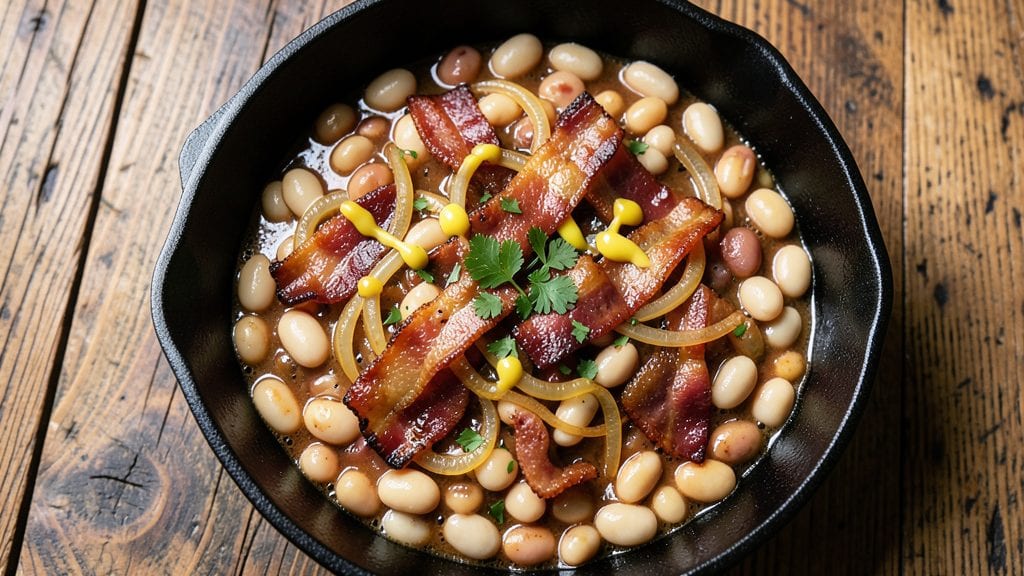
This classic baked beans recipe delivers the smoky-sweet harmony that makes them a timeless comfort food staple. The slow-cooking process transforms simple ingredients into rich, tender beans with deep caramelized flavors that pair perfectly with barbecue or stand alone as a hearty side.
I've perfected this method over years of testing, ensuring the onions develop that signature sweetness while the beans soak up all the savory-sweet broth.
The foundation begins with properly browning onions and garlic—this step creates the depth of flavor that separates homemade from canned. A balance of molasses, mustard, and smoked paprika builds that classic tangy-sweet profile, while bacon adds smoky richness that elevates every bite.
The key is patience: baking at 250°F for hours allows flavors to meld without drying out the beans.
What you'll end up with is a pot of velvety beans with caramelized edges, where each spoonful delivers perfect harmony of smoky, sweet, and tangy notes.
The texture is just tender enough to melt in your mouth while maintaining enough structure to hold up to forks or slurp straight from the pot. This recipe serves as both a classic barbecue side and a standalone meal that's impossible to resist.
For vegetarians, simply swap the bacon for extra smoked paprika or liquid smoke to maintain that signature flavor. The slow-cooking method makes this recipe ideal for meal prep—it tastes even better the next day as flavors continue developing. Let's get started on creating your perfect batch of baked beans.
Ingredients for classic baked beans
These pantry staples and simple proteins create the perfect slow-cooked baked beans harmony.
| Ingredient | Amount | Notes |
|---|---|---|
| Large White Beans 🫘 | 3 lbs | Dry, low-sodium preferred |
| Yellow Onions 🧅 | 3 whole | Thinly sliced, caramelized |
| Garlic Cloves 🧄 | 6 cloves | Minced, for aromatic base |
| Bacon 🍖 | 1 lb | Chopped, smoked preferred |
| Molasses 🍯 | ½ cup | Unsulphured for depth |
| Yellow Mustard 🧅 | ¼ cup | Whole grain for texture |
| Smoked Paprika 🌶️ | 2 tbsp | Spanish variety preferred |
| Brown Sugar 🍚 | ½ cup | Packed, for caramelization |
| Chicken Broth 🍲 | 4 cups | Low-sodium for control |
| Apple Cider Vinegar 🍎 | 2 tbsp | For tangy brightness |
| Salt 🧂 | 1 ½ tsp | Kosher, to taste |
| Black Pepper 🌶️ | 1 tsp | Freshly ground preferred |
The beans are the heart of this dish, so opt for large white beans—they hold up better to slow cooking than cannellini or navy beans. Dry beans are ideal since they absorb flavors more deeply than canned, but if you're short on time, rinse canned beans thoroughly. For the best caramelization, thinly slice your onions and cook them low and slow until they're deeply golden. The bacon should be smoked variety if possible—it adds that authentic campfire flavor that separates good beans from great ones. I always grab mine from Costco in bulk for the best price, but any quality bacon works.
No bacon? Extra smoked paprika plus 1 tbsp liquid smoke delivers that smoky depth. Want more tang? Substitute Dijon mustard at half the amount—it's punchier but still works. Brown sugar can be swapped for maple syrup at a 1:1 ratio, though the molasses gives that classic molasses flavor. The apple cider vinegar is non-negotiable for brightness—white vinegar works in a pinch, but it's less complex. For vegetarian versions, simply omit the bacon entirely and boost the smoked paprika to 3 tbsp to compensate for the missing smokiness.
This recipe is all about patience—bake at 250°F for 3-4 hours for the best texture. The beans will thicken as they cook, so add broth gradually if needed. Store in an airtight container in the fridge for 5 days or freeze portions for up to 6 months. I always make double batches and freeze half—I love having ready-to-eat baked beans for game days or weeknight meals. The flavors actually improve the next day as everything melds together, so don't skip the overnight rest if possible. For best results, use stainless steel or glass baking dishes—they distribute heat more evenly than aluminum.
Why You'll Love This Recipe
- Oven-Safe Simplicity: I don’t know about you, but my kitchen gets chaotic after work. These beans? I toss them together in the morning while coffee brews—soak the beans overnight, caramelize the onions while they sleep, and boom, done. The only real effort is waiting for that 3-hour bake. Even my roommate, who burns toast, can handle this.
- Molasses Magic: That half cup of unsulphured molasses isn’t just sweet—it’s the secret weapon. It gives these beans that deep, caramelized richness that makes them irresistible. Pair it with the smoky bacon and crispy onions, and you’ve got a dish that’s dangerously addictive. My kids fight over the last bite, and I won’t feel guilty about it.
- Feast or Frugal Meal: Need to feed a crowd? This recipe does it without breaking the bank. Three pounds of beans, a pound of bacon, and pantry staples like molasses and brown sugar make it one of the most budget-friendly meals I know. Plus, leftovers? They’re even better the next day. I pack them for lunches or reheat them for a lazy Sunday dinner—no fuss, just flavor.
- Weeknight Hero: Between us, this isn’t just for holidays. It’s my go-to when I’m too tired to think about complicated recipes. The beans soak while I’m at work, the bacon crisps up in under 20 minutes, and then it’s hands-off baking. Serve it with grilled chicken or just crack open a beer and dig in. Honestly, it’s the kind of dish that makes me feel like I’ve earned my weekend.
Step-by-step instructions for classic baked beans
This method delivers the perfect balance of smoky, sweet, and savory flavors every time.
Prepare the Beans for Soaking
Place the 3 lbs large white beans in a large bowl and cover them with plenty of cold water—at least 2 inches above the beans. Let them soak overnight, or for a minimum of 8 hours. This ensures they soften evenly and reduces cooking time later. After soaking, drain and rinse the beans thoroughly under cold water.
Here's the thing—proper soaking prevents the beans from splitting during cooking, which keeps the texture creamy rather than mushy. If you forget to soak them ahead of time, you can simmer them in fresh water for 2 hours before adding to the baking dish, but the flavor won't be as rich.
Cook the Bacon and Caramelize the Onions
In a large oven-safe skillet, cook the 1 lb bacon over medium heat until it's crispy and the fat has rendered out completely. Remove the bacon with a slotted spoon and set it aside on paper towels to drain. Leave the bacon fat in the skillet—this is where all the flavor lives.
In the same skillet, add the 3 yellow onions and cook them slowly over medium-low heat for 15-20 minutes, stirring occasionally. You want them to turn deep golden brown and caramelize—this adds sweetness that balances the smoky flavors. If the onions start to stick, add a splash of water and scrape up any browned bits from the bottom of the pan.
Build the Baking Mixture
In a large mixing bowl, combine the drained beans, cooked bacon, caramelized onions, 6 minced garlic cloves, ½ cup molasses, ¼ cup yellow mustard, 2 tbsp smoked paprika, ½ cup brown sugar, 4 cups chicken broth, and 2 tbsp apple cider vinegar. Stir everything together until well combined. Season with 1½ tsp salt and 1 tsp black pepper.
This is where the magic happens—the molasses and brown sugar create that classic sweetness, while the vinegar adds a bright tang. The smoked paprika brings deep, smoky notes that define this dish. Taste the mixture now and adjust the seasoning if needed, but it should already be well-balanced.
Bake to Tender Perfection
Transfer the bean mixture to a greased 9x13-inch baking dish. Cover tightly with aluminum foil and bake at 325°F for 3 hours. After 3 hours, remove the foil and continue baking for another 30-45 minutes, until the beans are fork-tender and the sauce has thickened to a glossy consistency.
You'll know they're done when the beans are easily crushed between your fingers and the sauce clings to them rather than pooling at the bottom. If the top starts to darken too quickly, tent it loosely with foil to prevent burning. The longer they bake, the deeper the flavors develop, so don't rush this step.
Rest and Serve
Remove the baking dish from the oven and let the beans rest for 10-15 minutes before serving. This allows the juices to redistribute, ensuring each bite is moist and flavorful. Stir once before serving to redistribute any settled sauce at the bottom.
Serve the beans warm with crusty bread or alongside grilled meats. The combination of smoky, sweet, and savory flavors makes this a classic side dish that stands up to hearty mains. Store leftovers in the refrigerator for up to 5 days, or freeze for up to 3 months.
Pro Tips For Making Classic Baked Beans
- Don’t Skimp on Bacon Fat: That rendered fat from the 1 lb bacon isn’t just grease—it’s the flavor foundation. After cooking the bacon crispy, leave every last drop in the skillet to caramelize the onions. I used to drain it, thinking it was unhealthy, but the beans lose that rich, smoky depth without it.
- Caramelize Onions Low and Slow: Medium-low heat is non-negotiable here. If you rush the 3 onions, they’ll burn before they turn deep golden brown, and the sweetness that balances the molasses will vanish. Add a splash of water if they stick—those browned bits are pure flavor.
- Taste Before Baking: Stir everything together in the bowl and take a bite. The mix of ½ cup molasses, ¼ cup mustard, and 2 tbsp smoked paprika should be bold but not cloying. Adjust salt now—after baking, it’s too late. Trust me, I’ve learned this the hard way.
- Uncover for the Final 30 Minutes: The last 30-45 minutes uncovered at 325°F is where the sauce thickens and the beans soften properly. If you keep them covered, the top stays soggy, and the sauce turns gloppy instead of glossy. Resist the urge to peek—just let them work.
Wine and beer pairings for classic baked beans
Wine Pairings
For this rich, molasses-kissed baked bean dish, I reach for a bold red wine with enough fruit to stand up to the sweetness while complementing the smoky depth. A Portuguese red like Douro Valley Touriga Nacional—with its dark cherry and spice notes—cuts through the beans' caramelized sweetness beautifully.
The tannins in a Cabernet Sauvignon from Napa Valley also work wonders, as the oak and blackcurrant flavors harmonize with the bacon and molasses. For something lighter, a Pinot Noir from Oregon offers enough body to match the dish's complexity without overpowering it. 🍷
Beer Options
Craft beers with a touch of sweetness and smoky undertones pair surprisingly well with baked beans. I swear by an American amber ale like Allagash White—its caramel and vanilla notes complement the molasses, while the slight bitterness balances the sweetness.
For a more robust option, try a smoked porter like Founders Kentucky Breakfast Stout, where the roasted malt echoes the caramelized onions. A crisp pilsner like Fat Tire also works, as its citrusy brightness cuts through the richness. 🍺
Unexpected Pairings
If you're feeling adventurous, a sweet dessert wine can actually enhance the experience. A Moscato d'Asti—lightly fizzy and packed with peach and apricot flavors—might sound odd, but the sweetness mirrors the molasses, creating a delightful contrast.
I've also enjoyed pairing these beans with an iced tea made from black tea and a splash of molasses—it's a Southern staple that feels like a natural extension of the dish's flavors. 🍹
Regional Pairing
In the American South, where baked beans are a BBQ staple, corn liquor (or moonshine) is a classic pairing. A smooth, aged moonshine like Buffalo Trace adds a subtle sweetness that mirrors the beans' caramelized notes.
For a non-alcoholic option, a ginger beer with its spicy kick cuts through the richness and cleanses the palate. It's a pairing I've seen at every tailgate I've attended. 🥃
Nutrition facts
Frequently asked questions
Why do I need to soak the beans overnight?
Soaking the 3 lbs large white beans for at least 8 hours ensures they soften evenly and cook faster. This prevents splitting during baking, keeping your texture creamy instead of mushy. If you skip soaking, simmer them in fresh water for 2 hours first—though the flavor won't be as rich.
What's the best way to caramelize the onions?
Use medium-low heat for 15-20 minutes with thinly sliced onions. Stir occasionally and add water if they stick. The goal is deep golden brown color—this balances the smoky flavors perfectly. Don't rush it!
Can I make these vegetarian?
Skip the bacon and boost the smoked paprika to 3 tbsp for that smoky depth. Add liquid smoke (1 tbsp) if you want extra intensity. The molasses and mustard keep the classic flavor profile intact.
How do I know when the beans are done?
They're ready when beans are fork-tender and sauce clings to them—not pooling at the bottom. After 3 hours at 325°F, uncover and bake 30-45 minutes longer. If the top browns too fast, tent loosely with foil. Patience pays off for deeper flavor!
What if my beans are too thick?
Add ½ cup chicken broth at a time while baking, stirring well. The sauce should coat the back of a spoon when done. If it's still too thick after baking, simmer uncovered on the stove for 5-10 minutes to reduce.