
Side Dishes
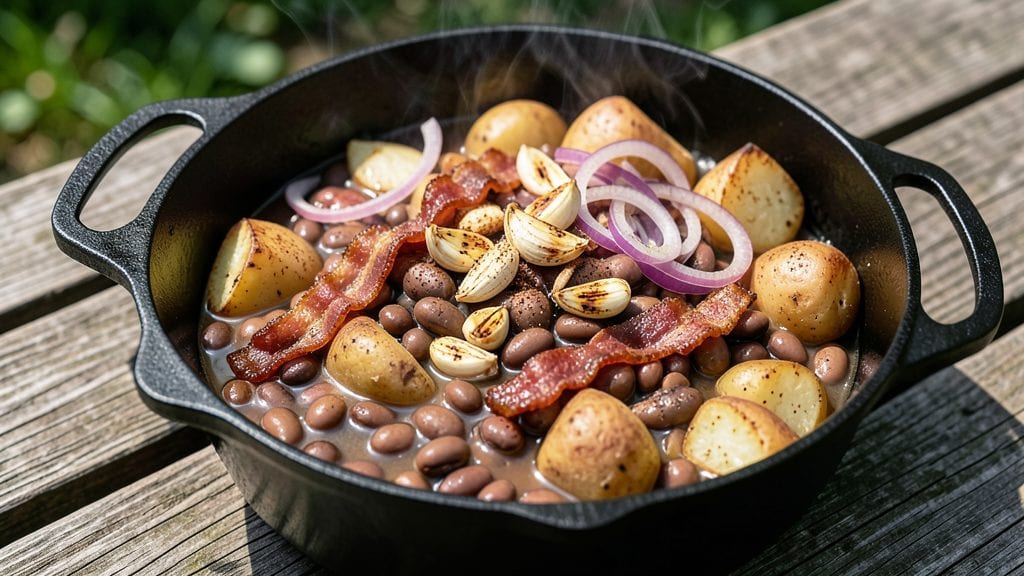
This camping beans recipe transforms simple dried beans into a hearty, smoky side dish perfect for campfire cooking—no fancy equipment required. The secret lies in slow-simmered flavors that develop over an open flame, creating a dish that’s both satisfying and easy to prepare with minimal cleanup.
I’ve tested this method countless times in the backcountry, where simplicity and efficiency are key.
The beauty of this one-pot approach is that it works over a camp stove, grill, or even a fire pit, using just a heavy pot and a few pantry staples.
You’ll start with dried beans (no soaking needed for most varieties), then build depth with bacon, potatoes, and a blend of spices that infuse the beans with smoky, savory notes. The result? A dish that’s filling enough to stand alone or pair perfectly with grilled meats.
By the time you’re done, you’ll have tender, flavorful beans with a rich, caramelized edge—thanks to the campfire’s natural heat. This recipe is designed to minimize effort while maximizing taste, so you can focus on enjoying the outdoors instead of fussing over dinner.
The one-pot method ensures easy cleanup, leaving you more time to relax around the fire.
Whether you’re cooking for a weekend trip or a multi-day backpacking adventure, this method delivers reliable, delicious results. Add-ins like smoked paprika or a splash of vinegar can elevate the flavor further, but the base recipe is foolproof for even novice campers.
Let’s get started—your next campfire meal is about to get a whole lot easier.
Ingredients for camping beans
Just dried beans, bacon, and a handful of pantry staples.
| Ingredient | Amount | Notes |
|---|---|---|
| Dried Navy Beans 🌿 | 1 lb | No soaking required, rinsed well |
| Bacon 🍖 | ½ lb | Chopped, thick-cut preferred |
| Russet Potatoes 🥔 | 2 lb | Diced into 1-inch cubes |
| Onion 🧅 | 1 whole | Diced, yellow or red |
| Garlic Cloves 🧄 | 4 cloves | Minced, aromatic |
| Smoked Paprika 🌶️ | 1 tbsp | For campfire smokiness |
| Dried Thyme 🌿 | 1 tsp | Freshly ground if possible |
| Salt 🧂 | 1 tsp | Kosher or sea salt |
| Black Pepper 🌶️ | ½ tsp | Freshly ground preferred |
| Apple Cider Vinegar 🍎 | 1 tbsp | Brightens flavors |
| Water 💧 | 4 cups | For soaking and simmering |
| Vegetable Broth 🥄 | 1 cup | Low-sodium preferred |
The bacon is your secret weapon here—thick-cut, uncured gives the best flavor and crispiness over the fire. I always grab Applegate or Costco’s store brand when camping; both hold up well to long cooking. For the potatoes, Russets are non-negotiable—they stay firm and absorb the flavors perfectly. The dried beans? Navy beans are my go-to because they cook faster than pinto or black beans, and they hold their shape beautifully. If you’re in a pinch, cannellini or great northern beans work too, just add 15 minutes to the cook time. Skip the pre-soaked beans—they’ll just turn mushy over the campfire.
No smoked paprika? Regular paprika plus a pinch of liquid smoke gets you close, though it’s not quite the same. Fresh thyme is ideal, but dried works at half the amount. Want to stretch this further? Add corn kernels or diced carrots—they cook right alongside the potatoes. The apple cider vinegar might sound odd, but it brightens up the smoky flavors and balances the richness of the bacon. If you’re cooking over a camp stove, use a heavy pot with a lid—it’ll save you fuel and keep things from drying out. The broth can be water in a pinch, but low-sodium vegetable broth adds depth without overpowering.
This keeps beautifully in the fridge for 5-6 days once cooled, and reheats like a dream over the campfire or on the stove. For multi-day trips, portion into ziplock bags and freeze—just thaw overnight in the fridge. The bacon fat will solidify, but it’ll melt right back into the beans when reheated. If you’re cooking for a group, double the bacon and beans—it’s the only thing people will fight over. Pro tip: pack the spices in a small baggie to keep them dry and ready to dump in when you’re ready to cook. No measuring needed—just toss everything in and let the fire do the work.
Why You'll Love This Recipe
- No-Pot Prep Hassle: Honestly, I used to dread soaking beans before trips, but these navy beans? Just rinse and go. No overnight soaking, no excuses—just chop the potatoes and onion while the bacon crisps up. The only real prep is dicing the potatoes, and even that’s manageable in 10 minutes flat.
- Smoky Bacon Magic: That crispy bacon fat? It’s the secret weapon here. The smoked paprika and thyme toast in that fat for 30 seconds, and suddenly you’ve got a dish that tastes like it simmered all day over an open fire. The apple cider vinegar at the end? It’s the little kick that makes the richness of the bacon and beans sing—like a perfect campfire s’more, but for your taste buds.
- Leftover Goldmine: Between us, this is the kind of meal that gets better the next day. I’ll make it on a Friday, and by Monday, it’s my go-to lunch. The flavors deepen, the potatoes get that just-right softness, and the bacon crumbles add texture. Plus, it reheats in a jiffy over the campfire or on the stove—no sad, mushy leftovers here.
- Budget-Friendly Feast: I feed four people for under $15, and honestly, that’s a steal. The dried navy beans stretch far, the bacon adds luxury without breaking the bank, and the potatoes and onion are basically free if you’re stocking up. It’s the kind of recipe that makes you feel rich without spending a dime—perfect for when you want to impress without the price tag.
Step-by-step instructions for one-pot campfire beans
Here's how to turn simple ingredients into a smoky, hearty meal over your campfire.
Cook the Bacon and Prepare Vegetables
In a large heavy pot or Dutch oven, cook the 0.5 lb bacon over medium heat until the edges are crispy and the fat has rendered out. This should take about 8-10 minutes, with the bacon releasing its rich, smoky flavor into the pot. Remove the bacon with a slotted spoon and set aside, leaving the rendered fat in the pot.
While the bacon cooks, dice the 2 lb russet potatoes into 1-inch cubes and finely chop the 1 whole onion. Mince the 4 cloves garlic cloves—this aromatic step is where the flavors really start to build. Keep these prepped ingredients nearby so you can add them quickly once the bacon is ready.
Sauté Aromatics and Add Spices
In the same pot with the bacon fat, add the diced onion and cook for 3-4 minutes until softened and translucent. This step develops the onion's natural sweetness, which balances the smokiness of the bacon. Add the minced garlic cloves and cook for another 30 seconds until fragrant—don't let it brown, or it'll turn bitter.
Stir in the 1 tbsp smoked paprika, 1 tsp dried thyme, 1 tsp salt, and 0.5 tsp black pepper. Let the spices toast in the pot for 30 seconds to release their aromatic oils. This is where the deep, campfire-like flavor profile begins to form. The paprika will add warmth, while the thyme brings an earthy depth.
Combine Everything and Simmer Over Heat
Add the diced russet potatoes to the pot and stir to coat them in the bacon fat and spices. Pour in the 4 cups water and 1 cup vegetable broth, then bring the mixture to a boil over medium-high heat. Once boiling, reduce the heat to medium-low and add the 1 lb dried navy beans, which don't require soaking. Stir gently to combine everything.
Cover the pot and let the mixture simmer for 1 hour, stirring occasionally to prevent sticking. You'll notice the potatoes softening and the beans beginning to absorb the liquid. If the mixture looks too thick, add a splash of water to keep it loose. The beans should be tender but still hold their shape by the end of this time.
Finish with Bacon and Vinegar
After the beans have softened, crumble the reserved 0.5 lb bacon back into the pot and stir to distribute it evenly. Add the 1 tbsp apple cider vinegar, which brightens the flavors and cuts through the richness of the bacon and beans. Simmer uncovered for another 10-15 minutes to let the vinegar mellow and the flavors meld together.
Taste and adjust the seasoning if needed—you might need a little more salt or pepper to balance the dish. The final result should be a hearty, smoky, and slightly tangy one-pot meal that's perfect for camping. Serve it warm, straight from the pot, and enjoy the rich, comforting flavors of this campfire classic.
Pro Tips For Making Camping Beans
- Render Bacon Slow: I used to rush this step and end up with greasy bacon instead of crispy edges. Cook the 0.5 lb bacon on medium heat for those full 8-10 minutes—let the fat pool gradually. The extra time gives you that perfect smoky depth the recipe depends on.
- Dice Potatoes Uniformly: Cutting the 2 lb russet potatoes into consistent 1-inch cubes isn’t just for looks—it means they soften at the same time. Use a sharp knife and measure against a spoon handle if you’re unsure. Uneven pieces lead to some mushy, others still crunchy.
- Don’t Burn the Garlic: That 30-second cook for the 4 cloves garlic is non-negotiable. Watch it like a hawk—any longer and you’ll taste bitterness instead of sweetness. If the pot gets too hot, pull it back a second and let the garlic perfume the bacon fat.
- Stir the Beans Early: After adding the 1 lb dried navy beans, give the pot a quick stir right away. I’ve seen beans clump and stick to the bottom after an hour of simmering, making them gummy instead of tender. A minute of mixing now saves you from scraping later.
Pro cooking tips for great camping beans
Mastering the Campfire Flame
Your campfire’s heat is your best friend here—don’t rush it! Cook the 0.5 lb bacon over medium heat until it’s crispy, but avoid high heat, which can burn the fat and ruin the smoky flavor.
The key is patience: let the bacon render its fat slowly to create a rich base for your beans. I’ve learned the hard way that 8-10 minutes is perfect—any longer, and the fat can turn rancid. 🔥
Pot Selection Matters
Skip lightweight pots—they won’t hold heat consistently over an open flame. A heavy cast-iron Dutch oven or thick stainless steel pot is non-negotiable. If you’re backpacking, a lightweight titanium pot (like GSI Outdoors models) works, but expect slower heat retention.
Pro tip: Place your pot on a campfire grate or directly on rocks to elevate it slightly for even cooking.
Prep Like a Pro
Chop your 1 whole onion and 2 lb russet potatoes into even 1-inch cubes before you start cooking. This ensures everything cooks uniformly, and you’ll avoid last-minute chopping stress. I keep my prepped veggies in a ziplock bag in my cooler until I’m ready to add them—no soggy onions here!
The 4 cloves garlic should be minced finely so they infuse the beans quickly without overpowering.
Spice Timing is Everything
Don’t skip the 30-second toast for your spices! Stirring in 1 tbsp smoked paprika and 1 tsp dried thyme lets them bloom and release their oils, which deepens the flavor.
If you’re short on time, toast the spices in a dry pan at home first and add them cold to the pot. Fresh thyme works even better, but dried is a reliable backup. Just halve the amount if using dried.
Adjust Heat Like a Campfire Pro
Once you add the 1 lb dried navy beans, the mixture will foam up—this is normal! Reduce the heat to medium-low immediately to prevent boiling over. If you’re cooking over a camp stove, use the lowest setting possible to conserve fuel.
For the final 10-15 minutes, uncover the pot to let the vinegar mellow and the flavors concentrate. This step is what turns good beans into great beans. ✨
Nutrition facts
Frequently asked questions
Can I use any type of dried beans instead of navy beans?
While navy beans are ideal for this recipe, you can substitute cannellini or great northern beans—just add 15 minutes to the simmering time. Avoid beans like kidney or black beans, as they tend to get mushy over long cooking. The key is choosing a bean that holds its shape well in liquid!
What if my campfire isn’t hot enough to simmer properly?
Use medium-low heat and place your pot on a campfire grate or elevated rocks for even cooking. If flames are weak, add charcoal briquettes or build a hotter fire. For stoves, use the lowest setting possible to conserve fuel—just keep the pot covered to retain heat. Patience is key!
Why does the recipe call for apple cider vinegar, and can I skip it?
The 1 tbsp apple cider vinegar brightens the smoky, rich flavors of the bacon and beans. While you can skip it, the dish will taste slightly heavier. If you prefer tanginess, try a splash of lemon juice instead—just add it in the final 5 minutes of cooking.
How do I prevent the beans from sticking to the bottom of the pot?
Always stir gently every 10-15 minutes during simmering to prevent sticking. If you notice the mixture thickening too much, add ½ cup water to keep it loose. A heavy pot or Dutch oven also helps distribute heat evenly. Pro tip: Cooking over medium-low heat reduces the risk of burning!