
Soups & Stews
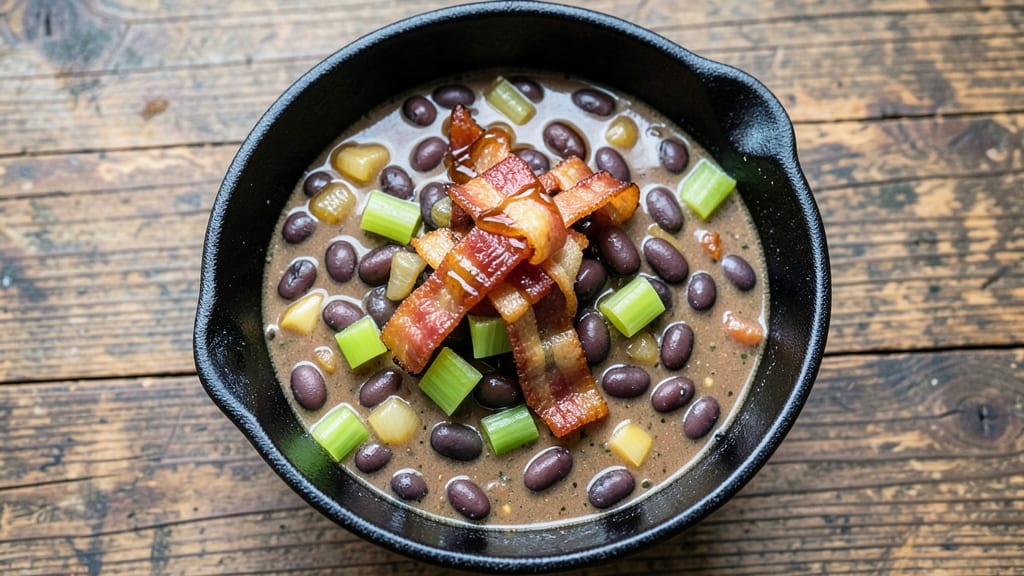
This Buckhorn Exchange Bean Soup recipe delivers the kind of smoky, maple-kissed comfort that warms both body and soul. The dish originated at the famous Buckhorn Exchange in Colorado, where it became a legendary staple—rich, hearty, and packed with slow-simmered flavors that transform simple ingredients into something extraordinary.
What sets this soup apart is the perfect balance of sweet and savory, achieved through a blend of maple syrup, bacon, and aromatic herbs that infuse the broth as it simmers for hours.
The beauty of this recipe lies in its foolproof technique—no fancy equipment required, just a sturdy pot and patience. You’ll start with dried beans (or canned for a quicker version), browned bacon for depth, and a medley of onions, garlic, and celery that form the flavor base.
The maple syrup isn’t just for sweetness; it caramelizes during cooking, adding a subtle complexity that makes this soup unforgettable. Whether you’re feeding a crowd or meal prepping for the week, this one-pot wonder delivers restaurant-quality results every time.
By the time you ladle that first bowl, you’ll taste the velvety texture of perfectly cooked beans, the smoky richness of the bacon, and the warm, caramelized notes of the maple. The soup is hearty enough to stand alone but pairs beautifully with crusty bread or a simple green salad.
It’s the kind of dish that feels like a hug in a bowl—ideal for chilly evenings or when you crave something deeply satisfying without the fuss.
For those short on time, a pressure cooker cuts the cooking time dramatically, but the slow-simmered version is worth the wait. The longer it cooks, the more the flavors meld together, creating a depth that’s impossible to rush.
Adjust the sweetness to your taste, and don’t skip the final garnish of fresh herbs—it adds brightness and ties everything together. Let’s make this soup, the way it was meant to be.
Ingredients for buckhorn exchange bean soup
Simple pantry staples transform into legendary Buckhorn Exchange comfort in one pot.
| Ingredient | Amount | Notes |
|---|---|---|
| Dried Navy Beans 🌱 | 2 cups | Soaked overnight or quick-soaked |
| Thick-Cut Bacon 🥓 | 12 oz | Chopped into 1/2-inch pieces |
| Yellow Onion 🧅 | 1 ½ cups | Diced, medium dice preferred |
| Celery Stalks 🥬 | 3 whole | Diced, about 1 cup total |
| Garlic Cloves 🧄 | 4 cloves | Minced, about 1 tbsp total |
| Pure Maple Syrup 🍯 | ½ cup | Grade B for smoky flavor |
| Chicken Broth 💧 | 4 cups | Low-sodium preferred |
| Tomato Paste 🍅 | 2 tbsp | Squeeze tube or canned |
| Bay Leaves 🌿 | 2 whole | Fresh preferred |
| Dried Thyme 🌿 | 1 tsp | Or 1 tbsp fresh |
| Black Peppercorns 🌶️ | ½ tsp | Freshly cracked |
| Salt 🧂 | 1 ½ tsp | Kosher or sea salt |
| Fresh Parsley 🌿 | ¼ cup | Chopped, for garnish |
| Crusty Bread 🍞 | 1 loaf | Optional serving suggestion |
| Green Salad 🥗 | 2 cups | Optional pairing |
The bacon is where all the magic starts—thick-cut gives the best flavor and texture. Costco or Trader Joe's usually have the best prices, but any grocery store bacon works. Look for Grade B maple syrup if you can find it—it's smokier and more authentic to the original recipe. The beans? Navy beans are traditional, but you can swap in pinto or kidney if that's what you've got. Just make sure they're dried, not canned—you want that creamy texture from proper soaking.
No maple syrup? Brown sugar or molasses will get you close, though the flavor won't be identical. Fresh herbs make a difference—Trader Joe's sells great thyme and parsley bundles. Short on time? Canned beans work in a pinch, but they won't have the same texture. The tomato paste can be skipped if you're sensitive to acidity, but it adds depth. For a vegetarian version, swap the bacon for smoked paprika and extra mushrooms. The celery and onion combo is classic—don't skip either, even if you're in a hurry.
This soup tastes even better the next day—3-4 days in the fridge, no problem. Freezes beautifully for up to 3 months if you make a big batch. I always double the recipe and freeze half—perfect for lazy weeknights. The crusty bread and green salad are just for serving; they don't go in the pot. Garnish with that fresh parsley right before eating—trust me on this—it makes all the difference.
Why You'll Love This Recipe
- One-Pot Magic: I swear by this recipe when I’m too tired to wash another dish. The bacon renders down in the same pot where the beans simmer—no extra pans, no fuss. Just chop, dump, and let it work its magic while you do something else.
- Smoky Depth Bomb: That thick-cut bacon? It’s the star. Crispy edges crumble into the broth, and the navy beans soak up all that salty, smoky goodness. Honestly, the first time I tasted it, I thought, “Why haven’t I been doing this all along?”
- Leftovers That Beg: This soup only gets better the next day. The flavors meld together, and the beans soften just enough to be irresistible. I’ll be real—my lunchbox gets packed with it for days, and even my picky-eating partner asks for seconds.
- Budget-Friendly Powerhouse: Dried beans and bacon stretch this recipe into a full week’s worth of meals. Between us, it’s one of my go-to soups when I’m pinching pennies but still want something hearty and satisfying. Plus, it’s the kind of dish that makes you feel like you’re feeding a crowd without breaking the bank.
Step-by-step instructions for Buckhorn Exchange bean soup
This hearty soup comes together in one pot with rich flavors and tender beans.
Prepare the Beans and Bacon
Start by soaking the 2 cups dried navy beans overnight in plenty of cold water. If you're short on time, quick-soak them by boiling for 2 minutes, then letting them sit off heat for 1 hour. Drain and set aside.
In a large Dutch oven, cook the 12 oz thick-cut bacon over medium heat until crispy, about 8-10 minutes. Remove the bacon with a slotted spoon and set aside on paper towels, leaving the rendered fat in the pot. This bacon fat will become the flavor base for your soup.
Sauté the Vegetables
In the same Dutch oven with the bacon fat, add the 1.5 cups diced yellow onion and 3 whole celery stalks (about 1 cup diced). Cook over medium heat for 5-6 minutes until softened and slightly caramelized. Add the 4 cloves minced garlic and cook for 30 seconds until fragrant.
Stir in the 2 tbsp tomato paste and cook for 1 minute to deepen the flavor. This step builds the rich foundation for your soup's complex taste profile.
Combine and Simmer
Add the drained beans, 4 cups chicken broth, 0.5 cup pure maple syrup, 2 whole bay leaves, 1 tsp dried thyme, 0.5 tsp cracked black peppercorns, and 1.5 tsp salt to the pot. Stir well to combine all ingredients. Bring to a boil, then reduce heat to low and simmer uncovered for 45-60 minutes, stirring occasionally, until the beans are tender.
Here's the thing—you want the soup to develop deep flavor, so don't rush this simmering time. The beans should be fork-tender with no resistance when pierced.
Finish and Serve
Once the beans are tender, stir in the crispy bacon you set aside earlier. Taste and adjust seasoning if needed. Remove the bay leaves and ladle the soup into bowls. Garnish each serving with 0.25 cup chopped fresh parsley.
Serve immediately with 1 loaf crusty bread on the side for dipping. This soup tastes even better the next day as flavors meld together, so make extra if you can. The combination of smoky bacon, sweet maple, and hearty beans creates pure comfort in every spoonful.
Pro Tips For Making Buckhorn Exchange Bean Soup
- CRISP THE BACON LOW: The Buckhorn Exchange version uses thick-cut bacon, and I learned the hard way—cranking the heat too high turns it rubbery before it renders. Cook it slow and steady on medium-low, stirring occasionally, until the fat pools and the edges get crisp. That fat’s the soul of the soup, so don’t rush it.
- SOAK BEANS OVERNIGHT: Dried navy beans expand dramatically, and skipping the overnight soak means your pot will look like a science experiment. Toss them in cold water (no salt) for 8–12 hours, then drain. The longer they soak, the creamier the soup—trust me, your future self will notice the difference.
- CHAR THE AROMATICS: Don’t just chop the onion, celery, and garlic—get them golden. Sauté them in the bacon fat until the onions are caramelized and the celery’s edges darken. This builds flavor that just simmering won’t match. (Yes, it takes longer, but the soup tastes like it’s been simmering for hours.)
- Skim Early, Skim Often: The first hour of simmering is when the soup gets cloudy from impurities rising to the surface. Lift the foam off with a spoon every 15 minutes—it’s tedious, but it keeps the broth clear and bright. Skip this, and you’ll end up with a murky, sad-looking soup.
Make-ahead tips for leftovers
Prep Ahead Basics
Start by soaking your 2 cups dried navy beans overnight in a bowl of cold water—this is the easiest way to ensure tender beans. If you're in a hurry, use the quick-soak method: boil the beans for 2 minutes, then let them sit off heat for 1 hour.
I always prep the beans first thing in the morning so they’re ready to go when I’m ready to cook. 🌱
Chop all your vegetables—1.5 cups onion, 3 celery stalks, and 4 garlic cloves—and store them in airtight containers in the fridge for up to 3 days.
This saves time when you’re ready to cook. I like to use a Ninja Foodi chopper for quick prep, but a sharp knife works just fine.
Bacon Prep Shortcut
Cook the 12 oz thick-cut bacon ahead of time and store it in an airtight container in the fridge. The crispy bacon will stay fresh for 3-4 days, and you can reuse it in other dishes like salads or sandwiches.
Just save the bacon fat in a jar—it’s liquid gold for future cooking sessions!
For an even bigger shortcut, render the bacon fat separately and store it in a glass jar in the fridge. Use it later to sauté vegetables or cook other meals—it’s packed with flavor. I keep a jar of bacon fat on hand all the time for quick cooking.
Slow Cooker Magic
Transfer the entire soup (except the fresh parsley garnish) to a 6-quart slow cooker after Step 3 in the instructions. Cook on low for 6-8 hours or high for 3-4 hours until the beans are tender.
This method is perfect for busy days—just dump everything in and let it do the work. The slow cooker keeps the soup warm and flavorful for hours. ⏰
If you’re making this for a crowd, double the recipe and split it between two slow cookers. The flavors will meld beautifully, and you’ll have leftovers for days. Just
Freezing for Later
Let the soup cool completely before transferring it to airtight containers or freezer bags. Leave 1 inch of headspace to allow for expansion. Label the containers with the date—this soup freezes beautifully for up to 3 months. I always make a big batch and freeze half for lazy weeknights. 🧊
To reheat, thaw the soup in the fridge overnight, then warm it on the stovetop over medium-low heat for 10-15 minutes, stirring occasionally. Avoid microwaving—it can make the soup watery. Add a splash of water or broth if needed to restore thickness.
Garnish Like a Pro
Fresh parsley isn’t just for looks—it adds brightness and freshness to the soup. Chop 0.25 cup parsley just before serving to keep it vibrant. Store the chopped parsley in an airtight container in the fridge for up to 2 days if you’re prepping ahead.
I also like to add a sprinkle of crumbled bacon bits on top for extra crunch. 💫
For a pop of color, add a few drops of hot sauce or a dash of smoked paprika to each bowl before serving. These finishing touches elevate the dish and make it feel restaurant-quality, even at home.
Nutrition facts
Frequently asked questions
Can I use canned beans instead of dried for this recipe?
Yes, but the texture will be different. For a quicker version, use 2 (15 oz) cans of navy beans, drained and rinsed. The soup will still be delicious, though the beans won't have the same creamy, slow-cooked texture. If using canned beans, reduce the simmering time to 20-30 minutes to avoid overcooking.
What makes this soup different from regular bean soup?
The Buckhorn Exchange version stands out because of its smoky-sweet balance from the maple syrup and bacon, plus the slow simmering that develops deep flavor. Traditional recipes also use Grade B maple syrup for its caramelized depth, and the tomato paste adds a subtle richness that sets it apart from simpler bean soups.
How can I make this soup vegetarian?
Swap the bacon for 1 tbsp smoked paprika and add 8 oz mushrooms (sliced) to the pot when sautéing the vegetables. For extra umami, include 1 tbsp soy sauce with the broth. The maple syrup and tomato paste will still provide the signature sweet-savory profile.
Why does the recipe call for Grade B maple syrup?
Grade B maple syrup has a darker color and smokier flavor that caramelizes beautifully during cooking. While Grade A works in a pinch, Grade B gives that authentic Buckhorn Exchange taste. If unavailable, use ½ cup brown sugar plus ¼ cup molasses for a similar effect.
Can I make this in an Instant Pot?
After sautéing the vegetables, add all ingredients (except parsley) to your Instant Pot. Cook on high pressure for 20 minutes, then natural release for 10 minutes. Stir in the bacon before serving. The pressure cooker cuts time dramatically while keeping the flavors rich and tender.