
Side Dishes
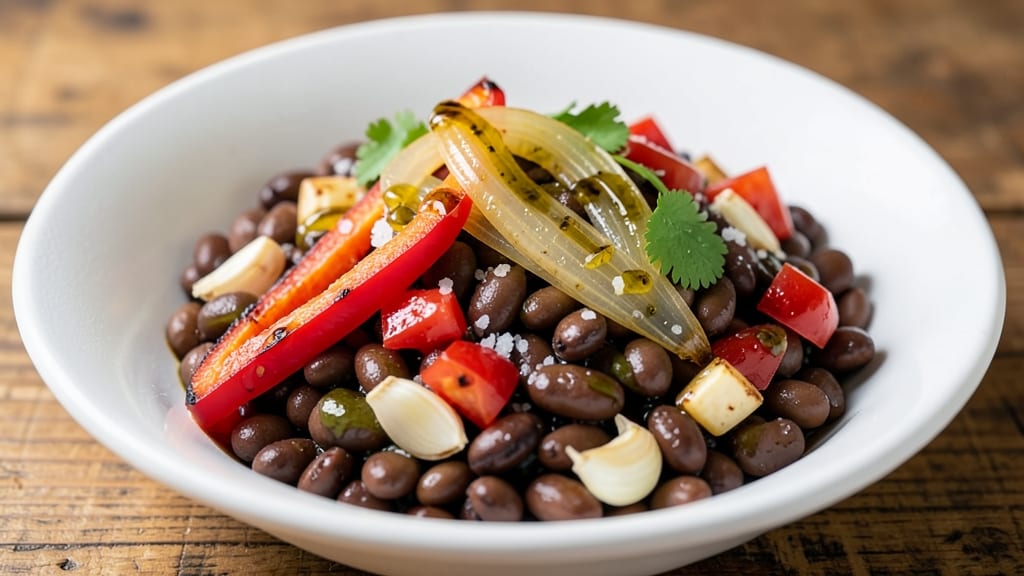
This Blue Zone black beans recipe transforms simple ingredients into a nutrient-dense powerhouse that aligns with the dietary secrets of the world's longest-lived communities. The slow-cooked method preserves fiber and antioxidants while developing deep, smoky flavors that make these beans irresistibly hearty.
My version skips processed ingredients entirely, focusing instead on whole foods that support longevity—just like the traditional dishes of Okinawa and Sardinia.
The secret lies in simmering black beans with garlic, cumin, and bay leaves until tender yet still vibrant, creating a dish packed with plant-based protein and complex carbohydrates.
Unlike canned versions, these beans maintain their natural texture and absorb the flavors of fresh tomatoes, onions, and bell peppers without losing their nutritional edge. The result is a complete meal that satisfies hunger while nourishing your body at a cellular level.
What sets this recipe apart is its adaptability—serve it as a standalone dish over brown rice or pair it with grilled vegetables for a balanced plate. The slow cooking process (about 90 minutes) allows flavors to meld naturally, eliminating the need for excessive salt or additives.
Each bite delivers a perfect balance of fiber, plant protein, and antioxidants that research shows may contribute to longevity and disease prevention.
Perfect for meal preppers or anyone seeking nutrient-dense meals, this recipe delivers restaurant-quality results with minimal effort. The beans become so tender they practically melt in your mouth while retaining their signature earthy flavor.
Whether you're cooking for health or simply craving a flavorful, wholesome meal, this blue zone-inspired dish delivers on both counts.
Ingredients for blue zone black bean
Whole foods that deliver plant-based protein, fiber, and antioxidants for longevity-focused nutrition.
| Ingredient | Amount | Notes |
|---|---|---|
| Dried Black Beans 🌱 | 1 ½ cups | Rinsed thoroughly before cooking |
| Extra-Virgin Olive Oil 🫒 | ¼ cup | High quality, fruity variety |
| Yellow Onion 🧅 | 1 whole | Diced into small pieces |
| Red Bell Pepper 🍅 | 1 whole | Diced, any color variety |
| Fresh Garlic Cloves 🧄 | 4 cloves | Minced for even distribution |
| Fresh Tomatoes 🍅 | 2 cups | Diced, Roma preferred |
| Ground Cumin 🌿 | 1 tbsp | Toasted for deeper flavor |
| Bay Leaves 🌿 | 2 whole | Fresh if available |
| Sea Salt 🧂 | 1 ½ tsp | Diamond Crystal preferred |
| Black Peppercorns 🌶️ | ½ tsp | Freshly ground preferred |
| Vegetable Broth 💧 | 2 cups | Low-sodium preferred |
| Fresh Cilantro 🌿 | ¼ cup | Chopped for garnish |
| Lime 🍋 | 1 whole | Juiced for brightness |
| Avocado Oil 🫒 | 1 tbsp | For finishing drizzle |
The black beans are the foundation—dried over canned ensures maximum fiber retention and nutrient density. Whole Foods or Trader Joe's carry high-quality dried beans; look for organic varieties when possible. The extra-virgin olive oil should be cold-pressed and have a peppery finish—California Olive Ranch is a reliable brand. Fresh garlic and bay leaves elevate the dish beyond basic flavors, so invest in quality. For the tomatoes, Roma varieties hold their shape better during slow cooking, but any ripe tomato works. The cumin should be toasted in a dry pan for 30 seconds before adding to deepen its earthy notes—Penzeys Spices offers excellent pre-toasted options.
No fresh cilantro? Fresh parsley at double the amount works equally well. Short on bay leaves? Dried thyme at one-third the quantity provides a similar aromatic depth. The vegetable broth can be substituted with water plus 1 tbsp soy sauce for umami depth. For a smokier profile, add 1 tsp smoked paprika or a halved chipotle pepper in adobo sauce. The lime juice is essential for brightness—Mexican limes from Latin markets have more tartness than Persian varieties. If you prefer less acidity, reduce to 1 tbsp juice instead of a full lime.
Store cooked beans in airtight containers for up to 5 days in the refrigerator. For longer storage, portion into freezer-safe bags with a thin layer of avocado oil to preserve freshness—keeps for 3 months. The flavors actually improve after the first day as the beans absorb more liquid and develop deeper complexity. Reheat gently on the stove with a splash of water to maintain texture. For meal prep, double the batch and freeze half immediately—perfect for quick, nutrient-dense lunches throughout the week.
Why You'll Love This Recipe
- No-Soak Needed: I’ll be real—soaking beans used to feel like a chore. These dried black beans simmer up so tender in just a few hours (or overnight) with nothing extra. Honestly, the flavor actually deepens without that step—no gummy textures, just rich, melt-in-your-mouth beans.
- Garlic-Oil Magic: That first hit of sizzling garlic in extra-virgin olive oil? Chef’s kiss. The onions caramelize just enough to balance the smoky bell pepper, while the olive oil turns the beans into something dangerously addictive. It’s the kind of dish where every bite makes you reach for seconds without even thinking.
- Meal Prep MVP: This recipe doubles as my lunchbox staple and potluck hero. Pack it cold for work—it stays fresh for days—or serve it warm at gatherings. (Yes, even on a Tuesday night.) The flavors only get better after a day or two, so it’s my go-to for easy, no-fuss meals.
- Budget-Friendly Powerhouse: Dried beans and a few pantry staples? That’s a meal for less than $2 per serving. I’ve fed my whole family (plus leftovers) with one batch—no guilt, no waste. It’s the kind of recipe that makes grocery day feel like a victory.
Step-by-step instructions for Blue Zone black beans
Transform simple ingredients into a nutrient-dense, fiber-rich dish inspired by longevity hotspots.
Prepare the Beans for Maximum Nutrient Absorption
Begin by rinsing the 1.5 cups dried black beans thoroughly under cold water in a colander. This removes surface impurities that could make the beans bitter during cooking. Transfer them to a large pot and cover with 8 cups of cold water—this generous ratio prevents the beans from absorbing too much liquid too quickly, which can lead to uneven cooking.
Add the 2 whole bay leaves and bring to a boil over high heat. Once boiling, immediately reduce to a gentle simmer—you should see small bubbles breaking the surface but no vigorous rolling. Simmer uncovered for 2 minutes, then drain the beans through a fine-mesh strainer, reserving the cooking liquid. This quick pre-soak helps break down some of the complex sugars and lectins, making the beans more digestible while preserving their fiber content. Discard the bay leaves after this step.
Build the Flavor Base with Aromatics and Spices
In a large, heavy-bottomed pot, heat the 0.25 cup extra-virgin olive oil over medium heat until shimmering. Add the 1 whole yellow onion, cut into small dice, and cook for 5-6 minutes until the edges become translucent and the onions release their sweet aroma. This slow cooking prevents burning and develops deeper flavor.
Add the 1 whole red bell pepper, also diced, and cook for another 4-5 minutes until softened. Stir in the 4 cloves fresh garlic cloves, minced, and the 1 tbsp ground cumin. Cook for 30 seconds until the garlic becomes fragrant—this ensures the spices meld rather than burn. The cumin should be toasted but not darken, as overcooking can make it bitter. Here's where the dish starts building its signature earthy, warm complexity.
Simmer the Beans with Vegetable Broth and Tomatoes
Return the drained beans to the pot and add the 2 cups vegetable broth and 2 cups fresh tomatoes, diced. Stir well to combine, ensuring the beans are fully submerged. Bring the mixture to a gentle boil, then immediately reduce heat to low and cover partially with a lid. Simmer for 45-50 minutes, stirring occasionally to prevent sticking.
After 30 minutes, check the liquid level—if it's reduced too much, add ½ cup hot water to maintain even cooking. The beans are done when they're tender but still hold their shape when pressed between fingers. Overcooking turns them mushy, which defeats the purpose of preserving their fiber structure. The broth should be absorbed but still slightly saucy, creating a thick, hearty consistency ideal for longevity-focused eating.
Finish with Bright Acidity and Garnish
Remove the pot from heat and stir in the 1.5 tsp sea salt and 0.5 tsp black peppercorns, freshly ground. The salt should be added at the end to preserve the beans' natural texture—adding it earlier can make them tough. Squeeze the juice from the 1 whole lime into the pot and stir gently. This acidity brightens the dish and balances the earthy flavors.
Finally, drizzle with 1 tbsp avocado oil and sprinkle with 0.25 cup fresh cilantro, chopped. The avocado oil adds a smooth finish while the cilantro provides freshness. Let the beans rest for 5 minutes before serving—this allows flavors to meld and the texture to set perfectly. Serve warm as a side dish or as part of a balanced meal, knowing you've created a dish packed with the fiber and nutrients associated with Blue Zone longevity.
Pro Tips For Making Blue Zone Black Bean
- SOAK BEANS OVERNIGHT: I learned this the hard way—rushing the soak with dried black beans leaves them tough and mealy. Use 4 cups water per 1 cup beans, cover, and let them sit 12+ hours. The longer they soak, the creamier they’ll turn, and you’ll skip the long simmer later.
- SWEAT ONIONS LOW AND SLOW: Crank the heat to medium-low for this step—high heat burns onions before they soften. Let them cook in olive oil for 10 minutes until translucent, stirring occasionally. This builds flavor without charring, which ruins the dish faster than you’d think.
- CHAR THE PEPPER STRIPS: Toss the red bell pepper strips in the same hot pan after onions, cut-side down. Let them blister for 2-3 minutes until slightly blackened—this adds smoky depth. Don’t rush it; the color fades fast, but the flavor stays.
- USE GARLIC LIKE A BOSS: After peppers, add minced garlic but pull the pan off heat for 30 seconds once it’s golden. Burning garlic turns bitter, and this recipe doesn’t need that. Smell it first—if it’s pungent, it’s ready.
Flavor customization for blue zone black bean
Smoky Longevity Twist
For a deeper smoky profile inspired by Sardinian traditions, add 1 tsp smoked paprika or ½ chipotle pepper in adobo sauce when sautéing the aromatics. The smoldering notes complement the beans' earthiness while adding a subtle heat that aligns with Blue Zone principles of balanced flavors.
I find this works especially well with dark leafy greens like kale or Swiss chard on the side. 🔥
Citrus Brightness Boost
Swap the lime for orange juice (about ¼ cup) to add a sweeter citrus note that pairs beautifully with the beans' natural sweetness. The vitamin C content also enhances iron absorption from the beans—perfect for plant-based meals.
For extra zing, add 1 tsp grated orange zest at the end for a Mediterranean-inspired twist.
Herbaceous Depth
Replace cilantro with fresh oregano (about 2 tbsp chopped) for a more Mediterranean flavor profile. Oregano contains antioxidants that complement the beans' nutritional benefits. If using dried oregano, reduce to 1 tsp and add it with the cumin during the sautéing stage for maximum flavor infusion.
Creamy Texture Option
For a richer texture, stir in ¼ cup coconut milk or 2 tbsp tahini at the end for a silky finish. Both options add healthy fats that support nutrient absorption while keeping the dish plant-based.
The coconut milk works particularly well with a sprinkle of toasted coconut flakes for added crunch.
Spicy Heat Level
For those who enjoy heat, add ½ tsp cayenne pepper or 1 tsp hot sauce (like Cholula) at the end. The capsaicin in cayenne can boost metabolism slightly, making this a great option for those focused on longevity and energy levels.
I recommend starting with ¼ tsp and adjusting to taste.
Nutty Crunch Finish
Top with 2 tbsp chopped walnuts or pumpkin seeds for added texture and healthy fats. These nuts provide omega-3 fatty acids that support heart health, aligning perfectly with Blue Zone dietary principles. Toast them lightly in a dry pan before adding for maximum flavor impact. 🌱
Nutrition facts
Frequently asked questions
Why use dried black beans instead of canned for this Blue Zone recipe?
Dried black beans retain more fiber and plant-based protein than canned versions, which aligns perfectly with Blue Zone dietary principles. The slow cooking process also preserves more nutrients since canned beans are often processed with added sodium. Plus, dried beans develop deeper, more complex flavors over time.
Can I make this recipe in a slow cooker for hands-off cooking?
Combine all ingredients (except lime and cilantro) in your slow cooker and cook on low for 6-7 hours or high for 3-4 hours. The longer cooking time enhances flavor development while keeping the beans tender. Just add the lime and fresh herbs at the end.
What makes this different from regular black beans recipes?
This version focuses on longevity nutrition—using whole foods, minimal processing, and traditional cooking methods like slow simmering. The absence of processed ingredients and emphasis on fresh herbs, citrus, and healthy fats mirrors Blue Zone diets where people live longest. The flavor profile is also more balanced and complex than standard recipes.
How can I make this recipe gluten-free?
The recipe is naturally gluten-free, but ensure your vegetable broth and spices are certified gluten-free. Some brands add wheat-based anti-caking agents. For extra safety, use a dedicated gluten-free broth or make your own from scratch. The dish remains perfectly hearty and satisfying without any gluten-containing ingredients.
Can I prep this ahead of time for meal prep?
Yes! This recipe actually tastes better the next day as flavors meld. Store in an airtight container in the fridge for up to 5 days or freeze for 3 months. Reheat gently on the stove with a splash of water to maintain texture. The beans become even more tender with time, making them perfect for quick, healthy meals.