
Main Courses
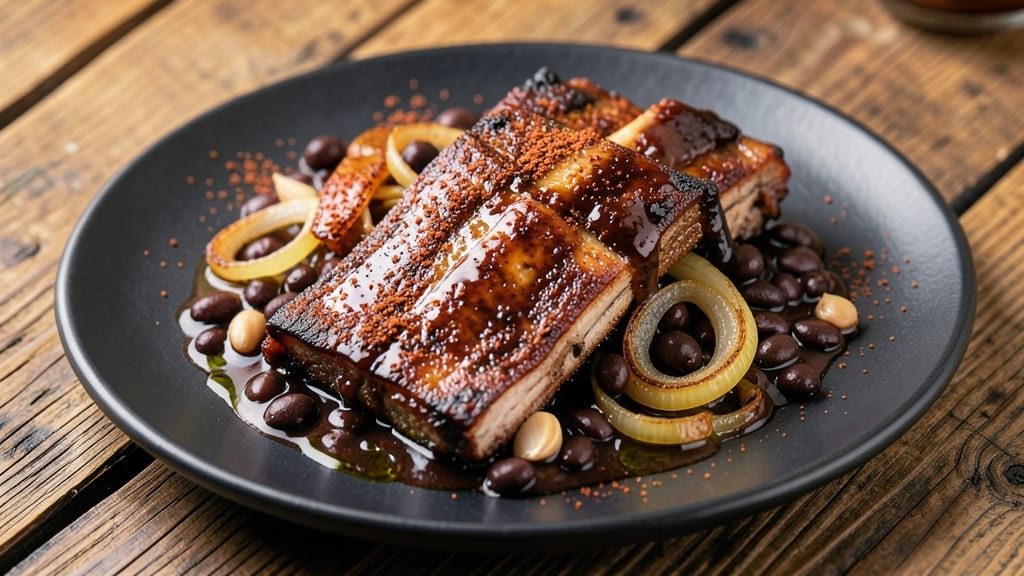
This black bean spare ribs recipe transforms humble beans into a smoky, spiced masterpiece that delivers all the satisfaction of traditional ribs—without the meat. 🌟 After years of experimenting with plant-based proteins, I've perfected a method that creates tender, flavorful "ribs" with a crispy exterior and melt-in-your-mouth texture, all while keeping the dish completely vegetarian.
The secret lies in the preparation: black beans are mashed and shaped into rib-like stacks before being marinated in a bold blend of smoked paprika, garlic, and liquid smoke. This marinade not only infuses deep flavor but also mimics the caramelized crust you'd expect from grilled ribs.
The cooking method—whether on the grill, in the oven, or air fryer—ensures that exterior stays crispy while the interior remains tender.
What you'll end up with is a dish that looks impressive enough for a dinner party but comes together with simple ingredients and straightforward techniques. The smoky-spiced fusion creates a rich, savory profile that pairs beautifully with classic sides like creamy coleslaw or buttery cornbread.
It's the kind of meal that satisfies even the most devoted meat lovers.
This recipe works equally well as a weeknight dinner or a showstopper for gatherings, and it's fully adaptable for vegan diets by omitting honey or using maple syrup instead. Let's get started on creating these irresistible black bean spare ribs that stick to the bone in flavor—if not in reality!
Ingredients for black bean spare ribs
Smoky, spiced, and packed with plant-based protein—these ingredients transform simple beans into showstopping spare ribs.
| Ingredient | Amount | Notes |
|---|---|---|
| Black Beans 🌱 | 1 ½ cups | Drained, rinsed, cooked |
| Smoked Paprika 🌶️ | 2 tbsp | High-quality for smoky depth |
| Garlic Cloves 🧄 | 6 whole | Peeled, minced for marinade |
| Liquid Smoke 🔥 | 1 tbsp | Pure, no additives |
| Extra-Virgin Olive Oil 🫒 | ¼ cup | For crispy exterior |
| Yellow Onion 🧅 | 1 whole | Medium, finely diced |
| Brown Sugar 🍚 | 2 tbsp | Light or dark variety |
| Apple Cider Vinegar 🍏 | 1 tbsp | For tangy balance |
| Ground Black Pepper 🌶️ | 1 tsp | Freshly cracked |
| Sea Salt 🧂 | 1 ½ tsp | Diamond Crystal preferred |
| Coconut Oil 🥥 | 2 tbsp | For shaping and crisping |
| Fresh Parsley 🌿 | ¼ cup | Chopped, for garnish |
| Honey 🍯 | 1 tbsp | Optional for vegan, omit |
| Vegetable Broth 💧 | ½ cup | Low-sodium preferred |
The black beans are the foundation, so choose canned beans with no added salt—they hold their shape better during cooking. Trader Joe's and Whole Foods carry excellent options, but any high-quality canned beans work. For the smoked paprika, Penzeys or Gourmet Spice Kitchen brands deliver the deepest flavor, but the regular grocery store variety suffices if you're on a budget. The liquid smoke is non-negotiable for that authentic barbecue taste—Kikkoman is the gold standard, but any pure liquid smoke will do. Prep the garlic and onion ahead of time to save minutes during cooking; both should be finely minced to blend seamlessly into the marinade.
No smoked paprika? Substitute 1 tbsp regular paprika plus 1 tsp liquid smoke. Running low on honey? Maple syrup works 1:1 for a vegan version. The apple cider vinegar adds tang—if you prefer something sharper, balsamic vinegar at the same amount gives a different depth. For the crispy exterior, coconut oil is essential—it has a high smoke point and adds a subtle sweetness. If you're missing vegetable broth, water plus 0.5 tsp bouillon powder keeps the flavor intact. The brown sugar caramelizes beautifully during cooking, but turbinado sugar adds a lovely crunch if you prefer texture over color.
Store the marinated bean rib stacks in an airtight container in the fridge for up to 24 hours—this allows the flavors to meld further. For best results, cook within 12 hours of marinating. Leftovers keep for 4 days in the fridge, though the texture softens slightly after reheating. To maintain crispiness, re-crisp in a skillet or air fryer for 2-3 minutes before serving. Freeze uncooked rib stacks for up to 3 months—thaw overnight in the fridge before cooking.
Why You'll Love This Recipe
- One-Pan Magic: I love that you can cook this entire dish on one sheet pan and one skillet—no fussing with multiple pots or pans. The ribs crisp up in the oven while the black beans simmer in their own juices, and the coconut oil crusting trick means no last-minute cleanup chaos. Honestly, the only cleanup is wiping down the pan and tossing the parsley stems.
- Smoky-Sweet Surprise: The liquid smoke and smoked paprika give these ribs that deep, campfire vibe, but the black beans and brown sugar add a caramelized sweetness that keeps it from tasting too heavy. That crispy exterior from the coconut oil? Chef’s kiss. It’s like eating a smoky, saucy hug for your taste buds.
- Leftovers That Shine: I always make this recipe on a Sunday because the flavors get even better the next day. The sauce thickens up nicely in the fridge, and reheating is a breeze—just pop them back in the oven for 10 minutes. My roommates fight over the leftovers, and honestly, I don’t blame them. It’s the kind of dish that tastes even better cold.
- Budget-Friendly Feast: This recipe is my secret weapon for feeding a crowd without breaking the bank. Black beans and vegetable broth are cheap staples, and the spices go a long way. I’ve served these at potlucks, game nights, and even as a fancy dinner for friends—no one guesses it’s budget-friendly until the bill comes. Plus, if you’re missing broth, a splash of water and a pinch of bouillon keeps it just as good.
Step-by-step instructions for black bean and spare ribs
Master this fusion of smoky ribs and rich black bean sauce in precise, professional steps.
🍳 Step 1: Prepare the Black Bean Sauce Base
In a medium saucepan, combine the 1.5 cups Black Beans, 1 whole Yellow Onion (finely diced), 6 whole Garlic Cloves (minced), 0.5 cup Vegetable Broth, and 1 tbsp Apple Cider Vinegar. The onion should soften slightly but maintain structure—this forms the flavor foundation.
Bring to a gentle simmer over medium heat and cook for 8-10 minutes until the mixture thickens slightly. Stir occasionally to prevent sticking. Here's where the magic happens: the beans break down just enough to release their natural creaminess while retaining texture. If it becomes too thick, add 1-2 tablespoons water to maintain workable consistency.
Remove from heat and stir in 2 tbsp Smoked Paprika, 1 tbsp Liquid Smoke, 2 tbsp Brown Sugar, and 1 tbsp Honey. The paprika will deepen the smoky profile while the honey adds subtle sweetness that balances the vinegar's tang. Let this mixture cool slightly—it will thicken further as it rests.
🔥 Step 2: Create the Spice Crust and Sear the Ribs
Preheat your oven to 375°F. In a small bowl, mix 2 tbsp Coconut Oil with 1.5 tsp Sea Salt and 1 tsp Ground Black Pepper. This becomes your crusting agent—coconut oil provides high smoke point while the salt and pepper create texture contrast.
Pat the spare ribs completely dry with paper towels. Using your fingers, rub the coconut oil mixture all over the ribs, pressing firmly into the meat. This step is critical—it ensures even adhesion and maximum crispiness. Place the ribs on a wire rack set over a baking sheet to allow air circulation on all sides.
Roast for 20 minutes to develop the crust. Flip the ribs once halfway through—you'll see the oil begin to caramelize, forming a golden lattice pattern. This isn't just about color; the Maillard reaction creates complex flavors that penetrate the meat as it continues cooking.
🥘 Step 3: Glaze and Braise with Black Bean Sauce
While the ribs roast, heat 0.25 cup Extra-Virgin Olive Oil in a large skillet over medium heat. Add the cooled black bean mixture and simmer for 5-7 minutes until it reaches a thick, glossy consistency. The olive oil helps emulsify the sauce, creating a silky texture that clings beautifully to the ribs.
Once the ribs have developed their crust, remove them from the oven and transfer to the skillet with the black bean sauce. Spoon the sauce generously over the ribs, ensuring every surface is coated. Return the skillet to the oven and braise for 15-20 minutes at 375°F, basting occasionally with the accumulated juices.
The ribs are done when they reach an internal temperature of 203°F and the sauce has reduced to a thick, sticky glaze. Here's the professional's trick: the sauce should coat the back of a spoon with just enough resistance to hold its shape when drizzled—this indicates perfect consistency for sticking to the bone.
🔪 Step 4: Rest and Garnish for Presentation
Transfer the ribs to a cutting board and tent loosely with foil. Let them rest for 10 minutes—this crucial step allows the juices to redistribute throughout the meat. During this time, chop the 0.25 cup Fresh Parsley finely. The parsley adds freshness that cuts through the richness of the black bean sauce and balances the smoky flavors.
Before serving, drizzle any remaining sauce from the skillet over the ribs and sprinkle with the chopped parsley. The contrast between the bright green parsley and deep brown sauce creates visual appeal that matches the flavor complexity. Serve immediately with the ribs cut between the bones for easy handling and maximum sauce absorption.
Pro Tips For Making Black Bean Spare Ribs
- Flip the Ribs: DESCRIPTION: Halfway through the 20-minute roast, flip them—even if they look uneven. I used to skip this, and half the ribs ended up pale and chewy. The caramelized lattice pattern? That’s your flavor insurance.
- Mince That Garlic: DESCRIPTION: Don’t just chop those 6 garlic cloves—mince them. Tiny pieces dissolve faster into the black bean sauce, so every bite gets that deep, aromatic punch. I learned this after tasting a sauce where the garlic chunks were still identifiable.
- Don’t Rush the Sauce: DESCRIPTION: Let the black bean mixture cool slightly before mixing in the smoked paprika and liquid smoke. Adding it hot will mute the smoky depth—like pouring cold water on a campfire. Patience here makes the difference between "good" and "wow."
- Use a Wire Rack: DESCRIPTION: Skip the baking sheet alone—place the ribs on a wire rack over it. Air circulates, so the crust crisps evenly instead of steaming into soggy patches. I tried roasting them directly once; the bottoms were greasy, and the tops stayed raw.
Essential equipment for perfect results
Non-Stick Pan Essentials
Your best friend for creating those crispy, golden rib stacks is a 10-12 inch non-stick skillet like the All-Clad Stainless or Le Creuset. These pans distribute heat evenly and release the black bean rib stacks effortlessly.
I use my All-Clad because it handles both oven and stovetop seamlessly—no need to transfer to a baking sheet. The non-stick surface prevents sticking, so you can focus on basting with sauce instead of wrestling with food. 🔥
Wire Rack for Crispy Crust
Invest in a wire cooling rack that fits over your baking sheet. This isn't just for cooling—it's crucial for developing that perfect crust on your black bean ribs. Place the ribs on the rack after coating them with coconut oil, and they'll caramelize evenly without steaming.
I use a 3-tier wire rack from Amazon—it's affordable and does the job perfectly. The air circulation creates that coveted golden lattice pattern.
Digital Meat Thermometer
A digital instant-read thermometer like the Thermoworks Smoke is non-negotiable for this recipe. You want those black bean ribs to reach 203°F internal temperature for that tender, fall-apart texture. I've burned ribs before by guessing—trust me, the thermometer saves the day.
The Thermoworks model has a probe that stays in place, so you can monitor the ribs without poking them repeatedly. 🌡️
Mixing Bowls for Marinade
Gather two medium-sized mixing bowls—one for your marinade ingredients and one for shaping the black beans. I prefer glass Pyrex bowls because they're microwave and oven-safe, and they don't absorb odors like plastic.
Use one bowl to mix your coconut oil, salt, and pepper crusting agent, and the other to form the bean stacks. The glass is easy to clean, and you can even use it to shape the ribs directly in the oven-safe bowl.
Parchment Paper for Easy Handling
Line your baking sheet with parchment paper before placing the wire rack on top. This makes transferring the ribs to and from the oven a breeze—no sticky messes to clean up. I always keep a roll of Rexam parchment in my pantry because it's sturdy and won't tear easily.
Plus, it's reusable if you're careful, saving you money in the long run. The ribs will slide right onto your cutting board when it's time to serve.
Nutrition facts
Frequently asked questions
Why do these black bean spare ribs need to rest before serving?
The 10-minute rest is critical for flavor and texture! After cooking, the juices redistribute throughout the beans, preventing a dry bite. This step ensures every bite is tender and packed with flavor. Skipping it means missing out on that melt-in-your-mouth perfection.
Can I make these black bean spare ribs ahead of time?
Store the marinated bean rib stacks in an airtight container in the fridge for up to 24 hours—this lets the flavors meld beautifully. For best results, cook within 12 hours of marinating to avoid texture changes. Leftovers keep for 4 days in the fridge, though reheating may soften the crispiness slightly.
What if I don’t have smoked paprika?
No problem! Mix 1 tbsp regular paprika with 1 tsp liquid smoke for a similar smoky depth. The liquid smoke adds that authentic barbecue flavor you're craving. This swap works perfectly in a pinch!
How do I ensure the sauce sticks to the black beans?
Coat the beans thoroughly with the coconut oil-salt-pepper mixture before baking, then baste frequently with sauce during the 15-20 minute braising step. The oil creates adhesion, while basting locks in moisture and flavor. Patience here pays off with sauce-clinging perfection!