
Side Dishes
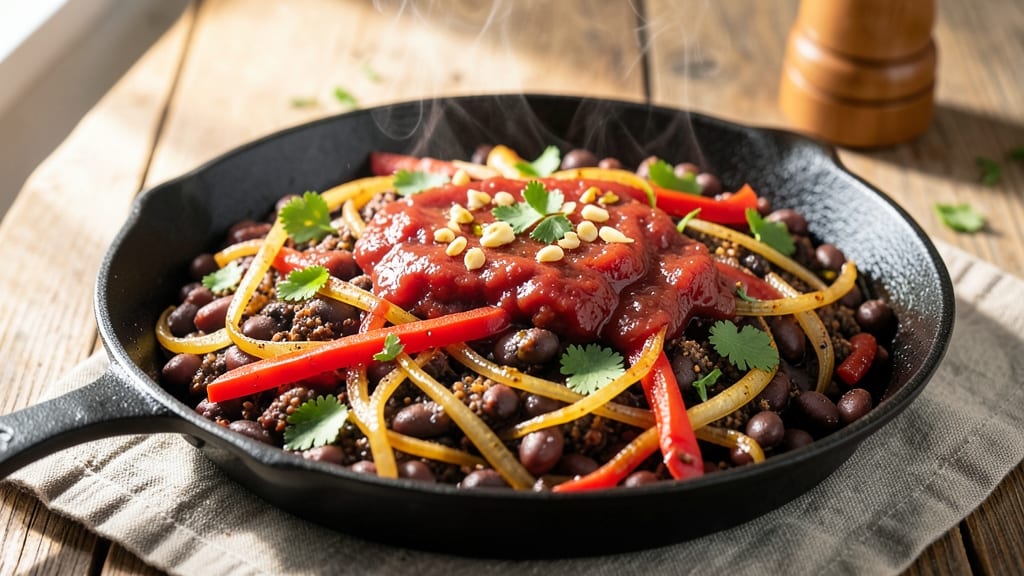
This black bean picadillo skillet recipe transforms humble ingredients into a vibrant, one-pan masterpiece that’s packed with smoky cumin, bright tomatoes, and tender black beans.
The secret lies in slow-sautéing onions and peppers until deeply caramelized, then layering everything in a single skillet for a rich, simmered harmony that’s both hearty and elegant. I developed this recipe after craving something substantial yet effortless—something that delivers restaurant-quality depth without requiring multiple dishes or complicated techniques.
The beauty of this dish is its versatility—it works as a standalone vegetarian meal, a satisfying side for grilled proteins, or a filling for tacos and bowls.
The spices (cumin, oregano, and a pinch of smoked paprika) create layers of warmth, while the tomatoes add a bright acidity that cuts through the richness.
The black beans hold their shape beautifully, absorbing all the flavors without turning mushy, and the optional toppings—like avocado, cilantro, or crumbled cheese—let you customize it to your taste.
What you’ll end up with is a deeply aromatic, slightly spicy, and utterly satisfying skillet dish that’s ready in under 45 minutes—no chopping ahead required.
The edges of the skillet will be slightly crispy from the browning, while the center remains tender and saucy, with tomatoes breaking down into a luscious, jam-like consistency. It’s the kind of dish that tastes even better the next day, making it perfect for meal prep or leftovers.
Serve it over fluffy rice, nestled in warm tortillas, or straight from the skillet with a sprinkle of fresh herbs. This recipe proves that vegetarian meals can be bold, flavorful, and deeply comforting—without any compromise. Let’s get cooking.
Ingredients for black bean picadillo skillet
Transform humble pantry staples into a deeply aromatic, one-pan vegetarian masterpiece.
| Ingredient | Amount | Notes |
|---|---|---|
| Black Beans 🫘 | 1 ½ cups | Cooked or canned, drained |
| Extra-Virgin Olive Oil 🫒 | ½ cup | High quality, fruity |
| Yellow Onion 🧅 | 1 whole | Thinly sliced, caramelized |
| Red Bell Pepper 🌶️ | 1 whole | Diced, seeds removed |
| Canned Crushed Tomatoes 🍅 | 15 oz | San Marzano preferred |
| Garlic Cloves 🧄 | 4 cloves | Minced, fresh preferred |
| Ground Cumin 🌿 | 1 ½ tbsp | Toasted for depth |
| Smoked Paprika 🌶️ | 1 tsp | For smoky aroma |
| Dried Oregano 🍃 | 1 tsp | Mexican oregano ideal |
| Salt 🧂 | 1 ½ tsp | Diamond Crystal preferred |
| Ground Black Pepper 🌶️ | ½ tsp | Freshly ground |
| Fresh Cilantro 🌿 | ¼ cup | Chopped, for garnish |
| Lime 🍋 | 1 whole | Juiced, for brightness |
| Avocado 🥑 | 1 whole | Sliced, optional topping |
The foundation starts with quality ingredients—San Marzano crushed tomatoes and Mexican oregano elevate the dish beyond basic flavors. For the black beans, canned low-sodium varieties work best, but if using dried, soak overnight for optimal texture. The yellow onion should be caramelized until golden-brown, a process that takes about 15 minutes and adds incredible depth. I recommend using Penzeys brand spices for the cumin and paprika—their toasted cumin has a distinct warmth that’s worth the investment. Fresh garlic cloves are non-negotiable here; pre-minced garlic loses its punch quickly.
No San Marzano tomatoes? Any high-quality canned tomatoes will work—just look for brands without added salt. Running short on cilantro? Fresh parsley at half the amount provides a similar freshness, though with a milder flavor. The avocado is truly optional, but if you love creamy textures, add it just before serving to prevent browning. For extra richness, stir in 2 tablespoons of nutritional yeast at the end—it mimics the umami of cheese without any dairy. The lime juice should be freshly squeezed; bottled lime juice lacks the bright acidity needed to balance the dish.
This skillet dish reheats beautifully—even better the next day as flavors meld further. Store leftovers in an airtight container in the fridge for up to 5 days, or freeze portions for 3 months. For meal prep, I recommend making a double batch—portion into containers with rice on the side for easy grab-and-go lunches. The flavors intensify when reheated gently in a skillet with a splash of water to deglaze any stuck-on bits. Serve with warm tortillas or over fluffy jasmine rice for a complete meal.
Why You'll Love This Recipe
- One-Pan Magic: I swear by this recipe because it’s all in one skillet—no chopping boards to wash, no extra pots. Just sauté the onion and bell pepper in olive oil until they’re soft and sweet, add the beans and tomatoes, and let it simmer. Honestly, my weeknights thank me every time.
- Deep, Rich Layers: The crushed tomatoes and black beans create this perfect balance—sweet from the peppers, earthy from the beans, and bright from a splash of lime at the end. Between us, the olive oil caramelizes those onions until they’re practically melting, and that’s where the magic happens.
- Meal Prep MVP: This keeps beautifully for days, so I make a big batch on Sundays. It’s great cold in wraps for lunches or reheated with rice for dinner—even my picky-eating partner asks for seconds. (Yes, even on a Tuesday night.)
- Budget-Friendly Powerhouse: Black beans and canned tomatoes stretch this dish into a full meal without breaking the bank. I’ve fed four people for under $10, and the leftovers taste just as good the next day. Not the prettiest, but the taste makes up for it every time.
Step-by-step instructions for black bean picadillo skillet
This one-pan method builds rich, smoky flavors through precise timing and layering.
Sauté Aromatics Until Deeply Caramelized
Heat the 0.5 cup extra-virgin olive oil in a large skillet over medium-low heat. Add the thinly sliced yellow onion and cook for 10-12 minutes until translucent and beginning to caramelize at the edges. This slow cooking develops sweetness that forms the flavor base.
Add the diced red bell pepper and continue cooking for another 5-6 minutes until the peppers soften and the mixture releases its natural juices. The vegetables should be tender but not mushy—this ensures they won't disintegrate during the longer cooking ahead. Here's the thing—if the onions start to brown too quickly, reduce the heat slightly to prevent burning.
Toast Spices and Add Tomatoes
Increase heat to medium and add the 4 minced garlic cloves, cooking for 30 seconds until fragrant. Immediately stir in the 1.5 tablespoons ground cumin, 1 teaspoon smoked paprika, and 1 teaspoon dried oregano, toasting for 1 minute until the spices release their aromatic oils and fill your kitchen with earthy warmth.
Pour in the 15 ounces canned crushed tomatoes and stir to combine. Season with 1.5 teaspoons salt and 0.5 teaspoon ground black pepper. Bring to a gentle simmer, then reduce heat to low and let cook uncovered for 15 minutes to allow the flavors to meld and the sauce to thicken slightly. This step is where the magic happens—let the tomatoes break down naturally without stirring constantly.
Incorporate Black Beans and Simmer
Add the 1.5 cups black beans to the skillet and stir gently to coat them in the tomato-spice mixture. Increase heat to medium-low and simmer uncovered for 10-12 minutes until the beans are heated through and the sauce has thickened to a chunky consistency. You'll know it's ready when the beans are tender but still hold their shape, and the sauce clings to them rather than pooling at the bottom.
Taste and adjust seasoning if needed—this is your chance to perfect the balance between smoky, spicy, and tangy. The beans should be flavorful but not overwhelmingly salty. If the mixture seems too thick, add 2-3 tablespoons water to loosen it slightly while maintaining the desired texture.
Finish with Fresh Herbs and Brightness
Remove the skillet from heat and stir in the 0.25 cup chopped fresh cilantro and juice of the whole lime. The acidity from the lime brightens all the deep, earthy flavors while the cilantro adds a fresh herbal note. Let the mixture sit off the heat for 2-3 minutes to allow the lime juice to fully integrate and the flavors to meld completely.
Serve immediately, garnished with slices of the whole avocado if using. The avocado adds a creamy contrast that balances the hearty, spiced bean mixture. This dish tastes best fresh from the skillet when the flavors are at their peak intensity—don't let it sit too long before serving.
Pro Tips For Making Black Bean Picadillo Skillet
- Char the Onions Properly: I learned this the hard way—picadillo needs deep, caramelized onions for that rich base. Cook them over medium-low heat for 15-20 minutes, stirring often, until they’re dark golden and almost jammy. If you rush this, you’ll end up with a dish that tastes more like raw onion than anything else.
- Drain and Rinse Beans: Black beans straight from the can are fine, but if they’re still briny or watery, drain them and give them a quick rinse. This prevents a muddy, waterlogged texture in your skillet. Pro move: Use a colander and shake vigorously—no need to soak, just refresh.
- Sauté Peppers After Onions: Add the red bell pepper only after the onions have softened and started caramelizing. This ensures it cooks evenly without turning rubbery or releasing too much moisture too soon. Cut them into ½-inch strips for consistent cooking—no tiny bits that’ll turn to mush.
- Simmer Tomatoes Low and Slow: Once the crushed tomatoes hit the skillet, drop the heat to low and let it bubble gently for at least 10 minutes. Higher heat makes them split and turn grainy, which ruins the creamy texture. If you’re impatient, cover it and walk away—this is where flavor builds.
Storing and reheating this black bean picadillo skillet
Fridge Storage Essentials
Let your black bean picadillo cool completely before transferring to an airtight container—I use glass Pyrex with snap-on lids for best results. Store in the fridge at 40°F or below for up to 5 days, where the flavors actually deepen as the spices meld further.
The sauce will thicken slightly overnight, creating a more cohesive texture. Honestly, this is one of those rare dishes that tastes even better the next day! 💫
Freezer-Friendly Tips
For longer storage, portion into quart-sized freezer bags (leave 1 inch headspace for expansion) and freeze for up to 3 months. Thaw overnight in the fridge—never microwave directly from frozen, as it can make the beans mushy.
When reheating, add 2 tablespoons water to the skillet to prevent sticking and restore that perfect chunky consistency.
Skillet Reheating Method
My preferred way to revive leftovers is by reheating in the same skillet over medium-low heat for 8-10 minutes. Add 2-3 tablespoons water to deglaze any stuck-on bits and keep the sauce from drying out.
Stir occasionally and adjust seasoning—you may need a pinch more salt or lime juice to brighten flavors after storage. The skillet's natural heat distribution ensures even warming without breaking down the black beans.
Microwave Shortcut
For quick lunches, transfer a portion to a microwave-safe dish, cover loosely with a damp paper towel, and heat on 70% power for 2-3 minutes. Stir halfway through to distribute heat evenly.
If it looks dry, add 1 tablespoon water and let it steam for another 30 seconds. This method works in a pinch but lacks the depth of skillet reheating.
Meal Prep Strategy
Double the recipe and store half for later—this skillet dish reheats beautifully for 3-4 days of effortless lunches. I like to portion it with jasmine rice in separate containers for easy grab-and-go meals.
The rice absorbs any extra sauce, making each bite hearty and satisfying. Pro tip: Add a squeeze of lime before serving to revive the flavors instantly. ✨
Nutrition facts
Frequently asked questions
Can I use dried black beans instead of canned?
Yes, but you'll need to soak them overnight first—this ensures they cook evenly and stay tender. For 1.5 cups cooked beans, use 1 cup dried beans (about 200g). After soaking, drain and rinse them well before adding to the skillet. The cooking time will increase by about 15-20 minutes total, so adjust the simmering step accordingly.
What's the best way to prevent the onions from burning?
Keep the heat at medium-low and stir occasionally—especially during the first 10 minutes of caramelizing. If the onions start browning too quickly, reduce the heat further or cover the skillet temporarily. The goal is slow, even cooking that develops sweetness without charring. A 10-inch cast iron skillet works best for even heat distribution.
Can I make this dish in a slow cooker?
Sauté the onions and peppers first, then transfer everything to the slow cooker on low heat for 3-4 hours. The spices and tomatoes will meld beautifully, and the beans will absorb all the flavors. Just add the lime juice and cilantro at the very end. For extra richness, stir in 2 tablespoons tomato paste with the spices at the start.
How spicy is this recipe?
This dish has a mild, earthy warmth from the cumin and smoked paprika, but it's not spicy. For extra heat, add ½ teaspoon cayenne pepper with the spices. If you prefer no spice at all, simply omit the smoked paprika and reduce the cumin to 1 tablespoon. The lime juice adds brightness without heat.
What are the best toppings for serving?
Fresh avocado slices, crumbled cotija cheese, pickled red onions, or sour cream all pair beautifully. For extra crunch, sprinkle with toasted pumpkin seeds or crumbled tortilla chips. If you love fresh herbs, try chopped scallions or basil instead of cilantro for a different flavor profile.