
Soups & Stews
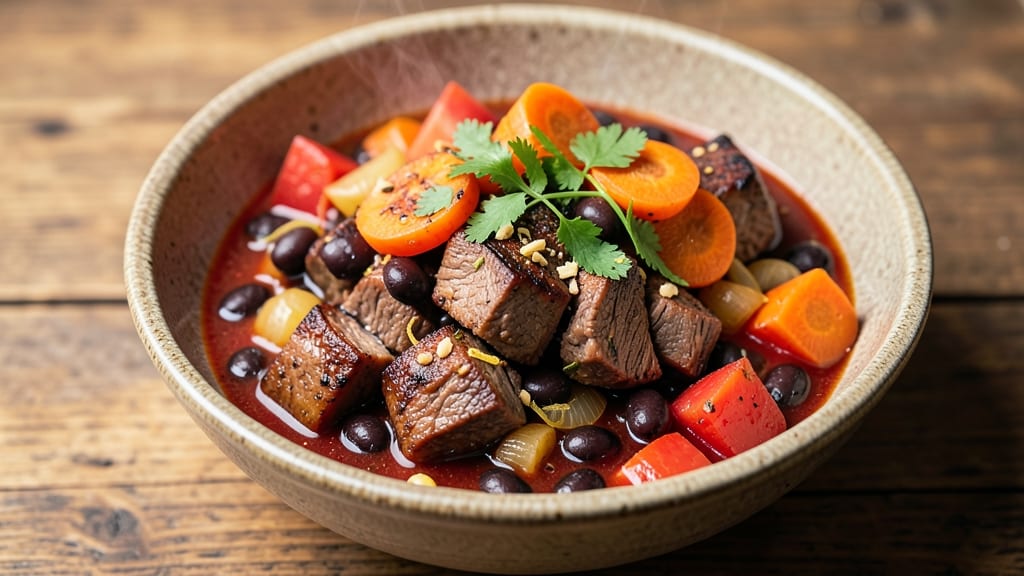
This beef and black bean stew recipe transforms tough cuts of beef into tender, melt-in-your-mouth perfection through slow simmering. The secret lies in layering flavors—smoky spices, rich tomatoes, and hearty beans—that deepen overnight, creating a dish that’s both comforting and nutritious.
Professional cooks know that patience pays off, and this recipe delivers restaurant-quality results with minimal effort.
The foundation starts with browning the beef for deep flavor, followed by a blend of aromatic spices and vegetables that build complexity. Black beans add protein and texture, while tomatoes and broth create a velvety base.
The beauty of this stew is its versatility—it’s hearty enough for a main dish but balanced enough to satisfy nutritional goals.
By the time it finishes simmering, you’ll have a rich, aromatic stew with tender beef and beans that soak up every flavorful drop. The aroma alone will have everyone gathering at the table, and the taste is even better.
Serve it with crusty bread or over rice to soak up the delicious broth.
This recipe works equally well in a slow cooker or on the stovetop, making it perfect for busy weeknights or meal prep. The flavors only get better after a few hours, so it’s ideal for making ahead.
Let’s get started on creating this comforting, flavorful dish that’s sure to become a family favorite.
Ingredients for beef and black bean stew
Pantry staples meet slow-cooked magic for this hearty beef and black bean stew.
| Ingredient | Amount | Notes |
|---|---|---|
| Chuck Roast 🥩 | 2 lb | Cut into 1-inch cubes |
| Black Beans 🫘 | 2 cups | Drained and rinsed |
| Diced Tomatoes 🍅 | 2 cups | San Marzano preferred |
| Yellow Onion 🧅 | 1 whole | Chopped into half-moons |
| Carrots 🥕 | 3 medium | Peeled and chopped into chunks |
| Garlic Cloves 🧄 | 4 cloves | Minced for aroma |
| Beef Broth 💧 | 4 cups | Low-sodium preferred |
| Tomato Paste 🍅 | 2 tbsp | For rich depth |
| Ground Cumin 🌿 | 1 tbsp | Toasted for warmth |
| Smoked Paprika 🌶️ | 1 tbsp | For smoky flavor |
| Bay Leaves 🍃 | 2 whole | Dried for infusion |
| Olive Oil 🫒 | 2 tbsp | Extra-virgin for richness |
| Salt 🧂 | 1 ½ tsp | Kosher or sea salt |
| Black Pepper 🌶️ | ½ tsp | Freshly ground |
The chuck roast is the star—look for good marbling at Costco or your butcher shop. Pre-cut cubes save time, but if you're buying a whole roast, ask for it to be cubed for you. Black beans? Drained and rinsed is key—no one wants mushy beans. San Marzano tomatoes are worth the splurge for that sweet, rich flavor, but regular diced tomatoes work in a pinch. Carrots can be baby or full-size—just chop them evenly so they cook at the same rate.
No smoked paprika? Regular paprika plus a pinch of cayenne mimics that smoky depth. Short on beef broth? Water plus a bouillon cube gets you close, but the flavor won't be as complex. The tomato paste is non-negotiable here—it's what gives the stew that professional, restaurant-quality richness. Trader Joe's has the best-priced squeeze tubes, and they keep forever. Garlic? Fresh is ideal, but if you're using dried, double the amount—it's way more concentrated.
This stew tastes even better the next day, so make a double batch if you can. Keeps 5 days in the fridge or 3 months frozen. I always portion it into containers for easy lunches—just reheat with a splash of water or broth. The flavors meld beautifully overnight, so if you can, let it sit for at least 6 hours before serving. Trust me, it's worth the wait.
Why You'll Love This Recipe
- One-Pot Magic: I swear by this recipe when I’m too tired to wash pots. Chuck roast, onions, and carrots all simmer together—no extra bowls, no fuss. Just dump, stir, and let it work its flavor while you do something else.
- Rich & Earthy: The black beans soak up the beef’s deep flavor, and the diced tomatoes add a bright pop that cuts through the richness. Honestly, the first bite makes me forget it’s a weeknight meal.
- Meal Prep MVP: I make a big batch on Sundays and portion it out for lunches all week. The stew only gets better as the flavors meld—my coworkers actually ask for seconds, and I’m not even trying.
- Budget-Friendly Feast: A chuck roast stretches to feed four for under $15, and the black beans add protein without breaking the bank. Leftovers? They’re my secret weapon for lazy days when I don’t want to cook.
Step-by-step instructions for beef and black bean stew
Here's how to build rich, layered flavors that get better overnight.
Sear the Chuck Roast for Deep Flavor
Heat the 2 tablespoons olive oil in a large Dutch oven over medium-high heat until shimmering. Pat the 2 lb chuck roast dry with paper towels and cut it into 1-inch cubes. Working in batches, add the beef to the pot and sear for 3-4 minutes per side until deeply browned. This step creates the Maillard reaction, which builds that intense beefy flavor we want in our stew.
Don't overcrowd the pot—sear in batches if needed. You'll know it's ready when the meat releases easily from the pan and has a rich, caramelized crust. Transfer the seared beef to a plate and set aside. If the oil starts smoking, reduce the heat slightly to prevent burning.
Sauté Aromatics Until Fragrant
In the same Dutch oven, add the 1 whole yellow onion chopped into half-moons and the 3 medium carrots chopped into chunks. Cook for 5-6 minutes until the onions soften and begin to caramelize. This is where the sweetness develops—don't rush this step.
Add the 4 cloves garlic cloves minced and the 2 tablespoons tomato paste, stirring constantly for 1 minute until the raw garlic smell disappears. The tomato paste will darken slightly and create a rich foundation for our sauce. Sprinkle in the 1 tablespoon ground cumin and 1 tablespoon smoked paprika, stirring to coat everything evenly with these warm spices.
Build the Stew Foundation
Pour in the 4 cups beef broth and scrape up any browned bits from the bottom of the pot with a wooden spoon. Add the 2 cups diced tomatoes, 2 cups black beans drained and rinsed, 2 whole bay leaves, 1.5 teaspoons salt, and 0.5 teaspoon black pepper. Stir everything together until well combined and bring to a gentle boil.
Once boiling, reduce the heat to low and cover the pot with a lid. Let it simmer for 2 hours, stirring occasionally. You want the beef to become fork-tender and the flavors to meld together. The stew should reduce slightly but still have enough liquid to coat the ingredients—this is perfect for thick, hearty stew.
Finish and Rest for Maximum Flavor
After 2 hours, remove the 2 whole bay leaves and check the seasoning. Taste the stew and adjust with more salt or pepper if needed. The beef should be tender enough to pull apart with a fork but still hold its shape. If the stew is too thick, add a splash of water or broth to reach your desired consistency.
Let the stew rest off the heat for 15 minutes before serving. This resting period allows the flavors to settle and the meat to absorb all that delicious liquid. Serve it hot with crusty bread or over rice, and you'll have a stew that tastes even better the next day.
Pro Tips For Making Beef And Black Bean Stew
- SEAR THE CHUCK FIRST: Chuck roast needs that crust to hold up in hours of simmering. Heat your pot until a drop of water sizzles violently, then pat the meat very dry—even the edges—and brown it in batches. I used to rush this, and the stew always tasted like it needed more depth.
- SOAK BEANS OVERNIGHT: Drain and rinse your black beans after soaking, but don’t skip the soak—even canned beans benefit. Cold water overnight (8+ hours) makes them tender without turning the stew mushy. I learned this the hard way when my stew turned into a thick paste.
- SIMMER LOW AND COVERED: After browning the meat, add just enough liquid to come halfway up the beef, then cover and cook at a bare simmer. Too much heat = tough meat; too little = uneven cooking. I now set my stove to the lowest possible heat that keeps tiny bubbles breaking the surface.
- ADD TOMATOES LATE: Toss diced tomatoes in at the 1.5-hour mark—they’ll break down into a sauce if added earlier. If you’re short on time, crush them slightly first, but don’t overdo it. My grandmother swore by this, and the texture stays just right.
Essential equipment for this dish
Dutch Oven Essentials
A 5-7 quart Dutch oven is my go-to for this stew—it's deep enough to handle the beef cubes and broth while allowing room for browning. I love the Lodge cast iron brand for its even heat distribution and durability.
If you don't have cast iron, a stainless steel Dutch oven from All-Clad works beautifully too. Just remember, Dutch ovens conduct heat differently than regular pots, so always use medium-low heat after searing to prevent burning. 🔥
Slow Cooker Adaptations
For hands-off cooking, a 6-quart slow cooker simplifies the process. I recommend the Hamilton Beach Programmable model for its temperature control options. Brown the beef separately in a skillet, then transfer everything to the slow cooker and cook on low for 8 hours or high for 4-5 hours.
The slow cooker maintains a consistent temperature, which is perfect for tenderizing the beef without monitoring. ⏰
Knife Skills Matter
Invest in a sharp chef's knife (I use Wüsthof) and a cutting board for precise chopping. The yellow onion should be cut into ½-inch half-moons for even cooking, while the carrots should be ¼-inch chunks.
A mandoline speeds up prep if you're making this stew frequently. Sharp knives make chopping safer and more efficient—never dull your blades! 💡
Measuring Tools
Accurate measurements are key, so use a stainless steel measuring spoons set for spices and a digital kitchen scale for broth (4 cups = ~946g). For beans, a 1-cup dry measure ensures proper ratios.
I keep my OXO Good Grips tools within reach—they're durable and easy to read. Precise measurements guarantee balanced flavors in every bite. ✨
Thermometer for Perfection
A meat thermometer ensures the beef reaches 195°F for fork-tender results. I recommend the ThermoWorks Thermapen ONE for its instant-read accuracy. Insert it into the thickest piece of beef during the final 30 minutes of cooking.
This prevents overcooking while ensuring the meat is perfectly tender. No more guessing—just perfect results every time. 🌡️
Nutrition facts
Frequently asked questions
Can I use ground beef instead of chuck roast?
Ground beef works in a pinch, but chuck roast gives the stew a richer, more tender texture. If substituting, use 1.5 lbs ground beef (80/20 fat ratio) and brown it thoroughly to develop deep flavor. The cooking time will be shorter (1 hour instead of 2 hours), but you'll lose that melt-in-your-mouth quality from slow-cooked beef.
How can I make this stew spicier?
Add ½ teaspoon cayenne pepper or 1 teaspoon chipotle powder when sautéing the aromatics. For heat lovers, stir in 1 diced jalapeño with the tomatoes. Remember, spices build flavor—start with half the amount and adjust to taste. The slow simmer lets heat develop gradually for balanced spice.
What's the best way to reheat leftovers?
Gently reheat on the stovetop over low heat with 2 tablespoons water or broth to prevent drying. Avoid microwaving—it creates a rubbery texture. For extra richness, add a splash of beef broth when reheating. The stew tastes even better the next day as flavors meld further.
Can I make this vegetarian?
Swap the beef for 1 lb extra-firm tofu (pressed and cubed) or 1 lb mushrooms (portobello or cremini). Increase the cooking time to 30 minutes and add 1 teaspoon soy sauce for umami depth. The black beans will still provide hearty texture, but the flavor profile shifts to earthy rather than beefy.
Why did my stew turn out too thick?
This happens when the liquid reduces too much during simmering. Thin with ½ cup water or broth while reheating. For future batches, keep the lid slightly ajar during the last 30 minutes of cooking to control reduction. The ideal consistency coats a spoon but leaves visible liquid.