
Soups & Stews
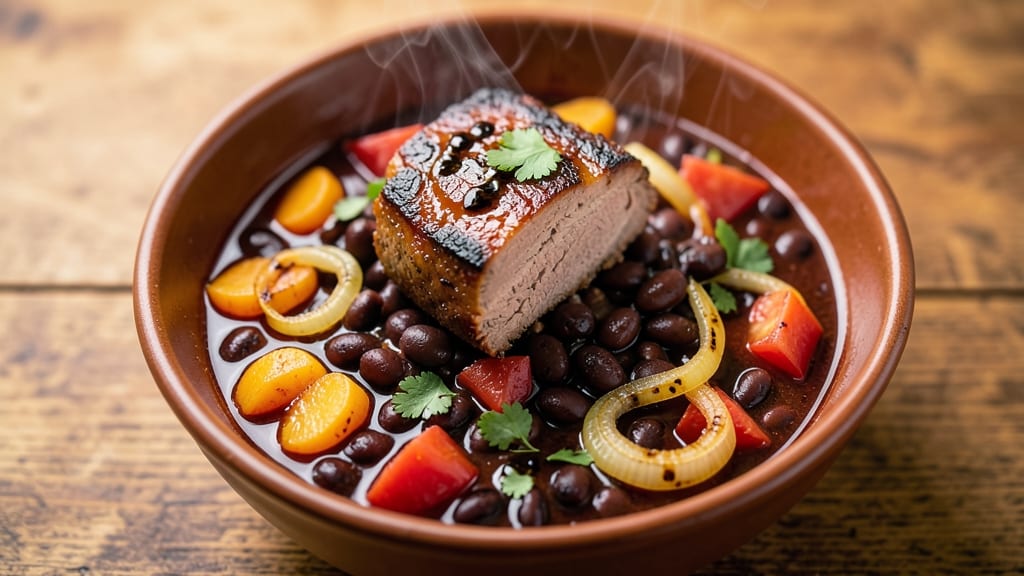
This beef and black bean soup recipe delivers restaurant-quality depth with just a few simple techniques—deep-roasting spices for complex flavor and slow simmering for tender beef.
The key lies in blooming whole spices in hot oil before adding liquids, which unlocks their aromatic potential and creates layers of warmth that linger long after the first bite.
What sets this recipe apart is the balance of textures and flavors: tender beef chunks, hearty black beans, and vegetables that soften just enough to soothe while maintaining structure.
The deep-roasted spices—cumin, coriander, and smoked paprika—infuse the broth with earthy, slightly smoky notes that pair perfectly with the natural richness of the beef and beans.
By the time it's finished, you'll have a soup that's rich yet not heavy, satisfying yet not greasy—a perfect marriage of pantry staples and professional techniques. The aroma alone will have everyone gathering around the table, and the first spoonful delivers on that promise of deep, comforting flavor.
This recipe works equally well as a weeknight dinner or a make-ahead meal for busy days. The flavors actually improve as it sits, making it ideal for meal prep. Here's how to create it from scratch.
Ingredients for beef and black bean soup
Pantry staples and a few key ingredients unlock restaurant-quality beef and black bean soup.
| Ingredient | Amount | Notes |
|---|---|---|
| Chuck Roast 🥩 | 1 ½ lb | Cut into 1-inch cubes |
| Black Beans 🌿 | 2 cups | Cooked or canned, drained |
| Carrots 🥕 | 3 medium | Peeled, cut into chunks |
| Yellow Onion 🧅 | 1 whole | Diced, medium size |
| Garlic Cloves 🧄 | 4 cloves | Minced, fresh preferred |
| Tomato Paste 🍅 | ½ cup | High-quality, no sugar added |
| Beef Broth 💧 | 4 cups | Low-sodium preferred |
| Cumin Seeds 🌶️ | 1 tbsp | Toasted for depth |
| Ground Cumin 🌶️ | 1 tsp | For extra warmth |
| Ground Coriander 🌿 | 1 tsp | Freshly ground preferred |
| Smoked Paprika 🌶️ | 1 tsp | For smoky depth |
| Bay Leaves 🍃 | 2 whole | Fresh or dried |
| Olive Oil 🫒 | 2 tbsp | Extra-virgin for roasting |
| Salt 🧂 | 1 ½ tsp | Kosher or sea salt |
| Black Pepper 🌶️ | ½ tsp | Freshly ground preferred |
The chuck roast is your flavor anchor—look for good marbling at Whole Foods or your local butcher. Pre-cut cubes save time, but if buying whole, trim excess fat and cube yourself. Costco often has great prices for larger roasts. For the spices, toast the cumin seeds in a dry pan until fragrant (about 30 seconds)—this deepens their flavor dramatically. The smoked paprika should be labeled 'smoked' for that authentic depth, not regular paprika. Fresh bay leaves add a subtle floral note, but dried work in a pinch if you're in a hurry.
No cumin seeds? Ground cumin at double the amount works, though you'll miss that nutty toasted note. Short on smoked paprika? Regular paprika plus a pinch of liquid smoke gets you close. Using canned beans? Rinse them well to remove excess sodium, then drain thoroughly. The tomato paste can be the squeeze-tube kind from Trader Joe's—no waste, and it keeps for months. For extra richness, stir in a splash of red wine after the initial roasting step, but it's not required. The carrots can be baby carrots if that's what's in the fridge, but whole carrots hold their shape better during simmering.
This soup tastes even better the next day as flavors meld. Keeps for 4-5 days in the fridge, or freeze portions for up to 3 months. For meal prep, double the batch and freeze half—just thaw overnight in the fridge before reheating. Store the broth separately if you prefer your soup less thick; stir in extra broth as needed when reheating. The spices lose potency after opening, so transfer them to a small jar for longer shelf life—6 months for whole spices, 3 months for ground.
Why You'll Love This Recipe
- One-Pot Magic: I swear by this—dump everything in one pot, walk away, and come back to tender beef and beans that practically melt in your mouth. The chuck roast turns fork-tender while you chop veggies, and honestly? That’s my kind of cooking.
- Deep Umami Bomb: The slow-cooked chuck roast develops this rich, meaty depth that pairs perfectly with the earthy black beans and caramelized onions. Between us, adding a splash of broth and a pinch of cumin turns this into something dangerously addictive—like comfort food had a flavor upgrade.
- Leftovers That Shine: This soup only gets better the next day. I make a double batch on Sundays, and by Wednesday, the flavors have melded into something even heartier. Reheat it with a sprinkle of lime and cilantro, and suddenly, it’s a whole new meal—no effort, all reward.
- Budget Meal That Feeds: Chuck roast is affordable, black beans stretch miles, and carrots/onions don’t break the bank. I feed my family of four for under $15, and we all ask for seconds. (Yes, even on a Tuesday night.) Plus, it’s one of those recipes where you use every bit—no wasted ingredients here.
Step-by-step instructions for beef and black bean soup
Transform simple pantry staples into a rich, aromatic soup with layers of deep-roasted spice.
🔥 Step 1: Develop the Spice Base
Heat the 2 tablespoons olive oil in a large Dutch oven over medium-high heat. Add the 1 tablespoon cumin seeds and toast for 30 seconds until they begin to sizzle and release their aroma. Immediately add the 1 whole yellow onion and 3 medium carrots, cutting the onion into medium dice and the carrots into chunks as you go.
Cook for 8-10 minutes, stirring occasionally, until the vegetables soften and the onions become translucent. Here's the thing—don't rush this step. The caramelization of the onions builds the soup's foundation. Add the 4 cloves garlic cloves, minced, and cook for another 30 seconds until fragrant. This is where the magic happens: the garlic shouldn't burn, but it should fully release its pungent flavor.
🍳 Step 2: Build the Flavor Foundation
Reduce the heat to medium and stir in the 0.5 cup tomato paste. Cook for 2-3 minutes, stirring constantly, until it darkens slightly and coats the vegetables. This step deepens the soup's complexity and balances the spices. Add the 1.5 teaspoons salt and 0.5 teaspoon black pepper, then sprinkle in the 1 teaspoon ground cumin, 1 teaspoon ground coriander, and 1 teaspoon smoked paprika. Stir well to distribute the spices evenly.
Pour in the 4 cups beef broth and bring to a gentle simmer. Add the 2 whole bay leaves and the 1.5 pound chuck roast, cut into 1-inch cubes. The broth should just cover the meat—if it looks too shallow, add a splash of water. Let the mixture simmer uncovered for 15 minutes, skimming off any foam that rises to the surface. This initial simmer helps tenderize the meat and infuse the broth with flavor.
🥘 Step 3: Cook the Meat to Tender Perfection
After the initial 15 minutes, add the 2 cups black beans (cooked or canned, drained). The beans will absorb some of the liquid, so don't worry if they don't fully submerge at first. Increase the heat to medium-high and bring the soup to a full boil. Once boiling, reduce the heat to low and let it simmer uncovered for 1 hour to 1 hour 15 minutes, or until the beef is fork-tender.
To check for doneness, remove a piece of beef with tongs and pierce it with a fork—it should slide in easily with no resistance. If the meat isn't tender after 1 hour 15 minutes, continue simmering for another 15-30 minutes. The longer it simmers, the more flavorful the broth becomes, but avoid overcooking, which can turn the meat tough. If the soup reduces too much, add a little water or broth to maintain the right consistency.
⏰ Step 4: Finish and Adjust the Seasoning
Once the beef is tender, remove the 2 whole bay leaves and discard them. Taste the soup and adjust the seasoning if needed. You might need a pinch more salt or a crack of black pepper to balance the flavors. If the soup is too thick, stir in a little more broth or water to reach your desired consistency—it should be hearty but still spoonable.
Let the soup rest for 5-10 minutes off the heat. This resting period allows the flavors to meld and the meat to reabsorb some of the juices. Serve the soup hot, garnished with a sprinkle of fresh cilantro or a drizzle of olive oil if desired. The result should be a rich, aromatic bowl with tender beef, creamy beans, and a deep, spice-infused broth that warms you from the inside out.
Pro Tips For Making Beef And Black Bean Soup
- SEAR THE ROAST FIRST: Chuck roast releases its juices when it hits the pan, so pat it very dry first—then sear it in batches if needed. Medium-high heat and 3-4 minutes per side until it’s deep brown. I learned this the hard way—skipping the sear means flavorless beef that turns to mush instead of melting in your mouth.
- SOAK BEANS OVERNIGHT (OR NOT): Black beans cook faster and stay firmer if soaked 8+ hours, but in a pinch, a 2-hour soak in hot water works. Drain and rinse well—the starchy water makes the soup gummy. (Yes, even if you’re impatient like me.)
- DON’T CROWD THE POT: Toss chopped onions, carrots, and garlic into the pot after the beef browns, not all at once. Overcrowding steams instead of caramelizes, and you’ll end up with bland veggies. Spread them out—your future self will taste the difference.
- USE THE BROTH TWICE: After searing the beef, deglaze the pan with a splash of water or beer, scraping up every browned bit. That’s free flavor—pour it into the pot with your broth. I skip this shortcut, and the soup’s always a little flat. (Your future self will thank you.)
Essential equipment for this recipe
Dutch Oven Essentials
A large Dutch oven is your secret weapon for this recipe—it conducts heat evenly and retains it beautifully during the long simmer. I recommend a 5-6 quart capacity with a tight-fitting lid, like the Le Creuset Stoneware Dutch Oven or Lodge Cast Iron Dutch Oven.
The cast iron version adds extra depth of flavor over time, while the stoneware is easier to handle. If you don’t have one, a heavy-bottomed pot with a tight lid works too, but expect slightly less even cooking. 🔥
Immersion Blender
For a silky-smooth texture without overcooking the meat, an immersion blender is a game-changer. Pulse the soup for 10-15 seconds after removing the meat to blend just the broth while keeping the beef chunks intact. The Ninja Foodi Immersion Blender or Magic Bullet Immersion Blender are both reliable choices.
If you don’t have one, strain the broth through a fine-mesh sieve for a similar effect, but you’ll lose some of the meat’s natural juices. ✨
Measuring Tools
Precision matters when balancing flavors in this soup. Use a set of stainless steel measuring spoons for spices and a digital kitchen scale for the beef—aim for 1.5 pounds of chuck roast, trimmed of excess fat.
A fine-mesh strainer helps drain canned beans thoroughly, and a wooden spoon prevents scratching your Dutch oven while stirring. I also keep a ladle handy for skimming foam during the initial simmer. 💡
Spice Toasting Pan
Toasted spices unlock the soup’s depth, and a small stainless steel skillet is perfect for blooming cumin seeds and garlic. Heat it over medium-high heat for just 30 seconds—any longer, and the spices burn. I like to use a non-stick pan for easier cleanup, but cast iron works too.
If you’re short on time, a dry toaster oven set to 350°F for 1-2 minutes can work in a pinch, though it’s less precise. 🌶️
Lid with Handle
A Dutch oven lid with a sturdy handle makes simmering effortless. Avoid flimsy lids—they let heat escape and make stirring difficult. The Lodge cast iron lid or Le Creuset lid with glass insert are both excellent.
Pro tip: Place a damp paper towel under the lid to prevent condensation from dripping back into the soup, which can dilute flavors. A tongs set also comes in handy for handling hot meat and vegetables. 💪
Storage Containers
For leftovers, glass airtight containers are ideal—they preserve flavors better than plastic and reheat evenly. I use Pyrex 1.5-quart containers for individual portions or a large Cambro container for batch prep. Label containers with dates, as the soup tastes best within 4-5 days.
If freezing, leave 1-inch headspace to prevent expansion cracks. A fine-mesh sieve helps strain excess liquid before storing for a cleaner texture. ❄️
Nutrition facts
Frequently asked questions
Can I substitute ground beef for chuck roast in this recipe?
You can use ground beef, but the texture and cooking time will differ. For best results, use 1 pound of ground beef (80/20 fat ratio) and brown it thoroughly in the Dutch oven before adding other ingredients. Cook for only 10-15 minutes after adding broth to avoid overcooking. The soup will be heartier but slightly less tender than with chuck roast.
How do I make this soup vegetarian?
Replace the beef with 1.5 pounds of extra-firm tofu or 2 cups of lentils. For tofu, press and cube it, then pan-fry until golden before adding to the soup. For lentils, use brown or green varieties and add them with the beans. Use vegetable broth instead of beef broth, and consider adding 1 teaspoon soy sauce or 1 tablespoon miso paste for depth.
Why does my soup taste bland after simmering?
Bland flavor usually means the spices weren't toasted enough or the broth wasn't reduced properly. Always toast whole spices in hot oil for 30 seconds to release their aroma. For deeper flavor, simmer the soup uncovered for 30-45 minutes to reduce the liquid slightly. Add a splash of red wine or tomato paste during cooking, or finish with a squeeze of lime or acidic vinegar to brighten flavors.
Can I make this soup in an Instant Pot?
Sauté the onions, carrots, and spices as directed, then add all remaining ingredients except the beans. Seal the lid and cook on high pressure for 25 minutes, then quick-release the pressure. Stir in the beans and cook on sauté mode for 5 minutes to heat through. The Instant Pot cuts cooking time significantly while keeping flavors intact.
What's the best way to reheat leftovers?
Reheat gently on the stove over medium-low heat for 5-7 minutes, stirring occasionally, until warmed through. Avoid microwaving as it can make the soup watery. For best texture, add a splash of beef broth or water if needed. If the soup seems too thick after reheating, stir in more liquid until it reaches your preferred consistency. The flavors actually improve after resting overnight!