
Soups & Stews
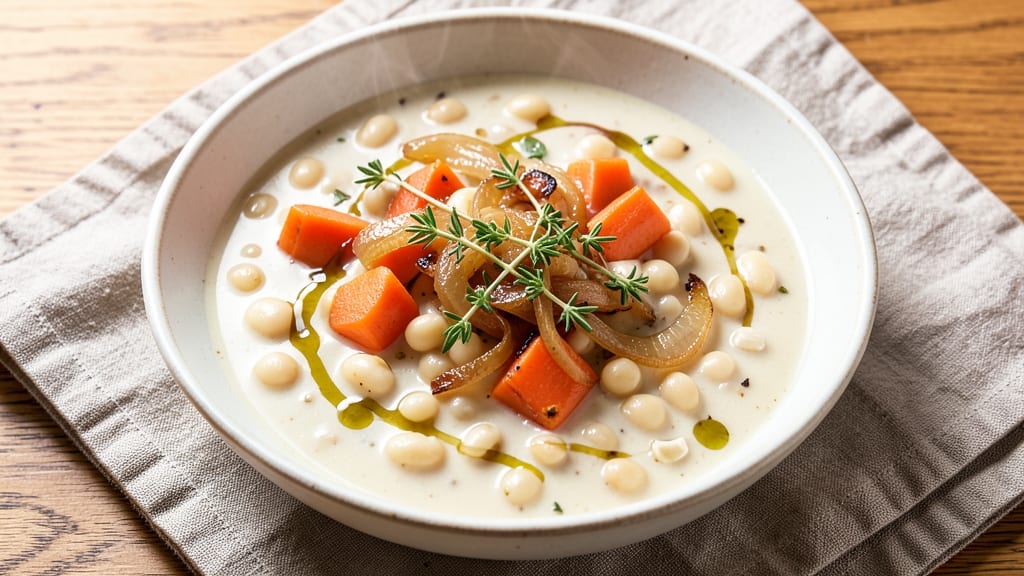
This earthy white bean soup recipe delivers deep, savory comfort without a single piece of ham, proving plant-based meals can be just as satisfying. The secret lies in a slow simmer that transforms simple ingredients—garlic, thyme, and white beans—into a rich, velvety broth with complex flavors.
I developed this version after realizing how much I missed hearty soups during my vegetarian phase, and it became an instant family favorite.
The beauty of this recipe is its versatility—you can use cannellini, navy, or great northern beans, and even swap in lentils or chickpeas for variation. Aromatic garlic and fragrant thyme form the flavor base, while a splash of vinegar brightens the broth.
The soup thickens naturally as it simmers, creating a satisfying texture that's both rustic and refined.
What you'll end up with is a bowl of soup that's deeply comforting yet light enough for any meal—perfect for chilly evenings or meal prep. The aroma alone will have everyone gathering at the table, and each spoonful delivers that perfect balance of earthy beans, aromatic herbs, and subtle acidity.
Serve with crusty bread to soak up every last drop of that flavorful broth.
This recipe works equally well as a main dish or side, and the leftovers taste even better the next day. The long simmering process develops flavors that store-bought versions can't match, making it worth the time investment.
Whether you're vegetarian or simply looking for a meat-free option, this soup delivers restaurant-quality results at home.
Ingredients for bean soup recipe no ham
Simple ingredients that transform into a hearty, vegetarian-friendly soup everyone will love.
| Ingredient | Amount | Notes |
|---|---|---|
| White Beans (Cannellini or Great Northern) 🌾 | 2 cups | Dried or canned, drained and rinsed |
| Yellow Onion 🧅 | 1 whole | Diced into small pieces |
| Carrots 🥕 | 3 medium | Peeled and chopped into chunks |
| Garlic Cloves 🧄 | 4 cloves | Minced for aromatic base |
| Fresh Thyme Leaves 🌿 | 1 ½ tbsp | Or 1 tsp dried thyme |
| Vegetable Broth 💧 | 4 cups | Low-sodium preferred |
| Extra-Virgin Olive Oil 🫒 | 2 tbsp | For sautéing vegetables |
| Red Wine Vinegar 🍷 | 1 tbsp | Brightens the broth |
| Tomato Paste 🍅 | 2 tbsp | For depth of flavor |
| Bay Leaves 🌿 | 2 whole | Removed before serving |
| Salt 🧂 | 1 ½ tsp | Adjust to taste |
| Black Pepper 🌶️ | ½ tsp | Freshly ground preferred |
| Fresh Parsley 🌿 | ¼ cup | Chopped for garnish |
The beans are the star—cannellini or great northern work best, but navy beans add a nice twist. Dried beans give the most flavor, but canned is totally fine if you're in a hurry. For the best broth, low-sodium vegetable broth is key—no one wants to deal with salt overload. Fresh thyme makes all the difference, but dried works in a pinch (just use one-third the amount). If you're feeling fancy, grab a bunch at a farmers market—it's worth it for that fresh aroma. The carrots can be baby carrots if that's what's in your fridge, but regular carrots add more texture.
No fresh thyme? Dried oregano or basil will work, though thyme's earthy flavor is ideal. Running low on vinegar? Lemon juice or apple cider vinegar both work well. The tomato paste can be tricky—if you only need two tablespoons, grab one of those little squeeze tubes from Trader Joe's—they're perfect for this. Want to make it even heartier? Add a cup of diced potatoes or chickpeas for extra protein. The bay leaves are non-negotiable—they add that subtle depth that makes this soup taste like it simmered all day (even if it didn't).
This soup only gets better with time—the flavors meld beautifully overnight. Keeps for 4-5 days in the fridge, and freezes perfectly for up to 3 months. I always double the batch because leftovers are even better the next day. Store it in airtight containers, and don't forget to label it—trust me, you'll thank yourself later. Garnish with fresh parsley right before serving, and serve with crusty bread to soak up every last drop of that flavorful broth.
Why You'll Love This Recipe
- Five-Ingredient Magic: I swear by this—just beans, onions, carrots, garlic, and thyme. That’s it. No fussing over a dozen pantry staples or hunting for obscure herbs. The carrots soften into sweetness while the thyme leaves perfume the whole pot like a whisper of summer.
- Creamy Without Cream: Between us, the cannellini beans break down just enough to make this soup rich and velvety on their own. No heavy cream or butter needed—just a simmer and a taste. Honestly, the way the garlic cloves caramelize at the bottom? That’s where the real flavor lives.
- Weeknight to Potluck: This soup doubles as my lazy Tuesday dinner and my "bring to the holiday party" dish. Serve it with crusty bread for a quick lunch, or ladle it into jars for a freezer-friendly meal. Even my picky teen asks for seconds—(yes, even on a Tuesday night).
- Pantry Goldmine: I make a big batch and freeze it in portions. Three dollars’ worth of beans and veggies stretches into six meals, and the leftovers? Just as good reheated as they were fresh. Budget-friendly doesn’t even begin to cover it—this is my wallet’s favorite recipe.
Step-by-step instructions for earthy white bean simmer
This hearty bean soup comes together with simple steps and bold flavors.
Sauté the Aromatic Vegetables
Heat the 2 tablespoons extra-virgin olive oil in a large pot over medium heat. Add the 1 whole yellow onion, chopped into small pieces, and cook for 5 minutes until softened and translucent. Add the 3 medium carrots, peeled and chopped into chunks, and continue cooking for another 5 minutes until they begin to soften and caramelize slightly.
Here's the thing—don't rush this step. You want the vegetables to develop some depth of flavor before adding the garlic. When the carrots are tender and the onions are golden brown, add the 4 cloves garlic cloves, minced, and cook for 30 seconds until fragrant. This quick cooking prevents the garlic from burning, which would make the whole soup bitter.
Build the Flavor Foundation
Stir in the 2 tablespoons tomato paste and cook for 1 minute to deepen the flavor. Add the 1.5 tablespoons fresh thyme leaves, 2 whole bay leaves, 1.5 teaspoons salt, and 0.5 teaspoon black pepper, mixing well to coat the vegetables. Pour in the 4 cups vegetable broth and bring the mixture to a gentle boil.
Once boiling, reduce the heat to medium-low and let it simmer for 10 minutes. This allows all the spices and aromatics to meld together, creating a rich base for the soup. The broth should be bubbling gently but not vigorously—this ensures the vegetables cook evenly without breaking apart.
Add the White Beans and Simmer
Add the 2 cups white beans (cannellini or great northern) to the pot. If using dried beans, they should already be pre-soaked and cooked separately (or use canned beans, drained and rinsed). Stir well to combine, then add the 1 tablespoon red wine vinegar. This brightens the soup and balances the earthy flavors of the beans and thyme.
Return the soup to a gentle simmer and cook for 20-25 minutes. You'll know it's ready when the beans are tender and the flavors have melded beautifully. The soup should have a thick, hearty consistency but still be easy to stir. If it's too thick, add a splash of water or more broth to reach your desired texture.
Finish and Serve
Remove the 2 whole bay leaves from the soup and discard them. Taste and adjust the seasoning if needed—this is where you can fine-tune the balance of salt, acidity from the vinegar, and depth from the tomato paste. Ladle the soup into bowls and garnish each serving with 0.25 cup chopped fresh parsley. The parsley adds a fresh, bright contrast to the earthy flavors of the soup.
Serve immediately while hot, with crusty bread to soak up every last drop of that rich, aromatic broth. The soup should be comforting, flavorful, and perfectly balanced—no ham needed to shine.
Pro Tips For Making Bean Soup Recipe No Ham
- SOAK BEANS OVERNIGHT: I learned this the hard way—rushing beans with a quick soak leaves them gummy. Use 4 cups water to 1 cup dry beans, cover, and let sit 12+ hours. Drain, rinse, then cook: they’ll break down evenly and taste buttery, not mealy.
- CARROT SLICES UNIFORM: Cut carrots into ¼-inch half-moons, not random chunks. Even slices soften at the same rate, so they stay intact and sweet instead of turning to mush. (Yes, it takes 2 minutes extra—your soup will thank you.)
- SWEAT ONIONS LOW AND SLOW: After dicing onions, cook them on medium-low heat with a splash of water or broth. This draws out their sharpness and keeps them from burning before the carrots are ready. I used to blast them on high, and the soup always tasted bitter.
- ADD THYME LATE: Tuck fresh thyme sprigs into the soup only in the last 10 minutes. This keeps their bright aroma from fading into the background. (Pro move: Snip a few leaves off the stems first—it looks prettier and releases more flavor.)
Essential equipment for bean soup recipe no ham
Large Pot Essentials
Start with a 6-8 quart Dutch oven or heavy-bottomed stockpot—this size ensures enough room for ingredients while preventing overflow as the soup simmers. I swear by my All-Clad stainless steel Dutch oven for even heat distribution and easy cleanup.
If you don’t have one, a Le Creuset enameled cast iron works beautifully too. Just avoid thin, flimsy pots that can’t maintain steady temperatures. 🔥
Immersion Blender
For that silky-smooth texture without overcooking the beans, an immersion blender is a game-changer. I use the Ninja NB1000 to blend a portion of the soup directly in the pot—just pulse 3-4 times until slightly thickened.
This keeps the soup rustic yet velvety. If you’re blending everything, reserve 1 cup of beans before blending to maintain texture.
Fine-Mesh Strainer
A fine-mesh strainer (like the OXO Good Grips) is perfect for rinsing canned beans or draining excess starch from cooked dried beans. This step prevents a gummy texture in your soup. I also use it to strain broth if I’m making my own—just let it cool slightly before handling.
A colander works in a pinch, but a dedicated strainer gives you better control over particle size.
Wooden Spoon
Never use metal utensils when stirring hot soup—they can scratch your pot and react with acidic ingredients like vinegar or tomato paste. A long-handled wooden spoon (I love the OXO Good Grips) is ideal for gentle stirring.
It’s also great for scraping up any stuck-on bits from the bottom of the pot without damaging your cookware. 🌟
Measuring Spoons
Precision matters when it comes to spices and acids like vinegar. Use stainless steel measuring spoons (like the KitchenAid set) for accurate measurements. A ¼ teaspoon too much salt can ruin the balance, and ½ tablespoon extra vinegar can make your soup taste overly tangy.
Keep them handy near your stove for quick adjustments during cooking.
Optional Gadgets
For extra convenience, a microplane (like the OXO) helps finely grate garlic and zest carrots for added depth. A small ladle (about 6-8 ounces) makes serving soup effortless, while a soup thermometer ensures you’re simmering at the ideal 185-200°F for even cooking.
These aren’t essential, but they elevate the process for frequent cooks. ✨
Nutrition facts
Frequently asked questions
Can I substitute chickpeas or lentils for white beans?
Chickpeas add a nutty flavor and heartier texture, while lentils (especially brown or green) create a thicker, more rustic soup. Use the same quantity, but adjust cooking time—lentils cook faster (15-20 minutes) while chickpeas may need 25-30 minutes. For lentils, omit the bay leaves to avoid bitterness.
How can I make this soup creamier without dairy?
Blend 1 cup of the soup with ½ cup of cooked white beans until smooth, then stir back in. For extra richness, add 2 tablespoons of tahini or 1 ripe avocado (blended) at the end. The vinegar and tomato paste will help balance any added creaminess.
Why does my soup taste bland after simmering?
Most likely, the vinegar or salt needs adjusting. Add ½ teaspoon more salt or ½ tablespoon extra vinegar (or lemon juice) to brighten flavors. For depth, stir in 1 teaspoon soy sauce or ½ teaspoon smoked paprika—both add umami without ham. Always taste as you go!
Can I make this soup in an Instant Pot?
Yes! Sauté the onions, carrots, and garlic first. Then add all ingredients (except parsley) and cook on High Pressure for 10 minutes. Quick-release the pressure, stir in vinegar, and let sit for 5 minutes before serving. Garnish with parsley—it’ll still be fresh and vibrant.
What’s the best way to reheat leftovers?
Gently reheat on the stovetop over low heat with 2 tablespoons of water or broth to prevent drying. Avoid microwaving—it can make the beans mushy. For extra flavor, add a pinch of salt or a splash of vinegar while warming. Leftovers taste even better the next day!