
Main Courses
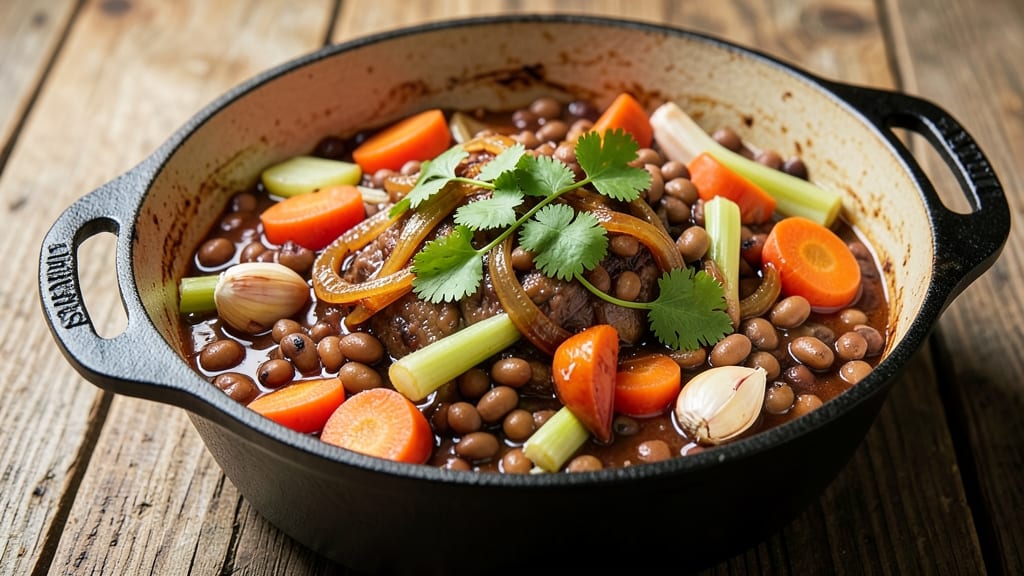
This bean pot roast recipe transforms humble ingredients into a hearty, protein-packed centerpiece that rivals meat-based classics. The secret lies in slow-cooking beans until they're tender enough to shred, creating a dish that's rich, satisfying, and packed with plant-based protein.
I developed this recipe during a particularly chilly winter when I needed a meal that would fill the house with warmth and nourish everyone at the table.
The beauty of this recipe is its versatility—pinto beans provide earthy depth, while black beans add a touch of smokiness, and the slow-cooking process allows all the flavors to meld together perfectly.
A simple blend of aromatic vegetables (carrots, celery, onions) forms the flavor base, while herbs and spices build complexity without overpowering the natural taste of the beans. The result is a dish that's hearty enough to stand alone but also pairs beautifully with crusty bread or mashed potatoes.
What makes this recipe truly special is how it achieves restaurant-quality texture and flavor with minimal effort. The beans become so tender they practically fall apart with a gentle touch, creating a sauce that coats every bite.
The slow cooking process (about 3 hours in a Dutch oven or 1 hour in an Instant Pot) transforms simple ingredients into something extraordinary, making this the perfect solution for busy weeknights or cozy family dinners.
Serve this bean pot roast with your favorite sides to create a complete meal that's both nourishing and delicious. The leftovers reheat beautifully, making it an excellent option for meal prep. Here's how to make it—simple steps that yield impressive results.
Ingredients for bean pot roast
Sixteen ingredients transform into a hearty vegetarian pot roast with restaurant-quality depth.
| Ingredient | Amount | Notes |
|---|---|---|
| Pinto Beans 🌾 | 2 cups | Dried, soaked overnight |
| Black Beans 🌾 | 1 cup | Dried, soaked overnight |
| Yellow Onion 🧅 | 1 whole | Large, chopped into chunks |
| Carrots | 4 medium | Whole, peeled, chopped |
| Celery Stalks 🥕 | 3 whole | Chopped into 1-inch pieces |
| Garlic Cloves 🧄 | 6 cloves | Peeled, smashed |
| Tomato Paste 🍅 | ½ cup | High-quality, no salt added |
| Vegetable Broth 💧 | 3 cups | Low-sodium preferred |
| Red Wine 🍷 | 1 cup | Dry, bold variety |
| Olive Oil 🫒 | ¼ cup | Extra-virgin for richness |
| Bay Leaves 🍃 | 2 whole | Fresh preferred |
| Thyme 🌿 | 1 tbsp | Fresh, chopped |
| Rosemary 🌿 | 1 tbsp | Fresh, chopped |
| Smoked Paprika 🌶️ | 1 tbsp | For depth of flavor |
| Salt 🧂 | 1 ½ tsp | Kosher or sea salt |
| Black Peppercorns 🌶️ | ½ tsp | Freshly ground |
The beans are the foundation—pinto and black together create that perfect earthy-smoky balance. Dried beans (not canned) give the best texture, but if you're in a hurry, rinsed canned beans work in a pinch. Soak overnight for even tenderness. For the vegetables, Whole Foods or local markets often have fresher produce—look for carrots with bright orange color and celery stalks that snap when bent. The garlic should be plump and firm, not shriveled. If using fresh herbs, Trader Joe's usually has the best selection at reasonable prices.
No red wine? Substitute extra vegetable broth with 1 tbsp balsamic vinegar for depth. Fresh thyme and rosemary are ideal, but dried works at half the amount. The tomato paste can be skipped if you prefer, though it adds a nice richness. For the smoked paprika, Penzeys carries excellent varieties if you want to splurge, but the regular grocery store brand is perfectly fine. If you're watching sodium, low-sodium vegetable broth is a must—regular broth can make this dish too salty. The olive oil matters here—use something fruity and peppery, not the cheap stuff.
This reheats beautifully—even better the next day as flavors meld. Store in an airtight container in the fridge for up to 5 days, or freeze portions for 3 months. I like to portion it into individual containers for easy lunches. The beans will continue to soften slightly when reheated, so if they're not quite tender enough after the initial cooking, a quick simmer with a splash of broth will finish them perfectly. The sauce thickens as it cools, so add a splash of broth if it seems too thick when reheating.
Why You'll Love This Recipe
- One-Pot Magic: I swear by this recipe because it’s literally dump-and-go. Chop the onion, celery, and carrots (or skip that—just toss in pre-cut veggies if you’re in a rush), add the beans and broth, and let it simmer. No flipping pans, no stress—just rich, hearty flavor with zero fuss.
- Deep Umami Bomb: The combo of pinto and black beans? Chef’s kiss. That earthy, smoky depth from the beans pairs perfectly with the sweetness of carrots and the crunch of celery, all tied together by the onion’s caramelized richness. It’s the kind of dish that tastes even better the second day—honestly, I’ve had leftovers for breakfast and not regretted it once.
- Meal Prep MVP: Between us, this is my go-to for busy weeks. Make a big batch on Sunday, and you’ve got lunch or dinner covered for days. Pack it in containers for work, freeze half for later, or serve it at a potluck—it’s always a hit, and no one questions the leftovers.
- Budget-Friendly Powerhouse: Beans are my wallet’s best friend, and this recipe stretches them into something ridiculously satisfying. A pound of dried pinto and black beans, a few veggies, and basic seasonings feed four for under $10. Plus, the flavors get better as it sits—so it’s basically free money in a pot.
Step-by-step instructions for bean pot roast
This method transforms simple ingredients into a hearty, flavorful pot roast with tender beans and richly spiced vegetables.
Sauté the Aromatics and Brown the Beans
Heat the 0.25 cup olive oil in a large Dutch oven over medium-high heat. Add the chopped 1 whole yellow onion, 4 medium carrots, and 3 whole celery stalks, cooking for 5-7 minutes until the vegetables begin to soften and the onion turns translucent. Here's the thing—don't crowd the pan, or they'll steam instead of brown.
Push the vegetables to the sides and add the 2 cups pinto beans and 1 cup black beans (drained from soaking). Stir to coat the beans in the oil and cook for 3-4 minutes until they develop a light golden crust. This step builds deep flavor through the Maillard reaction. If the beans start to stick, simply add a splash of water and scrape up those browned bits—they're packed with flavor.
Build the Flavor Base with Wine and Spices
Pour in the 1 cup red wine and scrape the bottom of the pot to release any stuck-on bits. Let the wine simmer for 3-4 minutes until it reduces by half and the alcohol burns off. This step is critical—it concentrates the wine's flavor and removes any harshness.
Add the 0.5 cup tomato paste, 1 tbsp smoked paprika, 1 tbsp thyme, 1 tbsp rosemary, 1.5 tsp salt, and 0.5 tsp black peppercorns. Stir well to combine, then add the 6 cloves garlic cloves and 2 whole bay leaves. Cook for another 2 minutes until the spices are fragrant and the garlic is lightly golden. The pot should smell rich and complex at this point—this is your foundation.
Simmer the Pot Roast Until Tender
Pour in the 3 cups vegetable broth and bring the mixture to a gentle boil. Reduce heat to low and cover the pot. Let it simmer for 1.5 hours, stirring occasionally to prevent the beans from sticking to the bottom. After the initial hour, check the liquid level—if it's too low, add ½ cup water to keep everything moist.
Here's where the magic happens: the beans will begin to break down, releasing starches that thicken the sauce. You'll know it's ready when the beans are tender and the carrots are fork-tender with just a slight bite. The pot should smell even more aromatic, with layers of wine, herbs, and caramelized vegetables.
Adjust Consistency and Serve
Once the beans are tender, taste the sauce and adjust seasoning if needed. If the mixture is too thick, add ½ cup water or vegetable broth to reach your desired consistency. For a smoother texture, use an immersion blender to lightly blend about ½ cup of the beans back into the pot—this creates a velvety sauce while keeping the dish hearty.
Serve the bean pot roast immediately, spooning the rich sauce over each serving. The dish should be thick, flavorful, and packed with tender beans and vegetables. The wine and herbs will shine through, making this a satisfying, comforting meal perfect for chilly evenings. Leftovers keep well in the refrigerator for up to 4 days, with flavors deepening overnight.
Pro Tips For Making Bean Pot Roast
- SOAK BEANS OVERNIGHT: I learned this the hard way—rushing the soak leaves beans tough and gummy. Pinto and black beans need at least 8 hours (or quick-soak: boil 2 minutes, then steep 1 hour). Drain well before adding to the pot—starchy water makes everything gluey.
- SWEEP THE POT: After browning your roast, use a wooden spoon to scrape up all the fond stuck to the bottom. That caramelized bit is flavor gold—don’t let it go to waste. Just 30 seconds of scraping makes the whole dish richer.
- CHOP VEGGIES UNIFORM: Carrots and celery in big chunks? They’ll turn to mush while the onions burn. Aim for ½-inch pieces—small enough to cook through but big enough to stay recognizable. Onions? Slice them thin so they soften without disappearing.
- SIMMER LOW AND SLOW: This isn’t a race. After everything’s in the pot, reduce heat to a gentle simmer—just tiny bubbles at the edges. Too much heat = split beans and a mushy mess. Cover and let it hum for 2+ hours. Patience here is non-negotiable.
Troubleshooting perfect results
Beans Too Firm
If your beans aren't tender after 1.5 hours, check if they were properly soaked. Dried beans need 8+ hours of soaking—if you rushed, add ½ cup extra broth and simmer 30 more minutes.
For canned beans, use 1 (15 oz) can each of pinto and black beans (rinsed well) and reduce cooking time to 45 minutes. I've found Bush's low-sodium beans work best for this swap—they hold up better than store brands. 🌱
Sauce Too Thin
If your sauce is watery after simmering, let it reduce uncovered on medium-low heat for 10 minutes. For instant thickening, mix 1 tbsp cornstarch with 2 tbsp cold water, stir into the pot, and simmer 2-3 minutes.
Alternatively, mash ½ cup beans directly into the sauce—their starch will thicken it naturally. Avoid over-salting here; the beans already contain sodium from soaking. 💧
Burnt Onions or Garlic
Watch your heat carefully—medium-high is key for sautéing. If onions burn before softening, reduce heat to medium and add 1 tbsp water to deglaze. For garlic, add it only after the wine has reduced (step 2).
I keep a spray bottle nearby to quickly cool hot spots. Burnt flavors ruin the dish, so stay attentive during this critical step. 🔥
Lacking Depth of Flavor
Boost umami by adding 1 tsp soy sauce or ½ tsp miso paste with the spices. For extra richness, stir in 1 tbsp balsamic vinegar at the end. If using dried beans, roast them at 375°F for 15 minutes before cooking to deepen their flavor.
I've also found that adding a splash of red wine vinegar (just 1 tsp) brightens the dish beautifully. 🍷
Vegetables Overcooked
Carrots and celery should be tender but still hold shape. If they're mushy, reduce cooking time by 15 minutes next time. For extra control, parboil them for 5 minutes before adding to the pot.
I like to cut carrots into 1-inch chunks and celery into ½-inch pieces—this ensures even cooking without overdoing it. 🥕
Instant Pot Adaptations
For the Instant Pot, sauté aromatics as directed, then add all remaining ingredients (including beans) and cook on high pressure for 20 minutes. Quick-release the pressure, then let it sit 10 minutes before opening.
If beans aren't tender, cook 5 more minutes on high pressure. The Instant Pot version finishes faster but requires close attention to avoid overcooking. 🏺
Nutrition facts
Frequently asked questions
Can I make this bean pot roast without red wine?
Replace the 1 cup red wine with 1 cup vegetable broth plus 1 tbsp balsamic vinegar for depth. The dish will still develop rich flavors—just add an extra pinch of salt to compensate for the missing wine's acidity. For even more complexity, try 1 tsp soy sauce instead of vinegar.
How do I make this recipe with canned beans?
Use 1 (15 oz) can each of pinto and black beans (rinsed well), and reduce cooking time to 45 minutes instead of 1.5 hours. Canned beans cook faster, so keep an eye on them—they'll be tender sooner. For best results, choose low-sodium brands like Bush's to control seasoning better.
What's the best way to reheat leftovers?
Reheat gently in a saucepan with 2-3 tablespoons of water or broth over low heat for 5-7 minutes, stirring occasionally. Avoid microwaving—it can make the beans mushy. The flavors actually improve overnight, so this dish tastes even better the second day! Store leftovers in an airtight container for up to 5 days.
Can I use lentils instead of beans?
Yes, but adjust cooking time! Lentils cook much faster—use 1 cup dried green or brown lentils and reduce simmering to 30-40 minutes. They'll hold their shape better than beans, creating a slightly different texture. For maximum tenderness, use ½ cup lentils and supplement with 1 cup cooked chickpeas to maintain heartiness.
What sides pair best with this dish?
This hearty pot roast pairs perfectly with creamy mashed potatoes, crusty sourdough bread, or roasted Brussels sprouts. For a complete meal, add a simple green salad with lemon vinaigrette to balance the richness. The wine-infused sauce also works beautifully with polenta or buttered egg noodles.