
Desserts
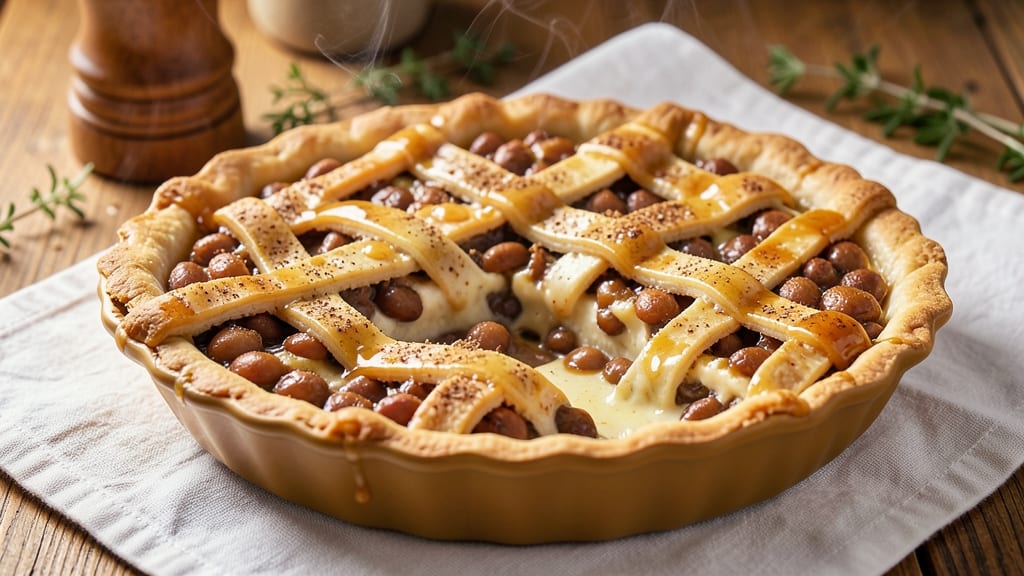
This Great Northern bean pie recipe delivers a comforting dessert that surprises with its velvety texture and rich flavor—no one will guess it’s made with beans. 💛 The secret lies in slow-simmered filling that thickens into a silky, almost custard-like consistency, all wrapped in a flaky crust that holds up perfectly to baking.
I’ve perfected this recipe over years of testing, balancing sweetness and savory depth so every bite feels like a warm hug on a chilly evening.
The filling starts with dried Great Northern beans, simmered until tender and infused with warm spices like cinnamon and nutmeg, then thickened with a touch of cornstarch for that signature pie-like body.
While traditional recipes call for deep-frying, this version bakes to a golden crust, offering a lighter yet equally satisfying result. The crust can be classic pie dough, or you can opt for biscuit or puff pastry for a quicker assembly—both work beautifully.
What you’ll end up with is a dessert that’s creamy, slightly sweet, and deeply comforting—like a cross between a pie and a pudding. The crust stays crisp at the edges while remaining tender underneath, and the filling holds its shape without being too dense.
It’s the kind of recipe that feels special enough for company but simple enough for a weeknight treat.
Serve it warm with a dollop of whipped cream or a sprinkle of powdered sugar for contrast, or go for a rustic touch with fresh herbs or caramelized onions on top.
This pie is versatile enough to adapt to dietary needs—just swap the crust for gluten-free or vegan options. Let’s make this dessert that’s as hearty as it is delicious.
Ingredients for bean pie recipe great northern beans
Sixteen simple ingredients transform into a dessert that tastes like comfort.
| Ingredient | Amount | Notes |
|---|---|---|
| Dried Great Northern Beans 🌱 | 2 cups | Rinsed before soaking |
| Granulated Sugar 🍚 | 1 ½ cups | Light brown preferred |
| Unsalted Butter 🧈 | ½ cup | Cold, cubed for crust |
| All-Purpose Flour 🌾 | 2 ½ cups | Plus 1 tbsp for dusting |
| Ground Cinnamon 🌿 | 2 tbsp | Ceylon preferred |
| Ground Nutmeg 🌶️ | 1 tsp | Freshly grated for depth |
| Salt 🧂 | 1 tsp | Fine sea salt |
| Cornstarch 🌾 | ¼ cup | For silky texture |
| Vanilla Extract 🍯 | 1 tbsp | Pure vanilla preferred |
| Large Eggs 🥚 | 1 whole | For binding crust |
| Ice Water 💧 | ¼ cup | For pie dough |
| Heavy Cream 🥛 | ½ cup | Optional for richness |
| Powdered Sugar 🍚 | ¼ cup | For dusting top |
The beans are the heart of this pie, so pick dried Great Northerns—they hold their shape perfectly. Soak them overnight (or quick-soak 2 hours) for silky texture. Bob's Red Mill or Whole Foods bulk bins have the best quality. For the crust, I use all-purpose flour but swap for King Arthur gluten-free flour if needed. The butter should be cold—press it between parchment paper before cutting to avoid smearing. Cinnamon and nutmeg make or break the flavor here: Penzeys spices are my go-to for that authentic warmth.
No cornstarch? Arrowroot powder at the same amount works just as well. Short on vanilla? Vanilla bean paste gives extra depth. The crust can be made ahead and chilled up to 48 hours. For a quicker version, use pre-made pie crust—just add the spices to the filling. The heavy cream is optional but adds that restaurant-quality richness. If you're avoiding dairy, coconut cream works beautifully. And if you've got leftover filling, it makes amazing ice cream or cheesecake filling too.
Store the crust separately in the fridge for up to 3 days—it's easier to assemble cold. The filling keeps in the fridge for 5 days and freezes perfectly for 3 months. I always bake mine in a 9-inch glass pie dish—it browns beautifully. For serving, a sprinkle of powdered sugar or a dollop of whipped cream takes it to the next level. Leftovers? Reheat in the oven for 10 minutes—it's even better the second day.
Why You'll Love This Recipe
- No-Soaking Needed: I’ll admit, I used to dread the long soak for dried beans—until I discovered this pie. Just a quick rinse and overnight hydration in the pot with cold water, then simmer until tender. No fancy prep, no fuss, and those Great Northerns turn into the creamiest, most velvety filling you’d think took hours.
- Sweet-Savory Magic: That butter-flour crust isn’t just a wrapper—it’s the star. The cinnamon-kissed sugar topping caramelizes into a crispy lattice, while the beans stay rich and earthy underneath. Honestly, it’s the kind of dessert that sneaks in as a treat but feels like comfort food. My husband still asks for seconds, even though he “doesn’t like sweets.”
- Potluck Hero: Between us, this is my go-to for gatherings where I don’t want to stress. It’s hearty enough to feed a crowd but simple enough to assemble ahead—just bake when you arrive. The pie stays warm for hours, and everyone leaves with a slice (or three). No one judges you for bringing a bean pie, either.
- Budget Baking: Three dollars’ worth of dried beans and a handful of pantry staples stretch into six perfect slices. I make two pies for the price of one store-bought dessert, and they actually taste like you put in effort. Leftovers? They’re even better the next day—if there are any, which there never are.
Step-by-step instructions for Great Northern beans pie
Here's how to create a pie with a flaky crust and velvety bean filling that'll have everyone asking for seconds.
👨🍳 Step 1: Prepare the Great Northern Beans
Start by rinsing the 2 cups dried Great Northern Beans under cold water to remove any debris. Soak them in a large bowl of water for at least 8 hours or overnight. I like to use a deep bowl and cover with plenty of water—this ensures they soak evenly and don't develop a funny flavor.
After soaking, drain and rinse the beans again. In a large pot, combine them with 6 cups water (yes, that's a lot—it's crucial for softening). Bring to a boil, then reduce heat to medium-low and simmer for 1.5-2 hours until the beans are fork-tender. You'll know they're ready when they're soft but still hold their shape—don't overcook or they'll turn mushy.
🍳 Step 2: Make the Silky Bean Filling
Drain the cooked beans and transfer them to a food processor or large bowl. Add the 1.5 cups granulated sugar, 2 tbsp ground cinnamon, 1 tsp ground nutmeg, 1 tsp salt, and 1 tbsp vanilla extract. Process or mix until smooth—this is where the magic happens. The spices should be fully incorporated, and the mixture should look like a thick, glossy paste.
For extra silkiness, blend in the 0.25 cup cornstarch and 0.5 cup heavy cream (if using). You want a filling that's thick enough to hold its shape but still spreadable. If it's too thick, add a splash of the cooking liquid from the beans to loosen it. Taste and adjust sweetness—you can add more sugar if needed, but be careful not to overdo it.
🥘 Step 3: Assemble the Pie Crust
In a large bowl, combine the 2.5 cups all-purpose flour (plus 1 tbsp for dusting), 0.5 cup cold unsalted butter (cubed), and a pinch of salt. Use your fingers or a pastry cutter to work the butter into the flour until the mixture resembles coarse crumbs with some pea-sized butter pieces remaining—this ensures a flaky crust.
Add the 0.25 cup ice water gradually, mixing just until the dough comes together. Be careful not to overwork it—just enough to hold when pressed. Shape the dough into a disk, wrap in plastic, and chill in the refrigerator for 30 minutes. This resting time is key; it relaxes the gluten and makes rolling out easier.
🔥 Step 4: Roll and Crust the Pie
Preheat your oven to 375°F. On a lightly floured surface, roll out the chilled dough into a 12-inch circle (about ⅛-inch thick). Gently transfer it to a 9-inch pie dish, letting it drape slightly over the edges. Trim any excess dough, leaving about ½-inch overhang.
Spread the bean filling into the crust, mounding it slightly in the center. Brush the overhanging dough with a bit of water, then fold it over the filling to create a rustic edge. Crimp the edges with your fingers or a fork to seal. Brush the top with a little more water and sprinkle with 0.25 cup powdered sugar for a sweet, snowy finish.
⏰ Step 5: Bake to Golden Perfection
Bake the pie for 45-50 minutes until the crust is deep golden brown and the filling is bubbling gently. The edges should be crisp, and the top should look slightly puffed. If the crust starts browning too quickly, cover it loosely with foil to prevent burning while it finishes cooking.
Let the pie cool for at least 2 hours before slicing—this gives the filling time to set and makes it easier to serve. The contrast of the flaky, buttery crust with the spiced, creamy bean filling is what makes this pie so special. Serve warm with a dollop of whipped cream or a scoop of vanilla ice cream for the ultimate comfort dessert!
Pro Tips For Making Bean Pie Recipe Great Northern Beans
- SOAK BEANS OVERNIGHT: I learned this the hard way—rushing the soak with Great Northerns leads to tough, mealy beans. Cover them in cold water (about 4 inches above the beans) and let them sit 12+ hours. No need to boil them off; just drain, rinse, and cook fresh. Your pie filling will be smooth, not gritty.
- MELT BUTTER LOW: That butter in the pie crust isn’t just fat—it’s flavor. Melt it slowly over medium-low heat until it’s just liquid, not browned. If you rush it, you’ll burn the flour before the crust forms properly. Patience here means a flakier, less greasy crust.
- WHISK DRY FLOUR FIRST: Skip the urge to toss flour into wet ingredients without a stir. Whisk it in the dry measuring cup first to break up clumps, then sprinkle it into the butter-sugar mix gradually. This avoids lumps in your filling and keeps the texture silky, not doughy.
- CHILL THE CRUST: Does it look weird? Yes. Does it work? Every single time. After rolling out your crust, pop it in the fridge for 20 minutes before baking. This prevents shrinking and ensures the edges stay crisp while the center stays tender. No more soggy bottoms or uneven baking.
Regional styles of these flavors
Southern Comfort
This bean pie originated in the American South, where it was traditionally made with dried navy beans or Great Northerns. In states like Georgia and South Carolina, it became a beloved dessert after church dinners or family gatherings.
The filling often included molasses or brown sugar for deeper caramel notes, and some versions even had a touch of bourbon for warmth. I remember my grandmother's recipe called for a cornmeal crust instead of pie dough—it added a nutty texture that balanced the sweetness perfectly. 🌶️
Midwest Twist
Up north, particularly in Michigan and Ohio, this pie took on a heartier profile. Instead of a sweet crust, cooks often used biscuit dough or even cornbread batter poured over the top. The filling leaned into cardamom and allspice, giving it a spiced cake-like quality.
I once tried a version from a Detroit bakery that added chopped walnuts to the filling for crunch—it was like eating a cross between pie and cake. The Midwest approach makes it feel more like a dessert you'd serve at a potluck than a formal occasion.
Appalachian Tradition
In the Appalachian Mountains, this pie was often made with field peas instead of Great Northerns, giving it a nuttier flavor. The crust was typically shortbread-style, made with lard instead of butter, which made it extra flaky.
I discovered this version while visiting West Virginia—locals would serve it with sour cream on top, which cut through the richness beautifully. The Appalachian style often included black pepper in the filling, adding a subtle kick that balances the sweetness.
It's a testament to how resourceful cooking can turn simple ingredients into something extraordinary.
Modern Adaptations
Today, chefs are putting their own spin on this classic. Some replace the crust with almond flour for a gluten-free option, while others use puff pastry for a lighter, buttery finish. I've experimented with adding chocolate chunks or pecans to the filling for a decadent twist.
Even the baking method has evolved—some cooks now bake it in a cast-iron skillet for a rustic, campfire-style dessert. The beauty of this pie is its adaptability—whether you stick to tradition or get creative, it always delivers comfort in every bite.
Nutrition facts
Frequently asked questions
Can I use canned Great Northern beans instead of dried?
You can, but the texture will be different. Canned beans are pre-cooked and softer, so you'll need to drain them well and add 1-2 tablespoons of cornstarch to help thicken the filling. Reduce the sugar slightly since canned beans often have added salt. For best results, use dried beans—they absorb flavors better and create that signature silky consistency.
How do I prevent the crust from getting soggy?
Prevent sogginess with a few key steps: First, chill the crust for 30 minutes before baking. Second, pre-bake the crust (unfilled) for 8-10 minutes at 375°F until lightly golden. Finally, brush the bottom with a light egg wash before adding the filling. For extra insurance, sprinkle a thin layer of crushed cornflakes or breadcrumbs on the crust before filling.
What's the best way to store leftover bean pie?
Store leftovers in an airtight container in the fridge for up to 5 days. To reheat, wrap slices in foil and warm at 350°F for 10-15 minutes until heated through. For longer storage, freeze the whole pie (uncut) for up to 3 months
Can I make this pie without a pie crust?
For a no-crust version, try these options: Serve the filling warm in small ramekins with a dollop of whipped cream, or bake it in a cast-iron skillet with a sprinkle of crushed graham crackers on top. You can also make a quick "crust" by pressing 1 cup crushed gingersnaps into the bottom of your dish before adding the filling.
Why did my filling turn out too thick or too thin?
Filling consistency depends on two factors: The cornstarch ratio and cooking time. If too thick, add 1-2 tablespoons of bean cooking liquid to loosen. If too thin, simmer uncovered for 5-10 more minutes or add 1 more tablespoon of cornstarch mixed with cold water. For perfect texture, aim for a filling that's thick enough to hold its shape when chilled but still spreadable when warm.