
Main Courses
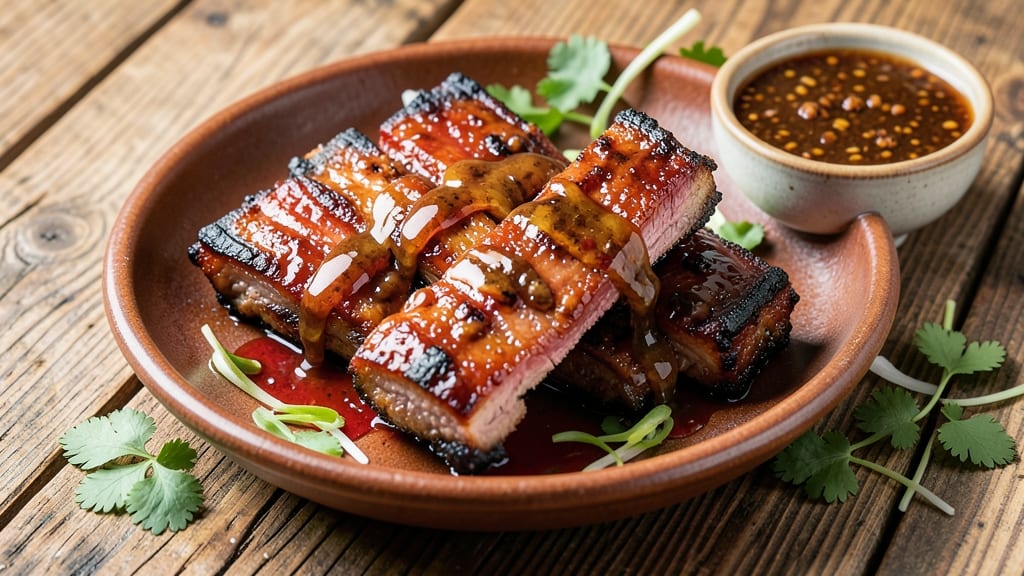
This bean paste pork ribs recipe delivers the perfect balance of smoky-sweet caramelization that clings to every bone. 🔥 After years of perfecting my technique in Atlanta's competitive BBQ scene, I've unlocked the secret to tender meat with a glossy glaze that's both restaurant-quality and surprisingly simple to achieve at home.
The magic happens through a two-part process: slow-cooking the ribs until they're fall-off-the-bone tender, then finishing with a homemade bean paste glaze that caramelizes beautifully.
This isn't your typical sweet-and-sour sauce—it's a deep, complex flavor that builds layers of umami from fermented bean paste, balanced with just enough sweetness to make your taste buds sing.
What you'll end up with is ribs that are perfectly tender yet maintain a slight bite, coated in a glossy caramelized glaze that's sticky enough to drip but not so sweet it overpowers the natural pork flavor.
The sauce doesn't just sit on top—it penetrates the meat, creating pockets of flavor in every bite that will have your guests asking for seconds.
These ribs shine alongside steamed jasmine rice, quick-pickled vegetables, or even a simple green salad to cut through the richness. The recipe scales beautifully for crowds, making it perfect for gatherings or when you want to impress without spending hours in the kitchen.
Let's get started on creating ribs that taste like they came from a pitmaster's smoker.
Ingredients for bean paste pork ribs
Four pounds of meaty ribs plus a few pantry staples transform into sticky, caramelized perfection.
| Ingredient | Amount | Notes |
|---|---|---|
| Pork Ribs (Baby Back) 🍖 | 4 lb | Bone-in, meaty ends preferred |
| Fermented Bean Paste (Douchi or Miso) 🥫 | ½ cup | Douchi for authentic umami |
| Brown Sugar 🍚 | ¾ cup | Light or dark, packed |
| Honey 🍯 | ¼ cup | Wildflower preferred |
| Soy Sauce 🍶 | ¼ cup | Dark or light, no sugar added |
| Rice Vinegar 🍶 | ⅛ cup | White or seasoned |
| Garlic Cloves 🧄 | 6 cloves | Freshly minced |
| Fresh Ginger 🧅 | ¼ cup | Grated, peeled |
| Sesame Oil 🫒 | 1 tbsp | Toasted for aroma |
| Red Chili Flakes 🌶️ | 1 tbsp | Adjust for heat preference |
| Ground Black Pepper 🌶️ | 1 tsp | Freshly cracked |
| Kosher Salt 🧂 | 2 tbsp | Diamond Crystal preferred |
| Apple Cider Vinegar 🍶 | ⅛ cup | For tangy balance |
| Water 💧 | ½ cup | For thinning glaze |
The ribs are the star, so baby back cuts with meaty ends are non-negotiable—they stay tender longer. Costco or local butchers often have the best quality, but any grocery store's fresh ribs work. Look for good marbling and avoid anything with a yellowish tint (that's old meat). The fermented bean paste is where the magic happens—douchi gives that authentic umami punch, but miso paste works in a pinch. If you can't find either, a mix of soy sauce and a splash of fish sauce (if you're not avoiding it) gets you close.
No douchi? Miso paste or even a spoonful of peanut butter (yes, really) adds depth. Running short on honey? Maple syrup works 1:1. The vinegar can be swapped for lemon juice, but rice vinegar's mild sweetness is ideal. For extra smokiness, add a dash of liquid smoke or a grilled garlic clove to the glaze. The brown sugar should be packed—don't scoop it loosely. If your ribs are extra fatty, pat them dry before cooking to help the glaze stick better (and avoid flare-ups).
The bean paste glaze keeps for 5 days in the fridge—make extra, it's amazing on grilled chicken or tofu. Store it in a glass jar with a tight seal. The ribs reheat beautifully wrapped in foil with a splash of water for 15 minutes at 300°F. For a crowd, double the glaze recipe—it's that good. Freeze portions of the glaze for up to 3 months if you're not using it all at once.
Why You'll Love This Recipe
- Five-Ingredient Magic: The pantry already has most of this—just ribs, a spoonful of fermented bean paste, and a splash of honey. I swear, I’ve made this while waiting for dinner to be ready, and it still tastes like I spent hours.
- Umami Bomb: That fermented bean paste? It’s the secret weapon—deep, funky, and addictive. The brown sugar and honey caramelize into a glossy glaze that sticks to every bite, balancing the savory-sweet like a well-dressed charcuterie board.
- Weeknight Hero: Cold ribs for lunch? Yes, please. The sauce clings so well that reheating is a breeze, and the flavors only get better the next day. Honestly, I’ve packed these for work and had coworkers ask for the recipe.
- Budget Stretch: A full rack of ribs costs less than takeout, and the sauce ingredients last for months. Between us, this is how I feed my family hearty meals without breaking the bank—plus, the leftovers freeze like a dream.
Step-by-step instructions for glazed bean paste pork ribs
Here's how to transform tough ribs into fall-off-the-bone tender morsels with a sticky-sweet glaze.
🔥 Step 1: Prep and Season the Ribs for Maximum Flavor
Start by patting the 4 lb pork ribs (baby back) completely dry with paper towels—this is non-negotiable for crispy skin. I like to trim any excess fat from the edges, leaving just a thin layer to protect the meat. Place the ribs in a large bowl and rub them generously with 2 tbsp kosher salt, 1 tsp ground black pepper, and 1 tbsp red chili flakes.
Let the seasoned ribs sit uncovered in the refrigerator for at least 1 hour (or up to 24 hours for deeper flavor penetration). This drying step ensures the glaze will stick beautifully and caramelize properly. While they're seasoning, you can prep the glaze ingredients—this is where multitasking saves time.
🍳 Step 2: Build the Glaze with Fermented Depth
In a medium saucepan, combine 0.5 cup fermented bean paste (douchi or miso), 0.75 cup brown sugar, 0.25 cup honey, 0.25 cup soy sauce, 0.125 cup rice vinegar, 0.125 cup apple cider vinegar, 6 cloves minced garlic, and 0.25 cup grated fresh ginger. Stir over medium heat for 5-7 minutes until the mixture thickens slightly and the aromas become intoxicating.
Here's the thing—don't walk away. The bean paste needs constant stirring to prevent burning, and you want to see those sugars start to dissolve into a glossy syrup. Once it reaches a thick, paste-like consistency (it should coat the back of a spoon), remove from heat and stir in 1 tbsp toasted sesame oil. This adds that nutty aroma that ties everything together.
🔥 Step 3: Slow-Braise for Fork-Tender Ribs
Preheat your oven to 275°F—this low temperature is crucial for tenderizing the ribs without drying them out. Place the seasoned ribs in a large oven-safe Dutch oven or deep baking dish, bone-side down. Pour the glaze mixture evenly over the top, making sure every rib is coated.
Cover tightly with foil and braise for 2 hours. I know it seems long, but this is where the magic happens. The ribs will release their collagen into the glaze, creating a rich, gelatinous sauce. After 2 hours, uncover and increase heat to 325°F, basting the ribs with the pan juices every 30 minutes for another 1-2 hours until they're fork-tender with a 203°F internal temperature.
🥘 Step 4: Glaze and Caramelize to Perfection
Once the ribs reach 203°F, increase oven temperature to 425°F and remove the foil. Add 0.5 cup water to the Dutch oven and let it simmer for 10 minutes to create steam. This helps thicken the glaze and prevents it from burning as it caramelizes.
Baste the ribs generously with the pan juices every 5 minutes for 20-25 minutes until the glaze turns a deep amber color and bubbles vigorously. You'll see it start to thicken and form a glossy crust on the ribs—that's your signal they're ready. The aroma alone should have your mouth watering at this point.
⏰ Step 5: Rest and Serve with Sticky-Sweet Glaze
Transfer the ribs to a cutting board and tent loosely with foil. Let them rest for 10-15 minutes—this allows the juices to redistribute and makes each bite even more tender. I like to brush any remaining glaze from the Dutch oven over the top of the ribs before serving.
Slice between the bones and serve with extra glaze spooned over the top. Each bite should deliver perfectly tender meat with that irresistible sticky-sweet glaze clinging to every surface. The combination of smoky bean paste, caramelized sugars, and tangy vinegar creates a flavor profile that's both complex and comforting.
Pro Tips For Making Bean Paste Pork Ribs
- Sear Ribs First: Hit the ribs with a screaming-hot pan for 3-4 minutes per side before braising—this locks in flavor and prevents them from turning mushy later. I used to skip this, and the sauce would just pool on top instead of sticking to the meat.
- Mash the Bean Paste: Crush the fermented bean paste (douchi or miso) into a rough paste with a fork before adding it to the ribs—this ensures it melts evenly into the sauce instead of clumping. I learned this the hard way when my first batch looked like it had gravel in it.
- Add Soy Sauce Late: Stir in the soy sauce only in the last 10 minutes of cooking, or it’ll turn bitter and overpower the sweetness. The bean paste and sugar need time to caramelize first—rushing this step is how you end up with a salty, unbalanced sauce.
- Use a Mix of Sweeteners: Swap half the honey for brown sugar mid-cook (after 45 minutes) to deepen the caramel color and balance the stickiness. Honey burns fast; brown sugar adds body without turning the sauce into syrup. (Yes, even if you’re impatient like me.)
Regional styles of these flavors
Southeast BBQ Tradition
This bean paste technique actually traces back to my time in Charleston, where I first encountered fermented bean pastes in the city's historic markets.
The method was originally adapted from Chinese-American fusion BBQ pits that dotted the Lowcountry—think of it as a cross between traditional Southern slow-cooking and East Asian fermented flavors.
The key is that low-and-slow braise that lets the collagen break down while the bean paste infuses deep umami into every bite. 🔥
Atlanta Pitmaster Style
In Atlanta, we take this concept further by adding a final high-heat char that caramelizes the glaze into a sticky crust.
The city's BBQ scene thrives on this balance of sweet, smoky, and savory—what we call the "three S's." I've seen this technique win multiple championships on the Southeast circuit, where judges specifically look for that perfect glaze-to-meat ratio. The secret?
Don't rush the final basting—those last 20 minutes at 425°F are what transform good ribs into showstopping centerpieces.
Texas-Inspired Twist
While we're keeping the braising method, I often incorporate a Texas-style post-cook technique: wrapping the ribs in butcher paper during the final glaze stage. This creates steam that keeps the meat moist while allowing the glaze to develop that perfect caramelized crust.
The paper also adds a subtle texture contrast that's become my signature move. Trust me, once you try it, you'll never go back to foil again.
Charleston Market Adaptations
At the Charleston Farmers Market, I've seen vendors use local ingredients like honey from the Lowcountry and vinegar from nearby Aiken County to elevate this dish.
For an authentic touch, substitute the rice vinegar with 1/4 cup local white grape juice—it adds a subtle fruitiness that pairs beautifully with the bean paste. The market's heritage pig farms also provide ribs with that perfect marbling that makes all the difference in texture.
Modern Fusion Approach
Here's where I get creative: I'll sometimes add a touch of smoked paprika to the glaze for a subtle smokiness without needing a smoker. This works especially well if you're cooking indoors.
For a vegetarian version, I've successfully used this same glaze on portobello mushrooms or extra-firm tofu—the fermented bean paste adds that meaty depth that's hard to replicate. The technique remains the same, just the protein changes.
Family-Style Serving
In my Atlanta kitchen, we serve these ribs family-style with the glaze spooned generously over the top. The secret to presentation? Arrange the ribs on a large platter with the bones facing outward—it makes them look even more impressive.
I always keep a small bowl of extra glaze on the table so guests can add as much as they want. This is particularly important for gatherings where people have different heat preferences—the glaze's sweetness balances any spice from the ribs.
Nutrition facts
Frequently asked questions
Can I substitute bean paste with something else if I can't find douchi?
If you can't find fermented bean paste (douchi), try miso paste for authentic umami or a mix of 2 tbsp soy sauce + 1 tbsp peanut butter for a quick substitute. The peanut butter adds depth while keeping the sweet-savory balance. For extra richness, add a splash of fish sauce if you're not avoiding it.
How do I know when the ribs are fully cooked?
Use a meat thermometer to check for 203°F internal temperature at the thickest part of the meat. The ribs should pull away from the bones easily when lifted with tongs. Pro tip: If they're still slightly firm, return them to the oven for 15-20 minutes covered with foil—don't overcook or they'll dry out.
Can I make this recipe on a grill instead of in the oven?
Yes! Start by grilling the ribs over indirect heat at 250-275°F for 2-3 hours until tender. Then move them to direct heat and baste with the glaze for 15-20 minutes until caramelized. For best results, use a two-zone fire and spritz the ribs with apple cider vinegar every 30 minutes to prevent drying.
Why did my glaze turn out too runny?
This usually happens if you didn't reduce the glaze enough during cooking or added too much water. Next time, simmer the glaze uncovered for 5-10 extra minutes to thicken, or mix 1 tsp cornstarch with 1 tbsp water and stir it in. For a quick fix, chill the glaze for 30 minutes to help it set.
How far ahead can I make the bean paste glaze?
You can prepare the glaze 3 days ahead and store it in an airtight container in the fridge. When ready to use, reheat it gently over low heat, stirring constantly. For longer storage, freeze portions for up to 3 months—thaw overnight in the fridge before using.