
Main Courses
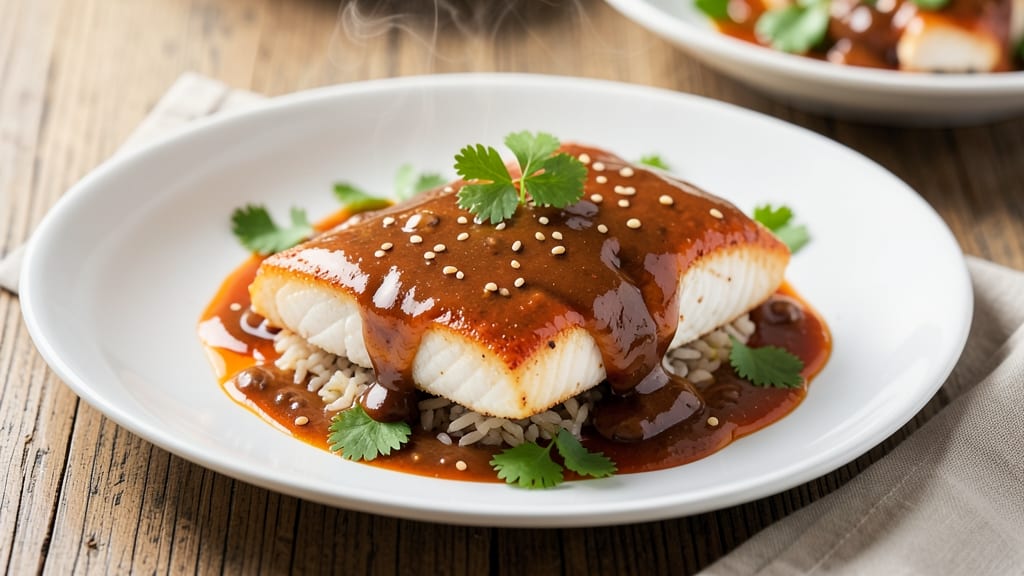
This bean paste fish recipe transforms simple fillets into a restaurant-worthy dish with just a few key ingredients and a silky glaze that clings perfectly to every bite. The secret lies in the bean paste—a fermented, umami-rich condiment that caramelizes into a glossy, savory coating while keeping the fish tender.
I first discovered this technique while exploring Southeast Asian cuisine, and it quickly became a staple in my kitchen for its ability to elevate even the most basic fish fillets.
The process is straightforward but requires attention to detail, particularly when balancing the cooking time to achieve a crispy glaze without overcooking the delicate fish. You’ll start by marinating the fillets in a mixture of bean paste, soy sauce, and a touch of honey to enhance the caramelization.
The glaze is built in stages—first searing the fish skin-side down, then basting with the reduced bean paste mixture until it reaches a deep golden hue. This method ensures the fish remains moist while developing layers of flavor.
What you’ll end up with is a dish that’s rich in umami, with a glossy, caramelized crust that contrasts beautifully against the silky, flaky interior of the fish. The bean paste’s deep, fermented notes complement the natural sweetness of the fish, creating a harmony that’s both comforting and sophisticated.
This recipe is perfect for a weeknight dinner or a special occasion, and it pairs wonderfully with steamed jasmine rice or a simple stir-fried vegetable.
For those looking to experiment, you can adjust the glaze by adding a splash of rice vinegar for brightness or a pinch of chili flakes for heat.
The beauty of this dish lies in its versatility—whether you’re using snapper, cod, or even firm white fish, the bean paste glaze will deliver a restaurant-quality result every time. Let’s get started on creating this umami-rich masterpiece.
Ingredients for bean paste fish
Umami-packed bean paste meets delicate fish for a dish that tastes like a high-end restaurant secret.
| Ingredient | Amount | Notes |
|---|---|---|
| White Fish Fillets 🐟 | 1 ½ lb | Snapper, cod, or firm white fish preferred |
| Fermented Bean Paste 🍶 | ½ cup | High-quality, umami-rich variety |
| Light Soy Sauce 🥄 | ¼ cup | Kikkoman preferred for balance |
| Honey 🍯 | 2 tbsp | Wildflower or clover variety |
| Rice Vinegar 🍶 | 1 tbsp | For brightness, optional |
| Sesame Oil 🫒 | 1 tbsp | Toasted sesame oil for aroma |
| Garlic Cloves 🧄 | 3 cloves | Minced for marinade |
| Fresh Ginger 🌿 | 1 tbsp | Grated, for depth |
| Neutral Oil 🫒 | 2 tbsp | Avocado or vegetable oil |
| Salt 🧂 | 1 tsp | Diamond Crystal kosher salt |
| Black Pepper 🌶️ | ½ tsp | Freshly cracked |
| Red Chili Flakes 🔥 | ½ tsp | Adjust for heat preference |
| Jasmine Rice 🍚 | 1 ½ cups | Uncooked, for serving |
The bean paste is non-negotiable here—look for fermented varieties at Asian markets or specialty stores. Lee Kum Kee or Thai Kitchen brands are reliable. Fresh fish is key: snapper or cod hold up best to the glaze. If you can't find whole fillets, ask your fishmonger to skin and portion them. The honey should be wildflower or clover—avoid artificial varieties that won't caramelize properly. For garlic, peel and mince fresh—jarred minced garlic lacks the punch this dish needs.
No bean paste? Miso paste at half the amount works in a pinch, though it won't have the same deep fermented notes. Skip the honey? Maple syrup is a 1:1 swap. The soy sauce can be swapped for coconut aminos, but you'll lose some umami depth. Fresh ginger? Ground ginger at one-third the amount is fine, but toasted sesame oil is harder to replace—nutty peanut oil is the closest substitute. For heat, sriracha or gochujang can replace chili flakes, but adjust to taste.
Fish should be used within 2 days of purchase—store it skin-side down on a plate in the fridge. Bean paste keeps for 6 months unopened, 3 months once opened. The glaze reheats beautifully—store leftovers in an airtight container with a thin layer of oil on top to preserve that glossy finish. For extra convenience, make a double batch of glaze and freeze it in ice cube trays—perfect for quick weeknight meals.
Why You'll Love This Recipe
- Five-Ingredient Magic: The pantry already has most of this—just fish, a spoonful of fermented bean paste, a splash of soy, a drizzle of honey, and vinegar. That’s it. No chopping, no blending, no stress.
- Umami Bomb: That fermented bean paste? It’s the secret weapon—deep, funky, and slightly sweet all at once. The honey and vinegar cut through the richness while keeping it bright, like a perfect balance of sticky-savory.
- Weeknight & Date Night: Same ingredients, different vibes: serve it over rice for a quick lunch or drizzle it on toast with greens for a fancy-ish brunch. Honestly, it works for both your "I’m exhausted" and "let’s impress" moments.
- Leftovers That Don’t Suck: Fish stays tender, sauce clings like glue—reheat it gently, and it’s still rich and flavorful. Pack it for lunches or freeze portions; no one will guess it’s not fresh-off-the-pan. (Yes, even on a Tuesday night.)
Step-by-step instructions for bean paste fish with umami glaze
This recipe delivers melt-in-your-mouth fish with a sticky-sweet glaze that balances rich umami with bright acidity.
Prepare the Glaze Base
In a small saucepan, combine the 0.5 cup fermented bean paste, 0.25 cup light soy sauce, 2 tbsp honey, 1 tbsp rice vinegar, and 1 tbsp sesame oil. Place over medium-low heat and stir constantly for 5-7 minutes until the mixture thickens slightly and becomes glossy. You're looking for a smooth, syrupy consistency that coats the back of a spoon.
Here's where the magic happens: the bean paste dissolves into the sauce, releasing deep umami flavors. If the mixture starts to bubble vigorously, reduce the heat slightly to prevent scorching. Once smooth, remove from heat and let it cool for 10 minutes—this prevents the glaze from cooking the fish too quickly when added later.
Infuse the Glaze with Aromatics
While the glaze cools, mince the 3 cloves garlic and grate the 1 tbsp fresh ginger. In a small bowl, combine these with the cooled glaze mixture. The garlic should be finely minced (almost paste-like) so it distributes evenly, while the ginger should be grated finely for maximum surface area and flavor infusion.
Let this aromatic mixture sit at room temperature for 10 minutes before using. This resting period allows the garlic and ginger to fully meld with the glaze, enhancing its depth. You'll notice the mixture becomes slightly more fragrant—this is your cue that the flavors are integrating properly.
Season and Marinate the Fish
Pat the 1.5 lb white fish fillets completely dry with paper towels. This step is crucial—any moisture on the surface will prevent the glaze from sticking properly. Season both sides generously with 1 tsp salt, 0.5 tsp black pepper, and 0.5 tsp red chili flakes, pressing the spices into the fish so they adhere.
Pour the infused glaze mixture evenly over the fish, coating all surfaces. Let the fish marinate for 15-20 minutes at room temperature. You'll see the glaze begin to penetrate the fish slightly, giving it a beautiful sheen. Don't skip this step—it ensures the fish absorbs the glaze's flavors and develops a perfect caramelized crust during cooking.
Cook the Jasmine Rice
While the fish marinates, rinse the 1.5 cups jasmine rice under cold water until the water runs clear. This removes excess starch that could make the rice gummy. In a medium saucepan, combine the rice with 3 cups water (or follow package instructions) and bring to a boil over high heat. Once boiling, reduce heat to low, cover tightly, and simmer for 15 minutes without lifting the lid.
After 15 minutes, remove from heat and let it steam, covered, for another 10 minutes. This resting period allows the rice to absorb any remaining moisture and develop its signature fluffy texture. Fluff with a fork before serving—you want each grain to be distinct and separate for the best texture contrast with the rich fish.
Sear and Glaze the Fish
Heat 2 tbsp neutral oil in a large skillet over medium-high heat until shimmering. Add the marinated fish fillets and sear for 2-3 minutes per side until the glaze begins to bubble and the fish turns opaque. You'll know it's ready when the edges are golden brown and the fish releases easily from the pan.
Immediately transfer the fish to a serving platter and spoon any remaining glaze from the pan over the top. The residual heat will finish cooking the glaze into a glossy, sticky coating. Serve the fish immediately over the jasmine rice, allowing the diners to experience the perfect balance of textures—silky fish, sticky glaze, and fluffy rice in every bite.
Pro Tips For Making Bean Paste Fish
- Bloom the Bean Paste: Stir the fermented bean paste into a tablespoon of warm water first—this breaks up any clumps and prevents a gritty texture in your sauce. I used to just toss it in cold, and half the time it looked like sandpaper on my tongue.
- Salt Fish Before Searing: Pat the fillets dry, then season with salt at least 10 minutes before cooking—this ensures they release moisture evenly and develop a better crust. I learned this the hard way when my fish turned rubbery mid-cook.
- Control the Honey Heat: Add the honey off the heat or on the lowest possible flame—it burns faster than you’d think. I’ve ruined three batches by letting it caramelize too aggressively; now I whisk it in after the pan’s off the stove.
- Deglaze with Rice Vinegar: After searing the fish, splash in the vinegar immediately—it cuts through the richness of the bean paste and brightens the sauce. Skip this, and your dish tastes like it’s missing something, even if everything else is perfect.
Troubleshooting this dish
Glaze Too Thin?
If your bean paste glaze isn’t thickening properly, you likely need to reduce it longer. Return the sauce to medium-low heat and simmer uncovered for an additional 3-5 minutes, stirring frequently. The moisture will evaporate, creating a thicker consistency perfect for glazing.
For extra insurance, add ½ tsp cornstarch mixed with 1 tsp water—stir it in and cook for 1 more minute. This trick works wonders without altering the flavor. 🔥
Fish Overcooking?
Bean paste glazes cook fish faster than expected. To prevent dryness, reduce your searing time to 1-2 minutes per side and finish with 1 minute under a broiler (watch closely!).
Alternatively, cook at medium heat instead of high—this gives you better control over the internal temperature. Use a meat thermometer to check for 145°F—any higher risks toughness. 🌡️
Glaze Not Sticking?
Moisture on the fish is the #1 culprit. Pat fillets extra dry with paper towels before seasoning, then let them sit on a wire rack for 5 minutes to evaporate any remaining dampness.
For stubborn cases, brush the fish with 1 tsp neutral oil before applying the glaze—this creates a better bond. If the glaze still won’t adhere, your sauce may be too thin—reduce it further as described above. ✨
Burnt Glaze?
High heat causes bean paste to scorch quickly. Keep your pan at medium-low while building the glaze, and never let it bubble vigorously. If it starts to darken too much, immediately remove from heat and stir in 1 tsp honey to balance the flavors.
For future attempts, use a light-colored pan (like stainless steel) to monitor color changes more easily. 💡
Uneven Cooking?
Thicker fish portions (like cod) cook unevenly. To fix this, place the thickest part of the fillet skin-side down first, then sear for 1 minute before flipping.
For extra insurance, tent the fish with foil during the last 2 minutes of cooking to prevent overbrowning on top. This technique ensures even doneness throughout. 🍽️
Glaze Too Salty?
Bean paste and soy sauce can overpower delicate fish. To balance, add 1 tsp honey or 1 tsp rice vinegar to the glaze while reducing. For a more dramatic fix, thin the glaze with 1 tbsp water, then simmer uncovered for 2 minutes to evaporate excess saltiness.
Taste as you go—this dish should sing with umami, not salt. 💛
Nutrition facts
Frequently asked questions
What type of fish works best for this bean paste glaze?
Firm white fish like snapper, cod, or halibut hold up perfectly to the glaze's richness. Avoid delicate fish like tilapia—they can break apart during cooking. For best results, use fillets with skin on (it crisps beautifully) and a thickness of about ½ to ¾ inch.
Can I make this recipe without bean paste?
Yes, but you'll lose some depth of flavor. Substitute with ½ cup miso paste (white or red) or ¼ cup soy sauce + 1 tbsp fish sauce for umami. For sweetness, add 1 extra tbsp honey. The glaze won't be as complex, but it'll still taste delicious!
How do I store leftovers?
Store cooked fish in an airtight container with a thin layer of oil on top to preserve the glaze's sheen. Keep refrigerated for up to 3 days or freeze for 1 month. Reheat gently in a skillet over low heat with a splash of water to restore moisture—never microwave.
What sides pair well with this dish?
Jasmine rice is classic, but you could also serve with steamed bok choy, stir-fried shiitake mushrooms, or cucumber salad for freshness. For a heartier meal, add quick-pickled vegetables to cut through the richness. The glaze's sweetness balances well with tangy or crunchy elements.
Why does my glaze turn dark brown too quickly?
Bean paste caramelizes fast when exposed to high heat. Keep your pan at medium-low and stir constantly. If it darkens too much, immediately remove from heat and stir in ½ tsp honey to balance the flavors. A light-colored pan helps you monitor color changes better than dark pans.