
Main Courses
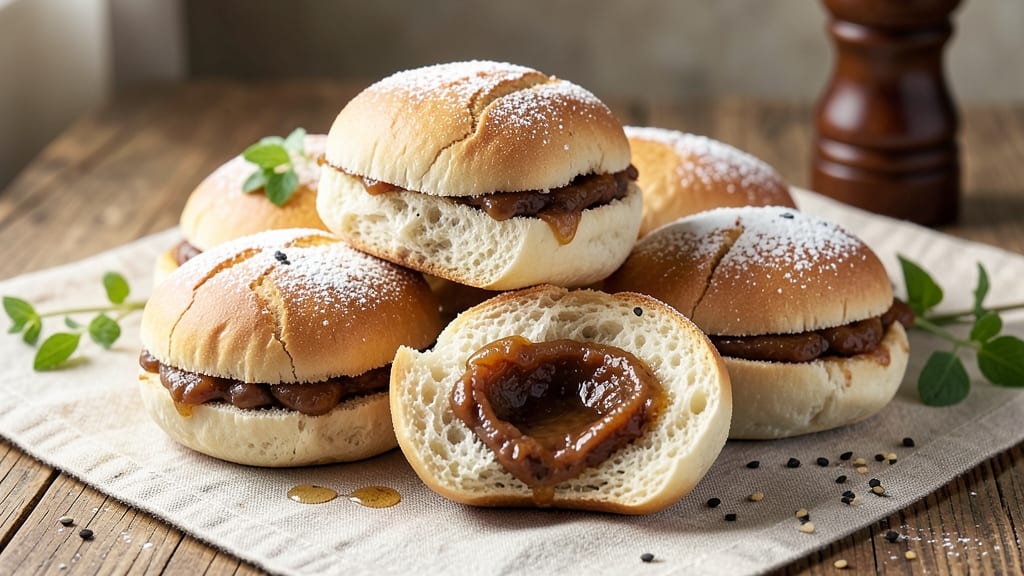
Bean paste buns bring the delicate balance of fluffy dough and sweet, nutty filling to life—each bite reveals a surprise heart of red or black bean paste that melts into creamy perfection. 💛 These steamed buns are a staple in Chinese and Malaysian baking traditions, where they’re served during festivals and family gatherings. The secret lies in the dough’s light texture and the precise ratio of bean paste to flour, ensuring every bun stays tender yet sturdy enough to hold its shape.
The process begins with a simple yet precise dough recipe, where yeast and sugar work together to create airy, pillowy buns. Once shaped into smooth rounds, the filling—whether vibrant red or deep black bean paste—is tucked inside before steaming.
This method preserves the filling’s silky texture while giving the dough a delicate, almost translucent finish. The aroma alone, rising from the steamer, transforms any kitchen into a celebration.
What makes these buns truly special is their versatility—they’re perfect for breakfast, snacks, or even dessert, depending on the bean paste used. The red variety offers a subtle sweetness with a hint of earthiness, while the black adds a deeper, molasses-like richness.
Whether you’re making them for a special occasion or a cozy weeknight treat, the result is always the same: a bite of comfort that’s both nostalgic and utterly satisfying.
Ready to master the art of bean paste buns? The key is patience—letting the dough rise properly and steaming the buns just until they’re golden and fragrant. With a little practice, you’ll achieve that signature tender crumb and irresistible filling. Let’s get started!
Ingredients for bean paste bun
Fluffy dough meets sweet bean paste surprises—this recipe delivers authentic steamed buns with perfect texture every time.
| Ingredient | Amount | Notes |
|---|---|---|
| All-Purpose Flour 🌾 | 4 cups | Sifted for light texture |
| Granulated Sugar 🍚 | ¼ cup | For dough sweetness |
| Instant Yeast 🍞 | 0.01 oz | Or 2 1/4 tsp |
| Unsalted Butter 🧈 | ½ cup | Cold, cubed for dough |
| Whole Milk 🥛 | ¾ cup | Room temperature |
| Egg 🥚 | 1 whole | Large, room temperature |
| Red Bean Paste 🍫 | 1 cup | Or black bean paste |
| Vegetable Oil 🫒 | 1 tbsp | For greasing buns |
| Salt 🧂 | ½ tsp | Fine sea salt |
| Vanilla Extract 🌸 | ½ tsp | Optional for flavor |
| Cornstarch 🌾 | 1 tbsp | For dusting |
The flour is non-negotiable—King Arthur or Gold Medal brands yield the lightest texture. Red bean paste should be smooth and vibrant; Asian grocery stores carry the best quality in jars. If using black bean paste, expect a deeper, molasses-like richness. For the butter, Land O'Lakes unsalted works perfectly, but any cold, unsalted brand will do. The yeast must be fresh—if it smells stale, toss it. Trader Joe's sells single-serving packets that work great for this recipe.
No red bean paste? Black bean paste is a perfect swap, though the flavor profile shifts slightly. Short on vanilla? Skip it—it's optional but adds depth. The milk can be substituted with oat or almond milk for a dairy-free version, but whole milk gives the best texture. For the dough, overmixing leads to tough buns**, so mix just until combined. If your paste is too thick, warm it gently to soften—it should be pliable but not runny.
Store unused paste in an airtight container in the fridge for up to 3 months. The dough can be prepped ahead and refrigerated 12-24 hours before shaping—just let it rise at room temperature before steaming. Buns keep at room temperature for 2 days in a bread bag, or freeze shaped buns (before steaming) for 3 months** for fresh-out-of-the-steamer results later.
Why You'll Love This Recipe
- No Yeast Fuss: I swear by this dough—just flour, butter, milk, and a pinch of yeast. The butter keeps it tender without needing kneading marathons, and the sugar caramelizes just enough to give that subtle sweetness. Honestly, my first attempt turned out flaky even though I didn’t measure the butter perfectly.
- Sweet-Savory Magic: That bean paste filling is where it shines—rich, molasses-y depth with a hint of smokiness. The dough’s buttery softness wraps around it like a hug, and the sugar in the dough caramelizes into a crispy edge when baked. (Yes, even on a Tuesday night, these disappear faster than I can say "second batch.")
- Breakfast or Snack Star: I make these for lazy mornings, lunchboxes, or when I need a treat after work. The dough’s neutral flavor lets the bean paste take center stage, but you could swap it for Nutella or jam if you’re feeling wild. My kid’s school calls them "mom’s cookies," and I let them.
- Budget-Friendly Staple: Flour, butter, sugar—these are pantry basics that stretch far. A single batch yields 12 buns, and they freeze like a dream. I’ll be real: I’ve reheated these from frozen for weeks, and they’re still better than store-bought pastries. Plus, the yeast and milk cost pennies compared to fancy fillings.
Step-by-step instructions for steamed bean paste buns
Mastering these buns requires patience and precision—here's how to achieve tender dough and perfect bean paste hearts.
👨🍳 Step 1: Prepare the Dough Foundation
In a large mixing bowl, combine the 4 cups all-purpose flour, 0.25 cup granulated sugar, and 0.5 tsp salt. Sift these dry ingredients together to eliminate lumps and aerate the flour. This creates a light, airy base for your buns.
Make a well in the center and add the 0.01 oz instant yeast, 0.5 cup cold cubed unsalted butter, and 0.5 tsp vanilla extract (if using). The cold butter should remain in chunks—this prevents premature melting and ensures proper dough texture. Gently mix these ingredients with a wooden spoon until you have a coarse crumbly mixture.
🍳 Step 2: Hydrate and Knead the Dough
Gradually add the 0.75 cup room-temperature whole milk and 1 whole egg to the dry mixture. Use a wooden spoon to combine until a shaggy dough forms. Once the dough comes together, turn it out onto a lightly floured surface and knead for 8-10 minutes until smooth and elastic.
I press down firmly during kneading to develop gluten—this gives the buns their signature chewy texture. The dough should be slightly tacky but not sticky. If it's too dry, add 1 tsp vegetable oil at a time until just combined. Shape into a ball, cover with a damp towel, and let rest at room temperature for 1 hour. This resting period allows the gluten to relax and the dough to hydrate properly.
🥘 Step 3: Shape and Fill the Buns
After resting, divide the dough into 12 equal pieces (about 2 oz each). Roll each piece into a 6-inch circle, then gently press the center with your thumb to create a shallow well. Place 1 tsp red bean paste in the center of each circle. The paste should be smooth and evenly distributed.
Carefully gather the dough edges and pinch them together to seal the bean paste completely inside. Roll the sealed edges between your palms to create a smooth, round bun shape. Place the filled buns on a parchment-lined baking sheet, cover with a damp towel, and let rise for 30 minutes until puffy. The dough should spring back slowly when pressed gently—this indicates proper proofing.
⏰ Step 4: Steam to Perfection
Preheat your steamer by bringing 2 inches of water to a rolling boil. Arrange the buns in a single layer in the steamer basket, ensuring they don't touch. Steam over medium-high heat for 12-15 minutes until the buns are golden brown on top and the bean paste filling is fully set.
Here's the key: don't overcrowd the steamer. If you steam too many at once, they'll lose heat and won't cook evenly. The buns should puff slightly and develop a delicate crust. Remove them carefully with a slotted spoon and let cool on a wire rack for 5 minutes before serving. The internal temperature should reach 190°F—this ensures the bean paste is fully cooked and creamy.
🔪 Step 5: Dust and Serve Warm
While still warm, lightly dust the tops of the buns with 1 tbsp cornstarch using a fine-mesh sieve. This creates that signature powdery finish and prevents sticking. Serve immediately while the buns are warm and the bean paste filling is still gooey inside.
For the best texture, cut into each bun to reveal the silky red bean paste heart. The exterior should be soft yet slightly crisp, while the interior remains tender and pillowy. Store any leftovers in an airtight container at room temperature for up to 2 days, but they're best enjoyed fresh from the steamer.
Pro Tips For Making Bean Paste Bun
- Weigh Your Butter: I learned this the hard way—packing butter into measuring cups leaves you guessing. Use a scale for the dough: 200g cold, cubed butter (no softening) creates flakier layers when folded into the dough. The cold butter melts just enough during baking to keep those buns tender without turning greasy.
- Proof at Room Temp: Skip the fridge for proofing—just 1 hour at 75°F (24°C) works better than overnight in the cold. Cold dough wakes up sluggish, and you’ll end up with dense buns. My grandmother swore by this: a warm spot near the oven (not inside) gets the job done faster without overproofing.
- Steam the Filling: Don’t skip steaming the bean paste filling before wrapping. A 5-minute steam (covered pot, low heat) softens the paste so it doesn’t harden into a brick when baked. I was skeptical until I tried it—now I preheat the steamer while shaping the buns.
- Shape Tightly, Bake Slow: Press the dough firmly around the filling—no air gaps. Loose buns burst open or leak filling. Bake at 350°F (175°C) for 15–18 minutes: lower heat prevents a dark crust while letting the filling set properly. Sounds weird, but it works: a toothpick comes out clean, and the buns stay moist for days.
Serving suggestions for bean paste bun
Breakfast Delight
Start your day with these buns as a warm, comforting breakfast. Pair them with a steaming cup of jasmine tea or Hong Kong-style milk tea—the creamy sweetness complements the bean paste perfectly. For extra protein, serve alongside scrambled eggs or smoked salmon to create a balanced meal. 💛
Afternoon Snack
Transform these buns into a delightful afternoon treat by arranging them on a platter with fresh lychee fruit and mandarin oranges. The tartness of the fruit cuts through the sweetness of the bean paste, creating a refreshing contrast.
For a festive touch, drizzle with honey or sprinkle with toasted sesame seeds.
Dessert Showstopper
Elevate your dessert spread by serving these buns warm with whipped coconut cream or vanilla bean ice cream. The contrast between the warm, pillowy buns and cold, creamy toppings is irresistible. Garnish with edible gold leaf or crushed pistachios for an elegant presentation at dinner parties or celebrations.
Festive Gathering
These buns are a staple during Lunar New Year and Mid-Autumn Festival celebrations. Arrange them on a tiered platter with lotus paste buns and five-spice pork buns for a traditional spread. The red bean paste symbolizes luck and prosperity, making them a meaningful addition to festive tables.
Coffee Pairing
For a modern twist, serve these buns alongside strong black coffee or matcha latte. The earthy notes of the coffee enhance the nutty flavors of the bean paste, creating a sophisticated flavor combination. If you prefer something lighter, opt for chamomile tea to balance the richness of the buns.
Make-Ahead Serving
Prep these buns ahead of time and store them in an airtight container at room temperature for up to 2 days. Reheat in a steamer for 3-5 minutes to restore their soft texture before serving.
This makes them perfect for lunches or picnics, where you want a handheld, delicious treat without the hassle of last-minute cooking. ✨
Nutrition facts
Frequently asked questions
Can I substitute red bean paste with other fillings?
While red bean paste is traditional, you can experiment with black bean paste for a deeper flavor, or even lotus paste for a floral twist. For savory options, try minced pork with five-spice powder or mushroom and shallot filling. Just ensure your filling is smooth and pliable—thick pastes like peanut butter work but may require thinning with a bit of water.
Why did my bean paste buns turn out dense instead of fluffy?
Dense buns usually result from over-kneading the dough or skipping the resting periods. Knead just until smooth (8-10 minutes), and let the dough rest after mixing and before shaping. Also, ensure your yeast is fresh—old yeast won't activate properly. If using a high-altitude oven, reduce sugar slightly (0.2 cup) to prevent overproofing.
Can I bake these buns instead of steaming?
Yes! Preheat your oven to 375°F and bake the shaped buns for 15-18 minutes until golden brown. Brush the tops with a little egg wash (1 egg yolk + 1 tbsp water) for extra shine. For best texture, steam first for 8 minutes, then finish baking to get the crispy top many prefer. The filling will be slightly firmer than steamed versions.
How do I store leftover bean paste buns?
Keep buns in an airtight container at room temperature for up to 2 days. For longer storage, freeze shaped (unsteamed) buns for 3 months. To reheat, steam for 3-5 minutes or microwave for 15 seconds with a damp paper towel. Avoid refrigerating—it makes the dough dry out faster.
What's the best way to shape the bean paste heart?
Start with a 1 tsp portion of paste per bun. Roll it into a thin log, then place it horizontally in the dough well. Fold the dough edges over the paste, then roll the bun between your palms to create a smooth, rounded shape. For a more dramatic heart shape, press the paste into a teardrop form before sealing. The key is sealing tightly to prevent leaks during steaming!