
Sauces & Condiments
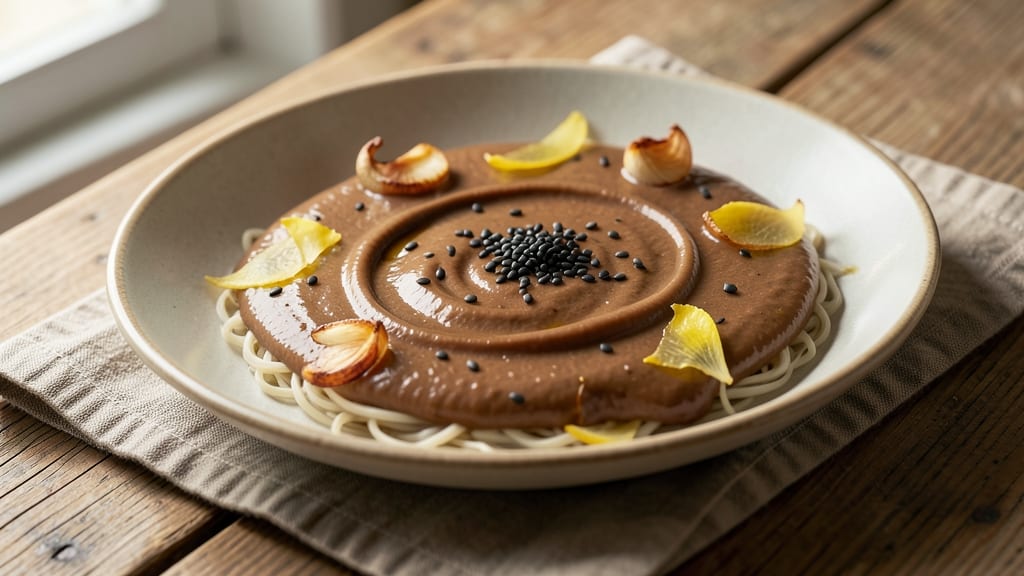
This bean curd sauce recipe transforms simple ingredients into a silky, umami-rich glaze that elevates stir-fries, noodles, and dumplings to restaurant-quality. The secret lies in blending silken tofu with aromatic garlic, ginger, and soy sauce until smooth, then simmering until thickened into a glossy, velvety sauce.
I developed this recipe after years of experimenting with plant-based sauces that actually deliver depth—no bland aftertaste here.
The beauty of this sauce is its versatility: use it as a dipping sauce for spring rolls, a glaze for tofu or tempeh stir-fries, or a flavor booster for ramen and pho.
The tofu base creates that signature silky texture while absorbing flavors beautifully, while the soy and miso provide that essential umami punch. What makes it special is how it coats ingredients perfectly without overpowering them—just a few spoonfuls transform a simple meal into something extraordinary.
What you'll end up with is a silky umami glaze that's rich, aromatic, and packed with savory depth—far beyond anything you'd find in a jar. The sauce thickens just enough to cling beautifully to noodles and proteins while remaining smooth enough to drizzle.
Best of all, it keeps well in the fridge for up to a week, making it perfect for meal prep. This is the kind of sauce that makes plant-based cooking exciting.
Ready to make your own? The process is straightforward: blend, simmer, and taste as you go. Whether you're vegan, simply looking for a new sauce to try, or want to add authentic flavor to your cooking, this bean curd sauce delivers. Let's get started—your taste buds will thank you.
Ingredients for bean curd sauce
Eight simple ingredients blend into a restaurant-worthy umami glaze that transforms any dish.
| Ingredient | Amount | Notes |
|---|---|---|
| Silken Tofu 🧀 | 14 oz | Extra-firm for best texture |
| Soy Sauce 🍶 | ½ cup | High-quality, reduced variety |
| White Miso Paste 🍶 | 2 tbsp | Aged 1-2 years for depth |
| Garlic Cloves 🧄 | 4 cloves | Freshly minced, not pre-minced |
| Fresh Ginger 🌿 | 1 tbsp | Finely grated, peeled |
| Sesame Oil 🫒 | 1 tbsp | Toasted, not refined |
| Rice Vinegar 🍶 | 1 tbsp | Seasoned for balance |
| Maple Syrup 🍯 | 1 tbsp | Pure, grade B preferred |
| Cornstarch 🌾 | 1 tsp | For thickening, dissolved first |
| Filtered Water 💧 | ¼ cup | Room temperature |
Silken tofu is the secret weapon here—extra-firm blocks from Nashville Tofu or House Foods give the best texture. Look for packages labeled 'extra-firm' or 'super silken' at Asian markets or well-stocked grocery stores. If you can only find regular silken tofu, drain it for 10 minutes first to remove excess water. The white miso should be aged 1-2 years for that deep, savory punch—Miso Master or Hokkaido brands are my go-tos. Fresh ginger and garlic are non-negotiable; pre-minced garlic loses flavor fast, and dried ginger lacks that bright zing.
No sesame oil? Toasted peanut oil works in a pinch, though the flavor will differ slightly. Running short on maple syrup? Agave nectar or coconut sugar dissolved in water keeps it vegan-friendly. The cornstarch is key for that perfect silky thickness—arrowroot powder works too, but cornstarch gives a cleaner finish. Soy sauce substitutes? Tamari for gluten-free or coconut aminos for a lighter taste. For extra umami, add 1 tsp nutritional yeast to the blend. And if you're feeling adventurous, swap half the soy sauce for dark soy sauce—it adds color and complexity.
This sauce keeps beautifully—1 week in the fridge sealed tightly, or 3 months frozen in ice cube trays for single portions. For best texture, reheat gently on low heat, stirring constantly. I always make a double batch because it disappears fast—once it's in your fridge, you'll be reaching for it constantly. Freeze extras in small containers so you always have sauce on hand for last-minute stir-fries. The sauce thickens as it cools, so if it seems too thick when first made, just add a splash of water and stir.
Why You'll Love This Recipe
- Few Ingredients, Big Payoff: I swear by this recipe—just silken tofu, miso, and a handful of pantry staples. No chopping mountains of veggies or hunting for obscure spices; the real magic happens in that 10-minute blend of garlic, ginger, and soy sauce. Honestly, I keep it on speed dial because it’s the kind of sauce that turns "meh" dinners into "wait, why didn’t I think of this sooner?"
- Umami Bomb: That white miso paste? It’s the secret weapon here. The first time I tasted this sauce—smooth, salty, with a slow-building depth—my partner grabbed the bowl and said, "More." The ginger and garlic add a bright kick, but it’s the miso that makes it dangerously good, especially when drizzled over rice or noodles. (Yes, even on a Tuesday night.)
- Works Every Time: Between us, this sauce is my go-to for lazy nights, potlucks, or when I’m too tired to cook. Drizzle it over steamed greens, toss it with cold soba noodles, or slather it on grilled fish—it’s the kind of flavor that adapts without trying too hard. I’ve even used it as a quick marinade for tofu skewers. Versatile? Absolutely. Overwhelming? Never.
- Leftovers That Don’t Suck: Most sauces turn into sad, watery messes by day three. Not this one. The miso and soy sauce keep it rich and balanced, so I make a big batch and stash it in the fridge. A spoonful of this sauce transforms reheated rice into a meal, or I mix it into scrambled eggs for a savory breakfast. Budget-friendly? Check. Time-saving? Double check. My wallet and I both approve.
Step-by-step instructions for silky bean curd sauce
This velvety umami glaze transforms simple stir-fries into restaurant-worthy dishes with minimal effort.
Blend the Silken Tofu and Miso Base
Begin by draining the 14 oz silken tofu and patting it completely dry with paper towels—this prevents a watery sauce. In a blender, combine the tofu with the 0.5 cup soy sauce and 2 tbsp white miso paste. Blend until completely smooth, about 30 seconds, until you achieve a homogeneous, creamy texture. Here's the thing—this step builds the sauce's velvety foundation, so don't skip blending thoroughly or you'll end up with lumps that disrupt the silky consistency.
Taste the mixture now—it should be intensely umami with a salty-sweet balance from the miso and soy sauce. If it needs more depth, add 1 tbsp of the maple syrup and blend again. The goal is to create a rich, flavorful base that will carry through the entire sauce. Keep this mixture in the blender for now; we'll return to it after building the aromatic components.
Sauté Aromatics Until Fragrant
Heat 1 tbsp sesame oil in a small saucepan over medium heat. Add the 4 minced garlic cloves and 1 tbsp finely grated fresh ginger, stirring constantly for 30 seconds until the garlic becomes translucent and the ginger releases its bright aroma. This quick cooking step prevents the garlic from burning while allowing the ginger's heat to mellow into the background.
Immediately pour in the 1 tbsp rice vinegar and let it simmer for 1 minute until the vinegar's sharpness softens into a subtle tang. Remove the pan from heat and let the aromatics cool for 2 minutes—the residual heat will continue cooking them gently. This aromatic base forms the flavor backbone of the sauce, so don't rush this step. The mixture should smell like a warm Asian street market: sweet, savory, and slightly funky.
Combine and Thicken the Sauce
Return the blended tofu mixture to the blender and add the cooled aromatic mixture. Pour in the 0.25 cup filtered water and 1 tbsp maple syrup, then blend again until completely smooth. The sauce should now have a thick, pudding-like consistency. In a small bowl, dissolve the 1 tsp cornstarch in 2 tbsp cold water to create a slurry—this will be our thickening agent.
Return the sauce to the saucepan and place it over medium-low heat. Slowly pour in the cornstarch slurry while whisking constantly. Bring the sauce to a gentle simmer and cook for 2-3 minutes until it thickens to a glossy, coatable consistency. You'll know it's ready when it pulls away from the sides of the pan and leaves a clean streak when you run your finger through it. This thickening step is critical—it transforms the sauce from a thin glaze into a luxurious, clinging coating perfect for stir-fries and dipping.
Finish and Test for Perfection
Remove the sauce from heat and taste immediately. The flavor should be complex: umami from the miso and tofu, sweet from the maple syrup, tangy from the rice vinegar, and aromatic from the garlic and ginger. If it needs more balance, adjust with a pinch of salt or an extra splash of soy sauce. The sauce should be cohesive and velvety, not grainy or watery.
Let the sauce cool to room temperature—it will thicken further as it sits. For best results, use it within 24 hours, though it will keep in the refrigerator for up to 5 days. This sauce works beautifully as a dipping sauce for spring rolls, a glaze for grilled meats, or a finishing sauce for stir-fried vegetables. The key to its success lies in the balance of textures and flavors we've carefully built—thick enough to cling, thin enough to coat, and flavorful enough to stand alone.
Pro Tips For Making Bean Curd Sauce
- BLEND TO SMOOTH, NOT SLUDGE: Silken tofu’s skin and watery center make blending a nightmare—unless you strain it first. After pressing the tofu (wrap in a towel, place a heavy pan on top for 10 minutes), scoop out the soft interior and blend it cold with 2 tablespoons of ice water. This keeps the texture velvety, not gluey. (Yes, I’ve made the mistake of skipping this—don’t.)
- GINGER: GRATE, DON’T CHOP: Fresh ginger loses its punch when you dice it. Use a microplane or the smallest holes on a box grater to turn 1-inch of ginger into a fine paste—no chunks, no bitterness. Add it raw to the sauce first, then simmer; this way, it infuses flavor without turning to mush. (I used to chop it like an onion. Bad move.)
- LOW AND SLOW FOR MISO: White miso paste burns faster than you’d think. After adding it to the sauce, reduce the heat to lowest and let it melt in for 3-4 minutes, stirring constantly. If you rush it, you’ll end up with a bitter, grainy mess. (I learned this after one disastrous batch where I walked away for "just a second.")
- GARLIC: TOAST IT FIRST: Raw garlic in this sauce can taste sharp and metallic. Before mincing, dry the cloves thoroughly with a paper towel, then lightly toast them in a dry pan over medium heat for 30 seconds until fragrant. Add them to the sauce after the ginger and soy sauce have simmered for 2 minutes—this softens their edge and adds depth. (Sounds weird, but it works.)
Health benefits of this bean curd sauce
Plant-Based Protein Boost
This bean curd sauce is a protein powerhouse for plant-based diets, delivering 12-15 grams of protein per serving from the silken tofu base. That's comparable to a small serving of Greek yogurt but with the rich umami depth of traditional Asian sauces.
The miso paste adds fermented protein and probiotics, supporting gut health while enhancing flavor. 💪
Fermented Benefits
The white miso paste in this sauce provides probiotic benefits from fermentation, aiding digestion and gut microbiome balance. Miso also contains antioxidants like polyphenols that help combat oxidative stress.
For maximum benefits, use aged miso (1-2 years) as it contains higher levels of beneficial compounds. I always keep a jar of Miso Master on hand for this reason.
Low-Calorie Umami
At just 50-60 calories per 2-tablespoon serving, this sauce delivers intense umami flavor without the calorie load of heavy cream-based sauces. The maple syrup provides natural sweetness with minimal calories, while the sesame oil adds healthy fats in a 1-tablespoon serving (about 120 calories).
This makes it perfect for health-conscious cooks who want flavor without guilt.
Blood Sugar Friendly
The sauce's low glycemic index comes from the combination of tofu protein, miso fiber, and maple syrup's natural sweetness. The cornstarch thickening is used sparingly, and the rice vinegar helps balance any sweetness.
For diabetic-friendly versions, reduce maple syrup to ½ tablespoon while keeping the same umami impact from the miso and soy.
Heart Health Support
The soy sauce provides isoflavones, plant compounds linked to improved cholesterol levels and heart health. Combined with the tofu's plant-based protein, this sauce supports cardiovascular wellness. The sesame oil contains sesamin, a compound that helps regulate blood pressure.
For maximum heart benefits, use reduced-sodium soy sauce and limit to 1 tablespoon per serving.
Meal Prep Nutrition
This sauce stores well for 5 days in the fridge or 3 months frozen, making it an excellent nutrient-dense condiment for meal prep. The ginger and garlic provide anti-inflammatory benefits, while the tofu's complete protein profile makes it ideal for post-workout meals.
I always keep a small batch on hand for quick stir-fries that need that umami boost without heavy calories. ✨
Nutrition facts
Frequently asked questions
Can I make this bean curd sauce without a blender?
Yes, but the texture will be less silky. Mash the 14 oz silken tofu with a fork until completely smooth, then strain through a fine-mesh sieve to remove any lumps. This removes the need for blending but may result in a slightly thicker, less velvety sauce. The flavor will still be delicious—just stir more vigorously when combining with other ingredients.
How can I adjust the sauce for spicy dishes?
Add ½ teaspoon of chili flakes or 1 teaspoon of gochujang (Korean chili paste) to the blended tofu mixture before simmering. For heat control, start with half the amount and adjust to taste. The sauce's silky texture helps balance spice beautifully, making it perfect for spicy noodles or dumplings.
Why did my sauce turn out too thick?
This usually happens when the cornstarch slurry cooks too long or the sauce sits too long before using. Thin with 1 teaspoon of warm water at a time, stirring constantly until smooth. If storing, reheat gently over low heat while stirring—never microwave, as it can make the sauce grainy. The ideal consistency should coat the back of a spoon but still drip slowly.
What's the best way to use leftover sauce?
Use it as a marinade for 15-30 minutes before grilling tofu, tempeh, or vegetables. It also makes an excellent dipping sauce for spring rolls or egg rolls. For extra richness, drizzle over steamed greens or use as a finishing sauce for ramen. The sauce keeps well for 5 days refrigerated or 3 months frozen in ice cube trays—perfect for meal prep!
Can I substitute silken tofu with regular tofu?
No, regular tofu won't work because it's too firm and won't blend smoothly. Silken tofu's delicate texture is essential for creating the sauce's velvety consistency. If you absolutely must substitute, use extra-firm tofu and drain it for 20 minutes first, but the texture will be slightly different. For best results, stick with silken tofu.