
Soups & Stews
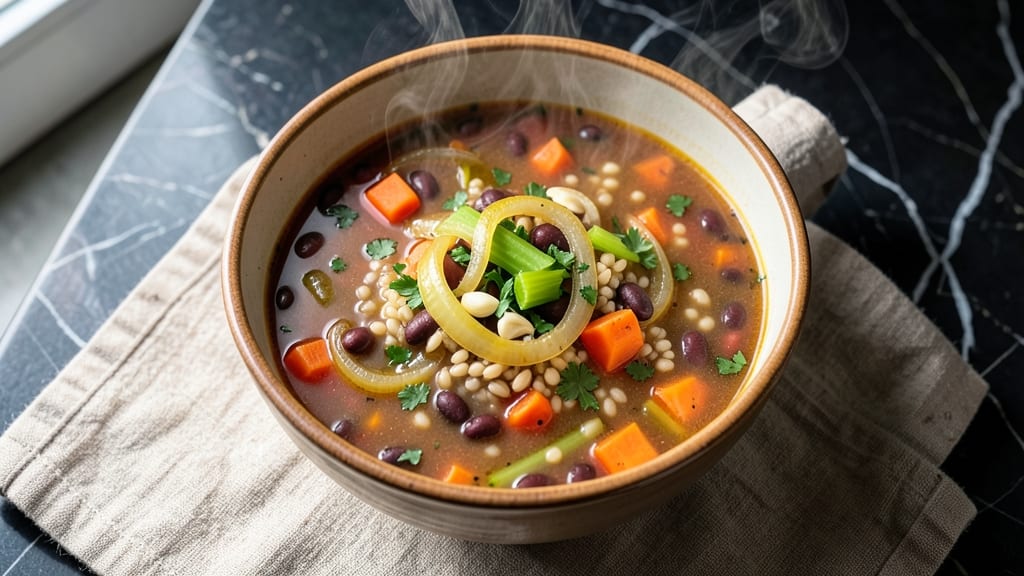
This Jewish bean and barley soup brings the warmth of Sabbath tradition to your kitchen with its earthy spices and hearty barley. The secret lies in slow simmering, where beans soften and barley absorbs the rich broth, creating a deeply satisfying dish that feels like a hug in a bowl.
I've perfected this recipe over years of family gatherings, ensuring every spoonful delivers that perfect balance of savory, spiced, and comforting flavors.
The beauty of this soup is its adaptability—whether you're preparing for a Shabbat meal or a cozy weeknight dinner, the ingredients come together effortlessly. Barley adds a satisfying chew, while beans provide protein and depth, all tied together with aromatic spices like cumin and parsley.
The broth, simmered for hours, becomes rich and flavorful, making this soup even more irresistible with each bite.
What makes this recipe special is its authenticity—no shortcuts, just the traditional flavors that have been passed down through generations. The slow cooking process ensures tender vegetables and perfectly cooked barley, while the spices infuse the broth with warmth and complexity.
This is more than just soup; it's a taste of tradition, comfort, and love in every bowl.
Serve it with crusty bread to soak up every last drop of that flavorful broth, or pair it with matzo balls for a classic touch. The possibilities are endless, but the result is always the same: a dish that feels like home. Let's get cooking!
Ingredients for bean and barley soup jewish
Six hearty ingredients and a few pantry staples—this Jewish Sabbath soup is all about slow-simmered comfort.
| Ingredient | Amount | Notes |
|---|---|---|
| Pearl Barley 🌾 | 1 cup | Rinsed thoroughly before cooking |
| Dried Navy Beans 🥔 | 1 ½ cups | Soaked overnight for best texture |
| Yellow Onion 🧅 | 1 whole | Diced into small pieces |
| Carrots 🥕 | 3 medium | Chopped into bite-sized pieces |
| Celery Stalks 🧆 | 3 whole | Diced into small pieces |
| Garlic Cloves 🧄 | 4 cloves | Minced for deep flavor |
| Ground Cumin 🌿 | 1 tbsp | Toasted for deeper aroma |
| Dried Parsley 🌿 | 1 tbsp | Fresh preferred if available |
| Bay Leaves 🍃 | 2 whole | Removed before serving |
| Vegetable Broth 💧 | 6 cups | Low-sodium preferred |
| Olive Oil 🫒 | 2 tbsp | Extra-virgin for richness |
| Salt 🧂 | 1 ½ tsp | Kosher or sea salt |
| Black Pepper 🌶️ | ½ tsp | Freshly ground preferred |
| Apple Cider Vinegar 🍎 | 1 tbsp | For brightness |
Barley is the star here, so grab pearled barley—it cooks faster than steel-cut but still holds its shape. Bob's Red Mill or the bulk section at Whole Foods usually have the best quality. Navy beans are traditional, but great northern or cannellini work too if you prefer. The carrots and celery should be fresh—look for vibrant color (no wilted tops!). If you're short on time, pre-cut veggies save 10 minutes, but fresh tastes better. For the spices, Penzeys or the bulk bins at your local market have the freshest ground cumin—it makes all the difference.
No vegetable broth? Water plus bouillon cubes works in a pinch, but homemade is better. Fresh parsley is ideal, but dried at half the amount gets you close. The apple cider vinegar might seem odd, but it cuts through the richness and brightens everything—Bragg or local orchard brands are my go-tos. Want more depth? Add a pinch of cinnamon or allspice (common in Ashkenazi cooking). The onions and garlic are non-negotiable—sauté them until golden for that caramelized sweetness. And trust me, toasting the cumin in the oil first is worth the extra minute.
This soup tastes even better the next day as flavors meld. Keeps for 5 days in the fridge or 3 months frozen. I like to make a big batch and freeze portions—just thaw overnight in the fridge. The barley thickens as it cools, so add a splash of broth when reheating. Serve with crusty bread or matzo balls for the full Sabbath experience. Leftovers? Perfect for lunch the next day—just warm through and enjoy.
Why You'll Love This Recipe
- I’ll be real: this recipe costs me about $1.50 per serving, and it fills me up like a steak dinner. Pearl barley and dried beans are pantry staples, and the veggies? You’re using the whole onion, not just the pretty parts. Plus, the more you make, the more you save—because reheating this soup is almost as good as the first bite.
- One-Pot Magic: I swear by this soup because it’s literally one pot—no chopping chaos, no extra bowls. Toss in the whole onion, carrots, and celery (peeled, roughly chopped), add the barley and beans, and let the broth do the work. By the time the navy beans are tender, the barley’s got that perfect bite, and the veggies? They melt into the broth like a warm hug.
- Deep, Rich Layers: Honestly, the secret’s in the slow simmer. That barley? It soaks up the broth until it’s almost creamy, while the navy beans stay hearty. Add a splash of vinegar or a bay leaf (trust me, it works), and suddenly you’ve got a soup that’s both comforting and complex—like a hug from your bubbe’s kitchen.
- Weeknight to Potluck: Between us, this soup is my go-to for everything. Make a big batch on Sunday, and you’ve got lunch for three days—or bring it to a Shabbat gathering and watch it disappear. The barley keeps it satisfying, and the beans? They’re cheap enough to stretch into leftovers that still taste amazing reheated.
Step-by-step instructions for bean and barley soup
This hearty soup comes together with simple steps and deep, comforting flavors.
Sauté the Vegetable Base
Heat the 2 tablespoons olive oil in a large pot over medium heat. Add the 1 whole yellow onion, 3 medium carrots, and 3 whole celery stalks, all chopped into small pieces. Cook for 5-7 minutes until the vegetables soften slightly and begin to release their natural juices. You'll see the onion turn translucent and the carrots and celery lose their raw bite.
Next, add the 4 cloves garlic, minced, and the 1 tablespoon ground cumin. Stir for 30 seconds until the garlic becomes fragrant and the cumin releases its warm, earthy aroma. This step builds the flavor foundation for your soup, so don't rush it. The vegetables should be tender but not browned—this ensures they'll cook through properly during the simmer.
Add Barley and Beans
Stir in the 1 cup pearl barley and 1.5 cups dried navy beans. The barley should be well-rinsed beforehand to remove any debris. Cook everything together for 2 minutes, stirring occasionally, until the barley and beans are lightly toasted and coated with the vegetable mixture. This brief toasting enhances their flavors and prevents them from sinking to the bottom during cooking.
Pour in the 6 cups vegetable broth, making sure all the barley and beans are submerged. Add the 2 whole bay leaves, 1.5 teaspoons salt, and 0.5 teaspoon black pepper. Bring the mixture to a boil over high heat, then immediately reduce the heat to low. Cover the pot and let it simmer gently for 45 minutes, stirring occasionally to prevent sticking. The soup should bubble softly without vigorous boiling.
Simmer Until Perfectly Tender
After the initial 45 minutes, check the texture of the barley and beans. They should be tender but still have a slight bite—barley should be soft but not mushy, and beans should be easily mashed between your fingers. If they're not quite there, continue simmering for another 15-20 minutes, checking occasionally. The soup should have a thick, hearty consistency with the barley and beans fully integrated into the broth.
Taste the soup and adjust the seasoning if needed. If it tastes flat, add a pinch more salt or a splash of the 1 tablespoon apple cider vinegar for brightness. The vinegar adds a subtle tang that balances the earthy flavors. Remove the bay leaves before serving, as they're not meant to be eaten.
Finish and Serve
Once the barley and beans are perfectly tender, stir in the 1 tablespoon dried parsley. The parsley adds a fresh, herbal note that brightens the soup. Let the soup sit off the heat for 5 minutes to allow the flavors to meld together. This resting time ensures the soup is perfectly balanced and ready to serve.
Ladle the soup into bowls and serve immediately. Each spoonful should deliver a harmonious blend of tender barley, hearty beans, and aromatic vegetables, all infused with the warm spices and brightened by the vinegar. This soup is especially comforting on a cool day or as part of a Sabbath meal, offering both nourishment and tradition in every bite.
Pro Tips For Making Bean And Barley Soup Jewish
- SOAK BEANS OVERNIGHT: I learned this the hard way—skipping the soak leaves navy beans tough and chewy. Toss them in cold water with a pinch of salt for 8+ hours (or quick-soak: boil 2 minutes, then rest 1 hour), and they’ll break down evenly into that creamy, melt-in-your-mouth texture.
- SWEAT VEGETABLES LOW: High heat burns onions before they soften, and that bitter taste lingers. Use medium-low and let them cook uncovered for 10-12 minutes—until the onions are translucent and carrots/celery start to collapse. Patience here keeps the soup from tasting flat.
- SKIP THE BARLEY BOIL: Adding pearl barley straight to a rolling boil turns it to mush. Instead, toast it dry in the pot for 2 minutes (until fragrant), then cover with cold water and bring to a simmer. This locks in texture and prevents a gluey soup.
- STIR IN BEANS LAST: If you add navy beans too early, they’ll overcook into a paste. Toss them in during the final 30 minutes—just until they’re tender but still hold their shape. The contrast of firm beans and creamy barley makes the dish sing.
Wine and beer pairings for this recipe
Red Wine Pairings
A medium-bodied red wine like Pinot Noir from Oregon or Burgundy is my go-to choice. Its bright acidity and subtle earthy notes mirror the soup's barley and cumin flavors beautifully.
Look for a wine with 12-14% alcohol—not too heavy, but with enough body to stand up to the hearty beans. A bottle from La Crema or Domaine Serene always delivers that perfect balance. 🍷
For something even more traditional, try a Gamay from Beaujolais. Its juicy red fruit flavors and light tannins complement the soup's warmth without overpowering it. I especially love a Beaujolais-Villages—it's affordable, widely available, and always a crowd-pleaser at my Shabbat table.
White Wine Options
If you prefer white wine, a dry Riesling from Germany or Alsace works surprisingly well. The wine's minerality and slight tartness cut through the soup's richness, while its honeyed apple notes harmonize with the apple cider vinegar.
I reach for Dr. Loosen Blue Slate or Trimbach Gewürztraminer—both have that perfect balance of sweetness and acidity. 🍷
For a lighter option, Sauvignon Blanc from New Zealand or Loire Valley offers crisp citrus notes that refresh the palate between spoonfuls. A bottle from Kim Crawford or Oyster Bay adds a zesty contrast that makes the soup taste even brighter.
The wine's herbal undertones also echo the parsley in the dish.
Beer Pairings
A Belgian witbier like Hoegaarden or Stella Artois is my favorite beer match. The beer's citrusy coriander and light effervescence cleanse the palate after each bite, while its subtle sweetness complements the barley's nuttiness. Serve it chilled—not too cold, just 40-45°F—to let the flavors shine. 🍺
For a heartier option, try a German Helles Lager like Weihenstephaner or Ayinger. Its malty sweetness and crisp finish balance the soup's earthy spices perfectly. The beer's light body ensures it doesn't overpower the dish, making it a great choice for those who prefer beer over wine.
Non-Alcoholic Options
For a refreshing non-alcoholic pairing, sparkling apple cider like Martinelli's or Woodchuck Hard Cider (non-alcoholic version) works wonderfully. The bright acidity and apple notes echo the vinegar in the soup, creating a cohesive flavor experience. Serve it well-chilled to enhance its crispness. 🍏
Herbal teas like hibiscus tea or peppermint tea also pair beautifully. The earthy, slightly tart profile of hibiscus tea complements the soup's spices, while peppermint's cooling freshness balances the richness. Brew a strong cup and serve it ice-cold for the best contrast. ✨
Nutrition facts
Frequently asked questions
Can I substitute pearl barley with another grain?
Yes! For a quicker option, use couscous (cooks in 5 minutes) or quinoa (15 minutes). For a nuttier flavor, try farro (simmer 25-30 minutes). Just adjust cooking times—test for tenderness before serving. The barley's chewy texture is traditional, but these swaps work beautifully for busy weeknights.
How do I make this soup dairy-free?
This recipe is already dairy-free, but if you're using butter in your cooking, simply swap it for olive oil or vegetable oil. For extra richness, add 1 tablespoon nutritional yeast at the end—it gives a cheesy flavor without dairy. Always check your broth and spices for hidden dairy ingredients.
Why does my barley get mushy?
Overcooking is the main culprit! Barley should simmer gently for 45-60 minutes total—not boil vigorously. Use a tight-fitting lid to trap steam and prevent evaporation. If it's still mushy, you likely used too much liquid. For next time, reduce broth to 5 cups instead of 6.
Can I make this soup in an Instant Pot?
Sauté the veggies as directed, then add everything except parsley. Cook on high pressure for 20 minutes, then natural release for 10 minutes. Stir in parsley at the end. The Instant Pot cuts cooking time by half while keeping all the traditional flavors. Just check barley tenderness—it may need 5 extra minutes if undercooked.
What's the best way to reheat leftovers?
Gently reheat on the stovetop over low heat with 2 tablespoons water or broth to restore moisture. Avoid microwaving—it makes barley gummy. For best results, reheat just until warm (3-4 minutes), then let sit 5 minutes before serving. Leftovers taste even better the next day!