
Side Dishes
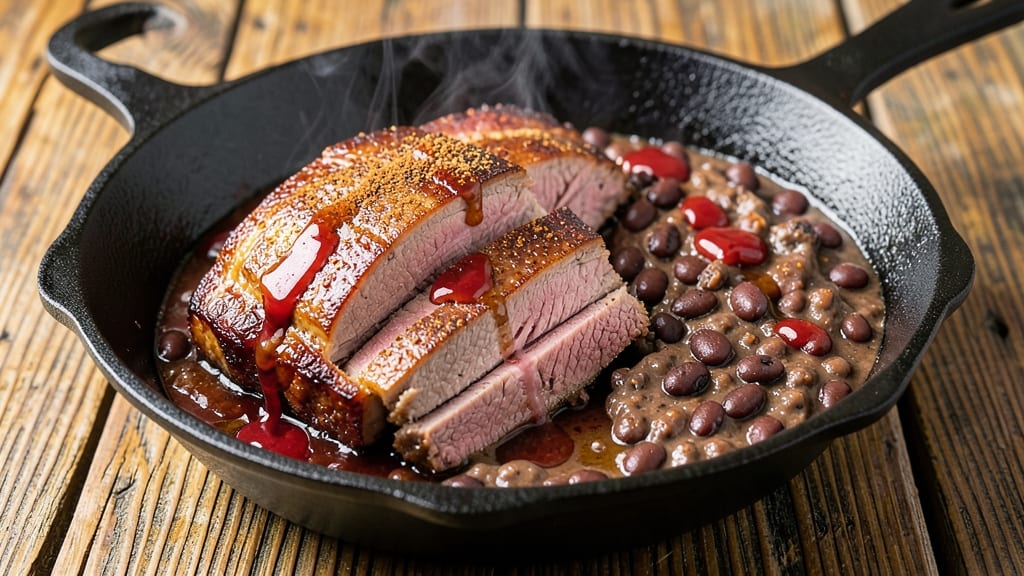
This baked beans with brisket recipe transforms a classic side into a showstopping centerpiece by marrying slow-smoked brisket with sweet-spiced beans—rich, tender, and packed with smoky depth.
The secret lies in cooking the brisket low and slow until it practically falls apart, then shredding it into the beans for layers of flavor that turn every bite into a revelation.
I’ve perfected this method over years of barbecue experiments, and it never fails to impress, even at casual gatherings where the main course steals the spotlight.
The brisket starts with a simple dry rub of salt, pepper, and smoked paprika, then cooks for 10-12 hours at 225°F until the internal temperature hits 203°F—that’s the magic number for melt-in-your-mouth tenderness.
Meanwhile, the beans simmer with molasses, brown sugar, and a splash of vinegar, creating a glossy, caramelized sauce that clings to every shred of brisket.
The combination of smoky meat and sweet-spiced beans is a match made in comfort food heaven, balancing richness with just enough tang to keep things interesting.
By the time you’re done, you’ll have a dish that’s hearty enough for a Sunday supper but elegant enough for a dinner party—think crispy edges on the brisket, velvety beans that practically dissolve on your tongue, and a sauce so flavorful it’ll have everyone asking for seconds.
Serve it with a hunk of warm cornbread to soak up every last drop, or pair it with tangy pickles to cut through the richness. This is the kind of recipe that turns a simple weeknight dinner into a memorable feast.
The best part? Leftovers reheat beautifully, making this the ultimate meal-prep-friendly dish for busy weeks. Whether you’re hosting a crowd or just treating yourself to a homemade meal, this baked beans with brisket recipe delivers restaurant-quality results with minimal effort. Let’s get cooking—your taste buds will thank you.
Ingredients for baked beans with brisket
Smoky brisket meets sweet-spiced beans—just the right mix of pantry staples and specialty ingredients for a showstopper.
| Ingredient | Amount | Notes |
|---|---|---|
| Beef Brisket 🥩 | 4 lb | Flat cut, trimmed of fat |
| Dry Black Beans 🌾 | 2 cups | Unsoaked, rinsed well |
| Molasses 🍯 | ½ cup | Unsulphured preferred |
| Brown Sugar 🍚 | 1 cup | Light or dark |
| Apple Cider Vinegar 🍎 | ¼ cup | For tangy brightness |
| Smoked Paprika 🌶️ | 2 tbsp | For smoky depth |
| Ground Black Pepper 🌶️ | 1 tbsp | Freshly cracked |
| Kosher Salt 🧂 | 2 tbsp | Coarse grain preferred |
| Yellow Onion 🧅 | 1 whole | Diced, yellow or red |
| Garlic Cloves 🧄 | 6 cloves | Minced, fresh preferred |
| Beef Broth 💧 | 1 ½ cups | Low-sodium preferred |
| Honey 🍯 | 2 tbsp | For extra sweetness |
| Cornbread Mix 🍞 | 1 box | For serving (8x8 pan) |
| Dijon Mustard 🍯 | 1 tbsp | For depth of flavor |
The brisket is non-negotiable here. Look for a 4-pound flat cut at your local butcher or grocery store's meat counter—Costco or Whole Foods have great options. Trim off any thick fat cap before applying the rub, but leave some marbling for flavor. If you're feeling fancy, ask for a dry-aged brisket—it's worth the splurge. The beans? Dry black beans are ideal, but navy or pinto work too. Just make sure they're rinsed well before using. For the molasses, unsulphured is key—it has a cleaner flavor that lets the smokiness shine through.
No smoked paprika? Substitute half the amount with regular paprika plus a pinch of liquid smoke. Running low on apple cider vinegar? White vinegar or red wine vinegar work in a pinch. The cornbread mix can be swapped for homemade cornbread batter if you're feeling ambitious—just follow the box instructions for the dry mix as a guide. For the brisket rub, Diamond Crystal kosher salt is my go-to, but any coarse salt will do. The honey can be swapped for maple syrup if you prefer, but honey adds a nice floral note that pairs perfectly with the smokiness. If you're prepping ahead, the beans can be made a day in advance—they actually taste better after sitting overnight.
This dish reheats beautifully—just warm it up on the stovetop with a splash of broth or water. The brisket stays tender for 3-4 days in the fridge, and the beans can be reheated separately if needed. For the cornbread, bake it fresh before serving—it's best warm. Portion out the beans into containers for easy meal prep. The brisket will keep for 4-5 days in the fridge, wrapped tightly in foil. Freeze any leftovers for up to 3 months—just thaw overnight in the fridge before reheating. The cornbread mix? Use it within 6 months of purchase for best results.
Why You'll Love This Recipe
- One-Pot Magic: I love that this dish lives in one Dutch oven—no frantic cleanup of multiple pans. The beans simmer while the brisket smokes, and then they finish together, so I’m not stuck scrubbing after dinner. Honestly, the only thing I clean is my plate.
- Smoky-Sweet Perfection: That combo of unsulphured molasses, apple cider vinegar, and smoked paprika? Chef’s kiss. The brisket’s smoky depth marries the beans’ caramelized sweetness, and the honey and Dijon mustard add a tangy punch that makes every bite addictive. My kids still ask for seconds, even though they pretend not to love "sweet beans."
- Crowd-Pleaser Always: This isn’t just for BBQs—it’s my go-to for game days, lazy Sundays, or even a fancy dinner when I want to impress without stress. The cornbread? A match made in heaven. And leftovers? Even better the next day, reheated with a splash of water. It’s the kind of dish that disappears off the table.
- Budget-Friendly Feast: A 4-pound brisket and dry beans stretch for three hearty meals, and I’m talking real meals—no sad leftovers here. The ingredients are simple but pack serious flavor, so I’m not breaking the bank. Plus, the brisket stays tender for days, so I can meal prep without stress.
Step-by-step instructions for baked beans with brisket
Here's how to create a rich, smoky-sweet brisket and bean masterpiece that'll have everyone asking for seconds.
Prepare the Brisket for Smoking
Pat the 4 lb Beef Brisket completely dry with paper towels, focusing on the fat cap. Trim any excess fat to about ¼-inch thickness—this ensures proper smoke penetration while keeping the meat juicy. Season both sides generously with 2 tbsp Kosher Salt and 1 tbsp Ground Black Pepper, pressing the spices into the meat so they stick.
In a small bowl, mix together 2 tbsp Smoked Paprika, 2 tbsp Honey, and 1 tbsp Dijon Mustard to create a smoky-sweet rub. Spread this evenly over the brisket, including the fat cap. Let it sit at room temperature for 30 minutes while you prepare the beans—this helps the rub adhere and the meat cook more evenly.
Simmer the Beans with Sweet-Spiced Broth
In a large Dutch oven, combine 2 cups Dry Black Beans (rinsed), 1 Yellow Onion (diced), and 6 cloves Garlic Cloves (minced). Add 1½ cups Beef Broth, ½ cup Molasses, 1 cup Brown Sugar, ¼ cup Apple Cider Vinegar, and bring to a boil over medium-high heat. Reduce heat to low and let it simmer uncovered for 45 minutes, stirring occasionally to prevent sticking.
Here's the thing—don't skip the simmering time. The beans need this initial cooking to soften before the brisket joins them. After 45 minutes, the beans should be tender but still hold their shape. If they're not quite soft enough, add ½ cup hot water and simmer another 15 minutes. The beans will continue cooking with the brisket, so they don't need to be fully done yet.
Smoke the Brisket Low and Slow
Preheat your smoker to 225°F using hickory or apple wood. Place the seasoned brisket fat-side up on the smoker grates. Smoke it undisturbed for 4-5 hours, or until the internal temperature reaches 165°F. This low-and-slow approach is key—it breaks down the tough connective tissue while building that beautiful bark.
Real talk: You'll hit "the stall" around 165°F, where the temperature plateaus. Don't panic—this is normal. If you have butcher paper, wrap the brisket tightly at this point to help push through the stall. Return it to the smoker and continue cooking until the internal temperature reaches 203°F (about 1-2 more hours). The meat should be fork-tender with a deep smoke ring.
Combine Brisket and Beans for Final Cooking
Carefully remove the brisket from the smoker and let it rest for 15 minutes before slicing against the grain into ¼-inch thick pieces. Return the sliced brisket to the Dutch oven with the beans and their cooking liquid. Stir gently to combine, then increase heat to medium-low and let everything simmer together for 30-45 minutes. This step infuses the beans with brisket juices and deepens their flavor.
The beans should now be fully tender with a thick, glossy sauce. If the mixture is too thin, simmer uncovered for another 10 minutes to reduce slightly. Taste and adjust seasoning—you might need a touch more Kosher Salt or a splash of Apple Cider Vinegar for brightness. The brisket should be falling apart easily, and the beans should be creamy with visible chunks of meat throughout.
Serve with Warm Cornbread
While the beans finish cooking, prepare the cornbread mix according to package instructions in an 8x8-inch pan. Bake until golden brown and a toothpick comes out clean. Serve the brisket and beans hot, topped with extra Dijon Mustard if desired, alongside the warm cornbread. The contrast of the smoky, sweet beans with the slightly sweet cornbread is what makes this dish unforgettable.
Don't skip the cornbread—it's the perfect vehicle for soaking up that rich bean sauce. For extra flair, sprinkle with chopped fresh parsley or a drizzle of ½ cup Molasses before serving. Leftovers? They taste even better the next day, especially reheated gently in the microwave with a splash of water.
Pro Tips For Making Baked Beans With Brisket
- Soak Beans Overnight: Dry black beans expand like magic when soaked—double their size, cook faster, and avoid that gummy texture. I used to skip this, but now I swear by it: cover them in water, add a pinch of salt, and let them sit 8+ hours (or at least 4 if you’re in a rush). Drain and rinse before cooking, and you’ll save 30 minutes of simmering.
- Sear Brisket Before Braising: A quick sear in a hot pan locks in flavor and makes the brisket tender. Pat it dry first, then hit it with oil and salt—let it brown 3-4 minutes per side until deep caramelized. I learned this the hard way: skipping the sear means bland, rubbery meat that fights with the beans instead of harmonizing.
- Balance Sweet and Tang: Molasses and brown sugar are your friends, but apple cider vinegar is the unsung hero—it cuts the sweetness and brightens the whole dish. Start with 1:1:1 ratio (molasses:brown sugar:vinegar), taste, then adjust. Too sweet? Add vinegar. Too sharp? A pinch more sugar. Trust your palate, not the recipe.
- Simmer Low and Slow: This isn’t a race—cover the pot and keep the heat at a gentle simmer (180-200°F). I used to crank the heat, and the beans turned mushy while the brisket stayed tough. A lid traps steam, and low heat lets the beans soften evenly without breaking down. Check it every 30 minutes; patience here makes all the difference.
Troubleshooting great baked beans with brisket
Beans Too Hard?
If your beans aren’t tender after 45 minutes of simmering, don’t panic—just add ½ cup hot water and continue cooking for another 15-20 minutes. The beans will finish softening when combined with the brisket later.
Overcooking is easy to do, but undercooking is fixable! Stir occasionally to prevent sticking and keep an eye on the liquid level. 💡
Brisket Stuck at Stall
When the brisket hits 165°F and plateaus, it’s hitting "the stall"—a normal (but frustrating) phase. Wrap it tightly in butcher paper (not foil) and return it to the smoker. This helps push through the stall and shaves 1-2 hours off your cook time.
If you don’t have paper, foil works in a pinch, but it can create steam pockets. 🔥
Sauce Too Thin?
If the bean mixture looks watery after combining with brisket, simmer uncovered for 10-15 minutes to reduce the liquid. Stir occasionally and taste as it thickens. Adding 1 tbsp cornstarch mixed with 2 tbsp water can also help—whisk it in and simmer until glossy.
Too much liquid ruins the texture, but a little patience fixes it. ✨
Brisket Too Dry?
If your brisket ends up dry after slicing, it likely cooked too fast or lost moisture during the stall. Next time, wrap it in foil after reaching 165°F to retain juices.
Alternatively, add ½ cup beef broth when combining the brisket with beans to rehydrate the meat. A spritz of apple cider vinegar also helps tenderize. 💧
Beans Taste Bland
Bland beans often need more acid or salt. Taste and adjust with ½ tsp apple cider vinegar or ½ tsp Kosher salt while simmering. If the sweetness is overpowering, reduce the brown sugar slightly next time. A pinch of smoked paprika can also add depth without changing flavor drastically. 🌶️
Cornbread Too Dense?
If your cornbread turns out gummy or dense, check the mix instructions for egg or oil adjustments. Some brands require adding an extra egg or 1 tbsp melted butter for moisture.
Bake it in a greased pan and avoid overmixing the batter. A toothpick should come out clean—not wet—when done. 🍞
Nutrition facts
Frequently asked questions
Can I use canned beans instead of dry beans?
Yes! If you’re short on time, drain and rinse 2 cans (15 oz each) of black beans and add them to the Dutch oven with the liquid. Reduce the 1 cup brown sugar to ¾ cup to balance the extra moisture. Simmer for 20 minutes instead of 45 to avoid mushiness. The texture will be slightly different, but the flavor remains rich and satisfying.
How do I know if the brisket is done?
Use a meat thermometer to check the thickest part of the brisket. It’s done at 203°F, but you’ll hit a stall around 165°F where the temperature plateaus. Wrap it in butcher paper, return it to the smoker, and wait for that final push. The meat should be fork-tender and pull apart easily when sliced. If unsure, err on the side of longer cooking—it’s harder to overcook than undercook.
Can I make the beans ahead of time?
Prepare the beans as directed and let them cool completely. Store them in an airtight container in the fridge for up to 3 days. Reheat gently on the stovetop with a splash of water or beef broth to restore the sauce’s gloss. The flavors deepen overnight, so they’ll taste even better the next day. Just add the brisket when ready to serve.
What’s the best way to reheat leftovers?
Gently warm the beans and brisket in a pot over medium-low heat, stirring occasionally, for 10-15 minutes. Add a splash of beef broth or water if the sauce thickens too much. Avoid high heat to prevent drying out the brisket or making the beans mushy. For extra richness, top with a drizzle of molasses or a swirl of Dijon mustard before serving.
Why does my brisket have a grayish bark?
A grayish bark happens when the brisket smokes too long at high heat or loses moisture. To fix it, wrap the brisket in butcher paper after reaching 165°F and cook until 203°F for a deeper, brown bark. If it’s already gray, slice and toss the bark, focusing on the tender meat inside. Next time, use hickory or apple wood for a cleaner smoke flavor and avoid over-smoking.