
Main Courses
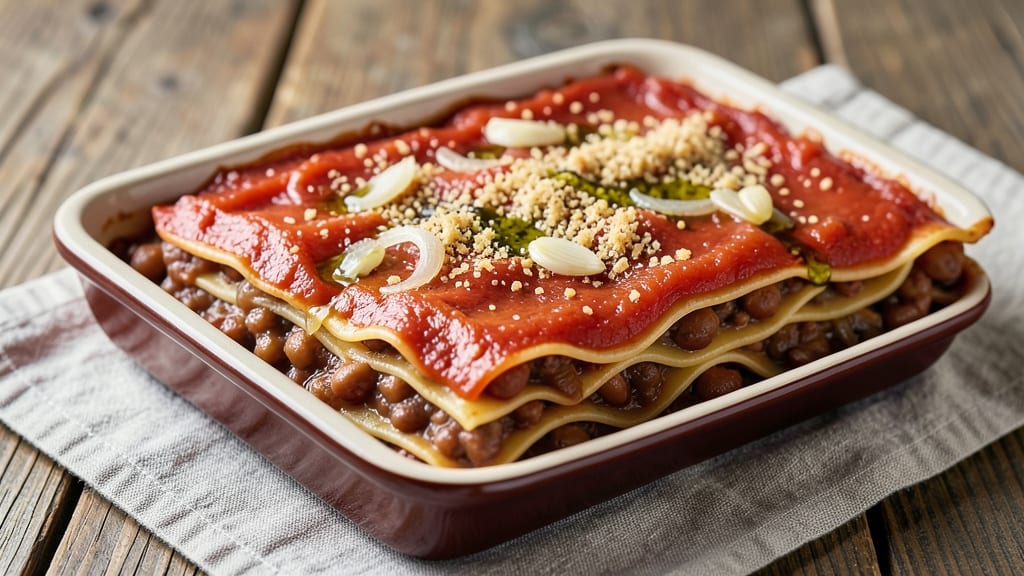
This baked bean lasagne recipe transforms humble ingredients into a hearty, comforting masterpiece that's rich with smoky tomato depth and tender layers. The secret lies in balancing creamy beans with savory tomato sauce, all encased in perfectly cooked lasagna noodles.
What makes this dish special is how it combines traditional Italian technique with a modern twist—using baked beans for protein and texture without sacrificing authenticity.
What sets this recipe apart is the foolproof layering method that ensures every bite delivers a perfect harmony of flavors. You'll start with pre-cooked lasagna noodles (never skip this step!) for ideal texture, then build layers of smoky tomato sauce, creamy baked beans, and melted cheese.
The result? A lasagne that's just as satisfying as its meat-based counterparts but entirely plant-powered.
By the time it emerges from the oven, you'll have a lasagne with golden, bubbling cheese on top, tender noodles throughout, and a rich, smoky sauce that ties everything together. The baked beans add a satisfying heartiness, while optional additions like spinach or roasted vegetables can elevate it even further.
This is comfort food at its finest—warm, inviting, and perfect for feeding a crowd.
The beauty of this recipe is its versatility. Serve it as a main dish for dinner parties or meal prep for the week. The leftovers reheat beautifully, making it an ideal solution for busy schedules.
Ready to create a lasagne that's as impressive as it is delicious? Let's get started with the ingredients.
Ingredients for baked bean lasagne
Six servings of layered comfort, where smoky tomato meets creamy beans and tender noodles.
| Ingredient | Amount | Notes |
|---|---|---|
| Canned Baked Beans 🌽 | 3 cans | Low-sodium preferred, drained |
| Lasagna Noodles 🍝 | 12 pieces | Pre-cooked, no-boil type |
| Tomato Passata 🍅 | 2 ½ cups | San Marzano preferred, unsweetened |
| Onion 🧅 | 1 whole | Yellow, finely diced |
| Garlic Cloves 🧄 | 4 cloves | Fresh, minced |
| Vegetable Stock 💧 | 1 ½ cups | Homemade or quality store-bought |
| Smoked Paprika 🌶️ | 1 tbsp | For smoky depth |
| Dried Thyme 🌿 | 1 tsp | Or 1 tbsp fresh |
| Salt 🧂 | 1 ½ tsp | Diamond Crystal preferred |
| Black Pepper 🌶️ | ½ tsp | Freshly ground |
| Ricotta Cheese 🧀 | 15 oz | Whole-milk preferred |
| Mozzarella Cheese 🧀 | 1 ½ cups | Fresh, shredded |
| Extra-Virgin Olive Oil 🫒 | ½ cup | For richness |
| Spinach 🍃 | 4 cups | Fresh, chopped (optional) |
The San Marzano tomato passata is non-negotiable for authentic flavor—its natural sweetness balances the beans beautifully. For the beans, low-sodium varieties prevent excess saltiness, though you can rinse them if needed. Pre-cooked lasagna noodles save time and prevent mushiness, though traditional boiled noodles work too. If you're using fresh spinach, wilt it first to remove excess moisture, which keeps your layers from getting soggy. For the cheese, fresh mozzarella melts best, but pre-shredded in a bag works in a pinch.
No ricotta? Cottage cheese blended smooth mimics its texture perfectly. Short on tomato passata? Crushed tomatoes with a pinch of sugar bridge the gap, though texture will differ slightly. The smoked paprika is what gives this lasagne its signature depth—substitute with regular paprika and a dash of liquid smoke if needed. For the stock, homemade vegetable stock elevates the dish, but low-sodium store-bought is fine for convenience. The onions should be finely diced (about 1/4 cup) to distribute flavor evenly throughout the layers.
This lasagne reheats beautifully—cover with foil and bake at 375°F for 20 minutes to revive crispness. Leftovers keep for 4 days refrigerated or 3 months frozen, though texture may soften slightly after freezing. For make-ahead prep, assemble and refrigerate uncooked for up to 24 hours before baking. The cheese layer should be generous—don't skimp, as it's what creates that golden, bubbling finish. Store any unused spinach in a sealed container with a paper towel to retain freshness.
Why You'll Love This Recipe
- Pantry Powerhouse: That can of baked beans? Your secret weapon. No fresh produce panic here—just open, drain, and layer. I’ve made this on nights when the fridge was empty except for a sad onion and a half-empty passata jar.
- Smoky Depth Magic: The beans bring that caramelized sweetness, while the passata and garlic clove paste simmered into a rich, tangy sauce. It’s like a pub-style bean chili, but with lasagna’s comforting layers—no one will guess it’s this easy.
- Leftovers That Win: This dish actually improves the next day. The noodles soften just enough to soak up extra flavor, and the edges get that perfect crisp. I’ve reheated portions for lunch three times without a single complaint.
- Budget-Friendly Feast: Feeds four for under $10, and the ingredients last. Use half the onion for dinner, the other half for tomorrow’s soup. My college self would’ve cried with joy over this—now my actual self does.
Step-by-step instructions for baked bean lasagne
Here's the method for building a rich, hearty lasagne with smoky tomato depth and creamy layers.
Prepare the Smoky Baked Bean Sauce
In a large saucepan, heat the 0.5 cup extra-virgin olive oil over medium heat. Add the finely diced whole onion and cook for 5 minutes until softened and translucent. Stir in the 4 minced garlic cloves and cook for 30 seconds until fragrant—don't let it brown or it'll turn bitter.
Add the 1 tbsp smoked paprika and 1 tsp dried thyme, stirring constantly for 1 minute to toast the spices and release their aromas. Pour in the 2.5 cups tomato passata and bring to a gentle simmer. Stir in the 3 cans drained baked beans, 1.5 cups vegetable stock, 1.5 tsp salt, and 0.5 tsp black pepper. Simmer uncovered for 15-20 minutes until the sauce thickens slightly and flavors meld. The sauce should coat the back of a spoon with a rich, smoky consistency.
Assemble the Lasagne Layers
Preheat your oven to 375°F. Grease a 9x13-inch baking dish with a little olive oil to prevent sticking. Begin by spreading a thin layer of the baked bean sauce on the bottom of the dish—about ¼ cup. This prevents the noodles from sticking directly to the pan.
Arrange 4 lasagna noodles in a single layer, slightly overlapping if needed to cover the bottom completely. Spread ½ of the remaining sauce evenly over the noodles, then sprinkle ⅓ of the 4 cups chopped spinach over the sauce. This distribution ensures each layer gets its share of flavor and moisture. Repeat with another layer of 4 noodles, another ⅓ of the spinach, and another ⅓ of the sauce. Finish with the final 4 noodles and the remaining sauce.
Add the Cheese Layers
In a medium bowl, gently fold together the 15 oz ricotta cheese and ½ cup of the mozzarella cheese, reserving the remaining 1 cup mozzarella for the top. Season the ricotta mixture with ¼ tsp salt and ¼ tsp black pepper—this enhances the cheese's natural flavor without overpowering. Spread this mixture evenly over the top layer of noodles, using a spatula to create a smooth, even surface.
Sprinkle the remaining 1 cup mozzarella cheese evenly over the ricotta layer. The cheese should melt into a golden, bubbly blanket during baking. For extra browning, you can sprinkle a pinch of smoked paprika over the top—this adds visual appeal and intensifies the smoky flavor.
Bake to Golden Perfection
Cover the baking dish tightly with aluminum foil and bake for 30 minutes. This initial covered baking allows the lasagne to cook through without drying out. After 30 minutes, remove the foil and bake for an additional 15-20 minutes until the top is golden brown and bubbly. The edges should be slightly crispy, and the cheese should have formed a thick, glossy crust.
Let the lasagne rest for 10-15 minutes before slicing. This resting period allows the layers to set and prevents the filling from sliding out when you cut into it. Serve with a side of garlic bread or a simple arugula salad to balance the richness. Each bite should deliver a perfect harmony of smoky tomato, creamy ricotta, and tender baked beans.
Pro Tips For Making Baked Bean Lasagne
- SOAK NOODLES 15 MINUTES: I learned this the hard way—skipping the soak leaves your lasagne with a chewy, uneven texture. Toss uncooked noodles in warm water for 15 minutes while you prep the filling, then drain. They’ll hold their shape better and absorb sauce more evenly.
- SWEAT ONIONS LOW AND SLOW: Crank the heat down to medium-low for this step—high heat burns onions before they soften. Let them bubble gently for 8-10 minutes until translucent, then add garlic. Burnt onions make the whole dish taste bitter, and no one wants that.
- DRAIN BEANS WELL: Those canned beans hold onto liquid like a sponge. After opening, drain them in a colander and press out excess moisture with a spoon. Wet beans turn your lasagne into soup, and we’re aiming for layers, not a sloppy casserole.
- LAYER SAUCE FIRST: Spread a thin layer of passata on the bottom of your dish before adding the first noodles. This prevents sticking and ensures every bite has that rich tomato flavor. It’s a small step, but it makes a real difference in texture and taste.
Best sauces and condiments for baked bean lasagne
Smoky Tomato Sauce
This lasagne's soul comes from the smoky tomato sauce, where San Marzano passata meets smoked paprika for depth. Stir in 1 tbsp balsamic vinegar during simmering to enhance sweetness and complexity. For extra richness, whisk in 1 tbsp tomato paste at the start—it thickens beautifully while baking. 🌶️
Creamy Ricotta Layer
The ricotta-cheese blend is where texture magic happens. Fold in 1 egg to bind it better, then mix in ¼ cup grated Parmesan for umami. For a tangy twist, add 1 tsp lemon zest—it brightens the richness. Spread evenly to avoid dry spots in your lasagne.
Cheese Topping Variations
Swap mozzarella for fontina—it melts creamier and adds nutty flavor. For a sharper bite, top with Pecorino Romano instead. Sprinkle crushed red pepper flakes before baking for subtle heat. Always use freshly grated cheese for best results—pre-shredded contains anti-caking agents that prevent proper melting.
Herb Finishing Touches
Fresh herbs elevate this dish instantly. Sprinkle chopped basil or thyme over the top before baking for aromatic brightness. After serving, garnish with extra-virgin olive oil and a pinch of flaky sea salt—this adds a restaurant-quality finish. 💫
Optional Sauce Enhancers
Boost the sauce with 1 cup roasted red peppers (jarred or homemade) for sweetness. Stir in 1 tsp maple syrup if you want to balance acidity. For umami, add 1 tbsp soy sauce—it deepens flavor without overpowering. Always taste and adjust seasoning before assembling layers.
Breadcrumbs for Crispiness
For a crispy top, mix ¼ cup breadcrumbs with 2 tbsp melted butter and sprinkle over the cheese layer before baking. This creates a delightful textural contrast. Use panko for extra crunch or whole-grain breadcrumbs for a heartier bite. Toast them lightly in a dry pan first for enhanced flavor.
Nutrition facts
Frequently asked questions
Can I use regular canned beans instead of baked beans?
Yes, but the flavor will be different! Regular canned beans (like kidney or black beans) will work, but they lack the smoky, caramelized depth that baked beans provide. For best results, season them with 1 tsp smoked paprika and ½ tsp liquid smoke to mimic the baked bean flavor. Drain and rinse thoroughly to remove excess sodium.
Do I need to cook the lasagna noodles beforehand?
It depends on the type! For no-boil lasagna noodles, you can skip pre-cooking—they soften during baking. Traditional lasagna noodles should be pre-cooked for 2 minutes less than package instructions (they'll finish cooking in the oven). Overcooking them makes the dish soggy. Always check the package directions!
How can I make this lasagne gluten-free?
Swap the lasagna noodles for gluten-free pasta sheets (like brown rice or chickpea-based) and ensure your tomato passata is certified gluten-free. Check all cheeses and vegetable stock for hidden gluten—many brands use wheat-based additives. For extra binding, add 1 tbsp cornstarch to the ricotta mixture.
Can I prepare this lasagne ahead of time?
Assemble the lasagne in your dish, cover tightly with foil, and refrigerate for up to 24 hours before baking. For make-ahead freezing, bake as directed, then cool completely. Wrap in plastic wrap and foil, and freeze for up to 3 months. Thaw overnight in the fridge and reheat covered at 350°F for 30 minutes.
Why did my lasagne turn out dry?
Most likely, you overcooked it or used too much cheese. The foil should stay on during the first 30 minutes of baking to trap moisture. For extra creaminess, add ½ cup béchamel sauce between layers. If it's still dry, try brushing the top with 2 tbsp olive oil before baking to prevent over-browning.