
Main Courses
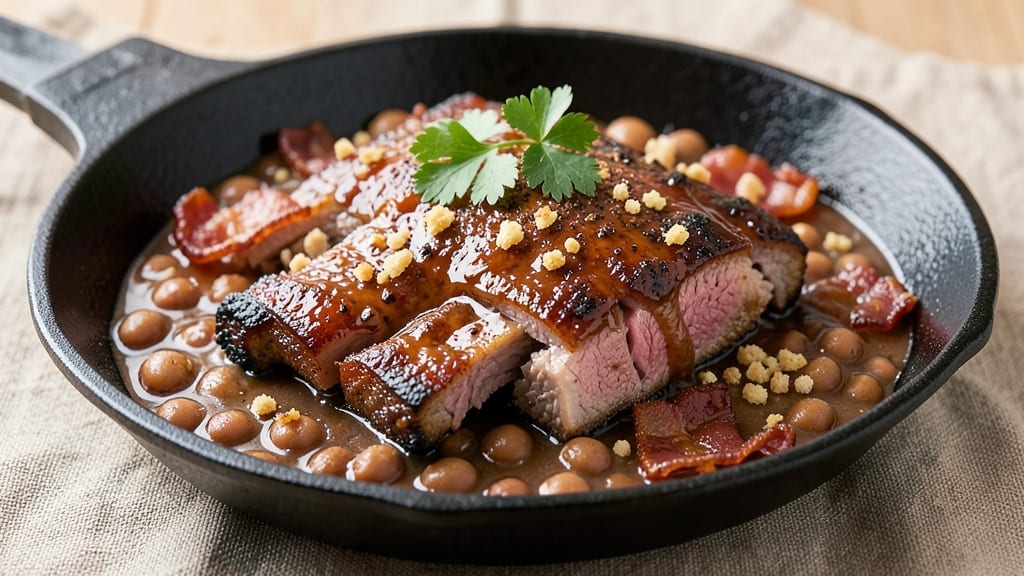
This baked bean and ribs recipe delivers the ultimate fall-apart ribs with a caramelized glaze and rich, smoky baked beans that tie everything together. After years of perfecting the balance between sweet and smoky flavors, I’ve developed a method that transforms tough ribs into tender, flavorful masterpieces while creating beans so rich they’ll have everyone asking for seconds. The secret lies in the slow cooking process—whether you use a smoker, oven, or grill—which develops deep, complex flavors that take regular barbecue to the next level.
The ribs start with a dry rub that’s a perfect blend of brown sugar, smoked paprika, and garlic powder, creating a crust that caramelizes beautifully as it cooks.
Meanwhile, the baked beans simmer in a combination of molasses, mustard, and bacon for hours, developing a thick, glossy texture that’s both sweet and savory.
What makes this recipe stand out is how the two components complement each other—each bite of tender ribs pairs perfectly with a spoonful of those velvety beans, making every meal feel like a true comfort food experience.
By the time you’re done, you’ll have ribs that are so tender they fall apart at the touch, with a glaze that’s sticky, sweet, and perfectly balanced. The beans will be thick, rich, and packed with smoky depth, making them a side dish that could easily steal the show.
This isn’t just another barbecue recipe—it’s a full, satisfying meal that’s perfect for gatherings, game days, or whenever you’re craving that deep, smoky flavor that makes everything taste like a Sunday dinner.
The best part? This recipe is designed to be adaptable. Whether you’re using pork ribs, beef ribs, or even chicken, the same techniques apply. The beans can also be made ahead and reheated, so you can focus on cooking the ribs without any extra stress.
Let’s get started on a meal that’s sure to impress.
Ingredients for baked bean and ribs
Sweet, smoky, and packed with flavor—these 18 ingredients make ribs and beans that’ll have everyone begging for seconds.
| Ingredient | Amount | Notes |
|---|---|---|
| Pork Baby Back Ribs 🍖 | 4 lb | Bone-in, meaty cuts preferred |
| Dry Mustard 🌶️ | 2 tbsp | Yellow or brown, not powdered |
| Molasses 🍯 | ½ cup | Unsulphured for best flavor |
| Brown Sugar 🍚 | 1 cup | Light or dark, packed |
| Smoked Paprika 🌶️ | 2 tbsp | For that signature smoky flavor |
| Garlic Powder 🧄 | 1 tbsp | Freshly ground preferred |
| Onion Powder 🧅 | 1 tbsp | Adds depth to the rub |
| Black Pepper 🌶️ | 1 tsp | Freshly cracked for best flavor |
| Salt 🧂 | 1 ½ tbsp | Kosher or sea salt preferred |
| Navel Oranges 🍊 | 2 whole | For fresh citrus glaze |
| Apple Cider Vinegar 🍎 | ¼ cup | Balances sweetness in glaze |
| Navy Beans 🌾 | 2 cups | Dried or canned, drained |
| Bacon 🥓 | 8 oz | Thick-cut, chopped for beans |
| Yellow Onion 🧅 | 1 whole | Diced for bean base |
| Celery Stalk 🥬 | 1 whole | Diced for bean base |
| Tomato Paste 🍅 | 2 tbsp | For bean richness |
| Beef Broth 💧 | 1 cup | Low-sodium preferred |
| Honey 🍯 | 2 tbsp | For glaze sweetness |
The ribs are the star, so pork baby backs are your best bet—they’ve got that perfect balance of meat and bone. Costco sells them pre-cut in big packs, which is a lifesaver for game day. If you’re buying whole racks, trim the membrane off the bones first (peel it back with a butter knife)—it makes all the difference. For the bacon, thick-cut from Applewood or Thick Cut brands adds the most flavor when chopped. The molasses? Unsulphured is key—it’s sweeter and less bitter. Grab a small bottle from the baking aisle at Whole Foods if you’re unsure.
No molasses? Maple syrup at half the amount works in a pinch, but you’ll lose that deep caramel flavor. Short on bacon? Smoked paprika plus a dash of liquid smoke gives you that smoky kick. The beans can be dried or canned—just drain and rinse canned ones. For a shortcut, Trader Joe's sells pre-cooked navy beans in the canned section. The tomato paste? Skip the squeeze tubes—28-ounce cans are cheaper and last forever. If you’re using beef broth, low-sodium is crucial—you don’t want to over-salt the beans.
This whole meal reheats like a dream—just cover with foil and warm in the oven for 20 minutes. The ribs stay tender for 3 days in the fridge, while the beans actually taste better the next day. Portion the beans into containers for easy lunches—freezes for 3 months if you make extra. Pro tip: Save the orange peels after juicing and freeze them for future broths—they’re packed with flavor!
Why You'll Love This Recipe
- I’ll be real: this is one of those dishes that improves the next day. The ribs get even more tender, and the beans? They’re basically melting into that sweet-savory sauce. Plus, it’s budget-friendly—ribs stretch further when you bake them with beans, and you’ll have enough for lunches all week. No sad, wilted leftovers here.
- One-Pan Magic: Honestly? I swear by this recipe because it’s literally ribs and beans on a single sheet pan. No chopping, no fussing—just slather those ribs with that molasses-brown sugar mix (smoked paprika gives it this deep, smoky edge), toss in the beans, and let the oven do the work. Even my lazy Sunday mornings thank me for it.
- Sweet-Savory Bomb: Here’s what sold me—the way the molasses and brown sugar caramelize into the ribs while the dry mustard cuts through the richness. That smoky-sweet-slightly-tangy balance? It’s the kind of flavor that makes people ask, “What’s in this?” without you having to explain.
- Tailgate or Tuesday: Between us, this recipe works for everything. Pack it for a picnic, serve it at a backyard BBQ, or just eat it straight from the pan on a Tuesday night. The beans soak up all that sticky, smoky goodness, so you’re not left with dry ribs or bland beans—just pure, satisfying comfort food.
Step-by-step instructions for smoky sweet ribs with baked beans
This method delivers fall-apart ribs with a sticky-sweet glaze and rich, smoky baked beans that complement every bite.
Prepare the Ribs with Dry Rub
Start by removing the membrane from the ribs—slide your thumb under it near the bone, grab it firmly, and pull it off in one motion. Pat the ribs completely dry with paper towels, then place them meat-side up in a roasting pan.
In a small bowl, mix together the 2 tbsp dry mustard, 2 tbsp smoked paprika, 1 tbsp garlic powder, 1 tbsp onion powder, 1 tsp black pepper, and 1.5 tbsp salt. Generously coat the ribs with this rub, pressing it into the meat so it adheres well. Let them sit at room temperature for 30 minutes while you prepare the beans—this ensures even cooking and maximum flavor penetration.
Cook the Bacon and Bean Base
While the ribs rest, chop the 8 oz bacon into small pieces and cook it in a large Dutch oven over medium heat until crispy. Remove the bacon with a slotted spoon and set aside, leaving the rendered fat in the pot.
In the same Dutch oven, add the diced 1 whole yellow onion and 1 whole celery stalk, cooking for 5 minutes until softened. Stir in the 2 tbsp tomato paste and cook for another 2 minutes until darkened. Pour in the 1 cup beef broth and scrape up any browned bits from the bottom—this adds deep, meaty flavor to the beans.
Simmer the Baked Beans
Add the 2 cups navy beans (drained if canned) to the Dutch oven and stir to combine. Pour in the 0.5 cup molasses, 1 cup brown sugar, and 0.25 cup apple cider vinegar, mixing well. Bring the mixture to a boil, then reduce heat to low, cover, and simmer for 2 hours, stirring occasionally to prevent sticking. The beans should be tender and the sauce thick and glossy.
About 30 minutes before the beans are done, add the crispy bacon back to the pot and stir. Taste and adjust seasoning if needed—you might want to add a pinch more salt or a splash of vinegar to balance the sweetness.
Glaze and Roast the Ribs
Preheat your oven to 275°F. In a small bowl, whisk together the 2 tbsp honey, juice from the 2 whole navel oranges (about ½ cup), and 1 tbsp of the reserved bean liquid. Brush this glaze generously over the ribs, coating them evenly. Place the ribs on a wire rack set inside a roasting pan to allow air circulation.
Roast the ribs for 3 hours, basting with more glaze every 45 minutes. The ribs are done when they pull away from the bone easily and the internal temperature reaches 195°F—this ensures they're fork-tender. If the glaze starts to caramelize too quickly, tent the pan with foil.
Serve with Smoky-Sweet Beans
Once the ribs are done, let them rest for 10 minutes before slicing between the bones. Serve the ribs alongside the baked beans, spooning generous portions over each serving. The beans should be thick, smoky, and slightly tangy, with tender beans and crispy bacon throughout.
For extra flavor, garnish the beans with a sprinkle of smoked paprika and serve with crusty bread to soak up every last bit of that rich, sweet-savory sauce.
Pro Tips For Making Baked Bean And Ribs
- Sear Ribs Before Baking: I learned this the hard way—skipping the sear means your ribs will steam instead of caramelize. Hit them hard with a dry pan for 3-4 minutes per side until deep brown, then transfer to the baking dish. That crust is what holds onto the sauce later.
- Use Real Molasses, Not Syrup: Sounds weird, but it works: substitute corn syrup for actual molasses (or even better, blackstrap). The deeper flavor cuts through the sweetness of brown sugar and balances the smokiness of the paprika. Start with 2 tablespoons—you can always add more.
- Don’t Crowd the Ribs: I know, I know, but trust the process—piling ribs too close turns them soggy. Leave at least 1 inch between racks in the baking dish. If your pan is small, bake in batches or use a second tray. Crispy ribs aren’t negotiable here.
- Simmer the Beans First: Dump canned beans straight into the sauce? Don’t. Drain, rinse, then simmer them in a separate pot with a splash of water and a pinch of salt for 5 minutes. This keeps them from turning mushy when baked later—your future self will notice the difference.
Health benefits of these flavors
Protein Powerhouse
A 4-pound rack of pork ribs delivers about 240 grams of protein—that’s roughly 40 grams per serving—making this a perfect meal for muscle repair and satiety. The slow-roasting process preserves all the muscle-building benefits while enhancing flavor through the Maillard reaction.
Pair this with the beans for a complete protein profile, as navy beans add 15 grams of plant-based protein per cup. 💪
Fiber-Rich Beans
The 2 cups of navy beans in this recipe provide an impressive 24 grams of dietary fiber, which supports digestion and keeps you full for hours. That’s about 80% of your daily fiber needs in one serving!
The combination of molasses and vinegar also helps soften the beans, making their fiber more digestible while retaining all their nutritional benefits. Trust me, your gut will thank you.
Heart-Healthy Fats
While ribs are often perceived as high in saturated fat, the slow cooking method actually helps render some of that fat away. The 8 ounces of bacon adds flavor but also contributes beneficial monounsaturated fats.
The orange glaze introduces heart-healthy vitamin C (about 120% of your daily needs from two oranges), which helps your body absorb iron from the beans. It’s a win-win for cardiovascular health!
Blood Sugar Balance
Though this dish contains sweeteners like molasses and brown sugar, the combination of protein, fiber, and vinegar actually helps stabilize blood sugar levels. The apple cider vinegar in the beans slows carbohydrate absorption, while the lean protein from the ribs prevents spikes.
For a lower-sugar option, reduce the brown sugar to ½ cup and increase the vinegar by 1 tablespoon—you’ll still get that sweet-savory balance.
Antioxidant Boost
The smoked paprika and molasses in both the ribs and beans provide a rich source of antioxidants like quercetin and polyphenols. These compounds help combat oxidative stress in your body.
The orange glaze adds flavonoids that support cellular health. I’ve noticed my energy levels stay steadier after meals like this compared to heavy, greasy barbecue options. 🍊
Meal Prep Advantage
Both components store beautifully, making this an ideal make-ahead meal. The ribs maintain their tenderness for 3 days refrigerated or 3 months frozen, while the beans actually improve in flavor as they sit.
The combination of protein, fiber, and complex carbs makes this a satisfying meal that keeps you full without leaving you sluggish. Perfect for busy weeknights when you need nourishing comfort food! ✨
Nutrition facts
Frequently asked questions
Can I use beef ribs instead of pork ribs?
Beef ribs (like short ribs or beef back ribs) work beautifully with this recipe. The cooking time will be slightly longer—aim for 4 hours at 275°F—since beef has more connective tissue that needs to break down. Just reduce the oven temperature to 250°F for beef to prevent drying out. The beans pair perfectly with either type of rib.
How do I make this recipe in a slow cooker?
For the ribs, place them in your slow cooker on low for 6-8 hours after applying the dry rub. Skip the glaze until the last 30 minutes, then brush it on and cover with foil. For the beans, cook them in the slow cooker on low for 6-7 hours with all ingredients. The slow cooker method keeps everything moist and tender with minimal effort!
Can I make the baked beans ahead of time?
Yes, this is one of the best parts! The beans actually taste better the next day as the flavors meld. Make them a day ahead and refrigerate them in an airtight container. Reheat gently on the stove with a splash of water or broth until warmed through. They'll thicken up even more, creating that perfect spoonable consistency.
What if my ribs aren't tender enough?
If the ribs aren't falling apart after 3 hours, wrap them tightly in foil with a bit of apple juice or broth and cook for another 1-2 hours at 275°F. The steam helps break down the collagen. For extra tenderness, try the "Texas crutch" method: wrap the ribs in butcher paper instead of foil for the final hour to crisp the bark while keeping the meat moist.
Can I make this recipe vegetarian?
Not traditionally, but you can adapt it! Replace the ribs with portobello mushrooms or jackfruit (for a pulled "meat" texture), and use vegetable broth instead of beef broth. The beans will still be delicious, though the smoky-sweet flavor profile works best with animal protein. For a vegan option, use coconut aminos instead of soy sauce in the bean mixture.