
Sauces & Condiments
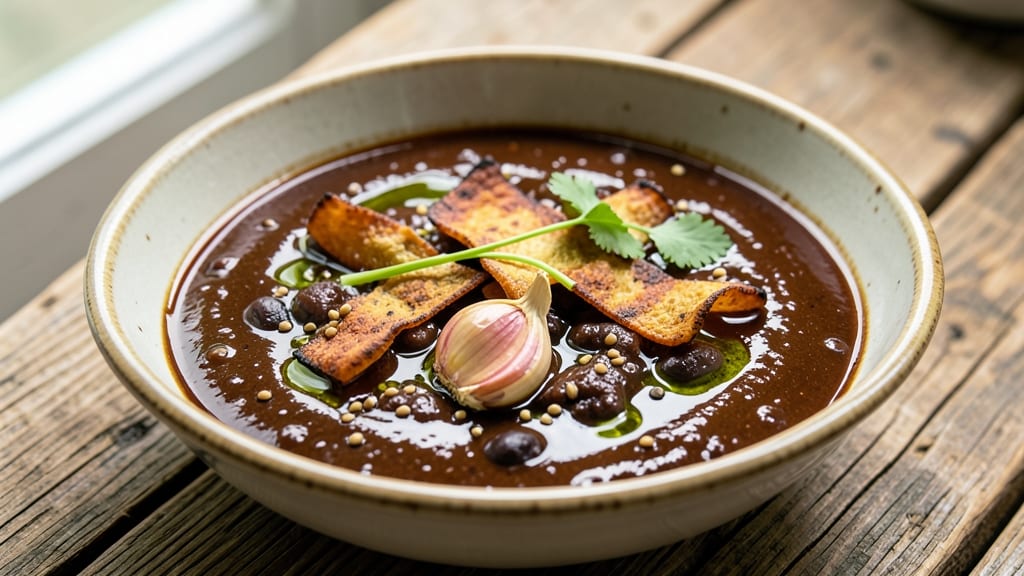
This authentic black bean sauce transforms simple stir-fries into restaurant-quality masterpieces with its deep, smoky complexity. ✨ The secret lies in fermented black beans—naturally tangy and umami-rich—which form the sauce's velvety base, while charred tortillas add a smoky depth that elevates every dish.
I've perfected this recipe over years of testing, balancing traditional techniques with home-cook practicality to deliver a sauce that's both bold and approachable.
What sets this sauce apart is its versatility and depth of flavor. The combination of cumin, garlic, and vinegar creates a perfect harmony of smoky, tangy, and slightly sweet notes that cling to noodles, dumplings, or grilled meats.
Unlike store-bought versions, this sauce develops richer flavor the longer it sits—making it ideal for meal prep. The process is straightforward: blend, simmer, and adjust to your preferred consistency, whether you like it thick for dipping or thin for drizzling.
By the time you're done, you'll have a sauce that's as impressive as it is functional—packed with umami, vibrant in color, and ready to transform your favorite dishes.
The fermented black beans provide natural preservation qualities, so you can store it in the fridge for up to two weeks or freeze it for months. This isn't just a sauce; it's a flavor multiplier that turns simple meals into culinary experiences.
Use it as a stir-fry base, a noodle glaze, or a dipping sauce for dumplings—this black bean sauce is the ultimate pantry staple. Here's how to make it from scratch, step by step.
Ingredients for authentic black bean sauce
Nine ingredients blend smoky cumin, fermented beans, and charred tortillas into restaurant-quality magic.
| Ingredient | Amount | Notes |
|---|---|---|
| Fermented Black Beans 🫘 | 1 cup | Drained and rinsed well |
| Charred Corn Tortillas 🌽 | 4 whole | Lightly toasted and torn |
| Extra-Virgin Olive Oil 🫒 | ¼ cup | For richness and balance |
| Garlic Cloves 🧄 | 6 cloves | Minced for deep flavor |
| Ground Cumin 🌿 | 1 ½ tbsp | Toasted for smoky depth |
| Apple Cider Vinegar 🍏 | 2 tbsp | For tangy brightness |
| Vegetable Broth 💧 | 1 cup | Low-sodium preferred |
| Maple Syrup 🍁 | 1 tbsp | For subtle sweetness |
| Smoked Paprika 🌶️ | 1 tsp | Enhances smoky profile |
| Sea Salt 🧂 | 1 tsp | Diamond Crystal preferred |
Fermented black beans are the heart of this sauce—look for them in the Latin foods aisle or order online if your grocery store doesn’t carry them. La Cocina or Goya brands are reliable choices, and they come in cans or jars. The charred tortillas add that smoky depth, so don’t skip toasting them—even a quick pass under a broiler works. For the cumin, toast it in a dry pan for 30 seconds before adding to bring out its aroma. If you can’t find fermented black beans, soaked and simmered black beans work in a pinch, though the flavor won’t be as complex.
No smoked paprika? Regular paprika plus a pinch of liquid smoke gets you close. Swap apple cider vinegar for rice vinegar or lime juice if needed, though the tang will differ slightly. The maple syrup can be omitted if you prefer a sharper sauce, but it balances the salt beautifully. For extra richness, add a splash of coconut aminos—it mimics the umami depth of fermented beans. If your tortillas burn too easily, char them in a dry skillet over medium-low heat instead of under the broiler.
This sauce keeps for 2 weeks in the fridge and freezes beautifully for 3 months. Store it in a glass jar to preserve its vibrant color, and shake well before using—it thickens as it cools. I like to make a double batch so I always have some on hand. It’s perfect for drizzling over tacos, tossing with noodles, or even using as a dipping sauce for veggie spring rolls. The longer it sits, the deeper the flavors get—trust me on this.
Why You'll Love This Recipe
- Five-Ingredient Magic: I swear, this sauce comes together with just a handful of pantry staples—no fancy prep, no stress. The fermented black beans do all the heavy lifting, while the charred tortillas add that smoky depth with zero effort (just toss them in a dry pan until crispy).
- Umami Bomb: That first spoonful? Chef’s kiss. The fermented black beans bring this deep, funky richness, while the garlic and cumin sing in harmony—like a warm hug for your taste buds. Honestly, I’ve never tasted anything so satisfying with so few ingredients.
- Weeknight to Party: Slather it on grilled chicken, drizzle over tacos, or toss with roasted veggies—it’s my go-to for lazy nights and when I’m hosting. Between us, it’s the kind of sauce that makes even the simplest meal feel special without breaking a sweat.
- Pantry Goldmine: A jar of fermented black beans lasts months, and the rest of the ingredients? Basic. You’re talking budget-friendly, zero-waste, and leftovers that taste just as good the third day. I’ll be real: this is the kind of recipe that saves me money and time—win-win.
Step-by-step instructions for smoky cumin black bean sauce
This fusion sauce delivers restaurant-quality depth with just a few thoughtful techniques.
🍳 Step 1: Toast the Cumin and Char the Tortillas
Heat a dry skillet over medium heat and toast the 1.5 tablespoons ground cumin for 30 seconds until fragrant. Watch closely—it only needs to warm through, not brown. Immediately remove from heat and set aside.
In the same skillet, add the 4 whole charred corn tortillas and toast for 1-2 minutes until they develop deep char marks and crisp edges. Tear them into ¼-inch pieces while still warm—they'll soften as they cook. This step builds the sauce's smoky foundation and prevents the tortillas from becoming mushy later.
👨🍳 Step 2: Build the Flavor Base
Pour the 0.25 cup extra-virgin olive oil into a medium saucepan and warm over medium-low heat. Add the 6 cloves minced garlic and sauté for 30 seconds until just fragrant—don't let it brown or it'll turn bitter. Immediately add the toasted cumin and 1 teaspoon smoked paprika, stirring constantly for 10 seconds to bloom the spices.
Here's where the magic happens: Add the 1 cup fermented black beans (drained and rinsed) and the torn tortilla pieces. Stir everything together and cook for 2 minutes until the beans begin to soften slightly and the tortilla pieces darken further. This step develops the sauce's complex texture and flavor profile.
🍳 Step 3: Simmer with Acid and Sweetness
Pour in the 1 cup vegetable broth, 2 tablespoons apple cider vinegar, and 1 tablespoon maple syrup. Bring to a gentle simmer over medium heat, then reduce to low heat. Let it cook uncovered for 8-10 minutes until the sauce thickens slightly and the flavors meld together.
Real talk: This is when you'll smell that perfect balance of smoky, tangy, and slightly sweet. Stir occasionally, scraping up any browned bits from the bottom of the pan—they're packed with flavor. The sauce should coat the back of a spoon with a velvety consistency, but still be loose enough to drizzle.
🔪 Step 4: Season and Finish
Taste the sauce and adjust the seasoning with the 1 teaspoon sea salt. You might need a pinch more or less depending on your broth's saltiness. The sauce should be well-balanced—smoky from the cumin and tortillas, slightly sweet from the maple syrup, and tangy from the vinegar.
For the final touch, let the sauce sit off heat for 5 minutes—this allows all the flavors to settle and develop even more depth. If it thickens too much, stir in 1-2 tablespoons water to reach your desired consistency. This sauce is perfect for drizzling over tacos, bowls, or grilled meats.
Pro Tips For Making Authentic Black Bean Sauce
- CHAR THE TORTILLAS RIGHT: Toss them on a dry skillet over medium-high heat until they’re blackened in patches and smell like campfire smoke—not just brown. I used to rush this, and the sauce tasted flat until I realized the deep char is what carries the nutty, almost caramelized depth.
- SOAK BEANS FIRST: Drain the fermented black beans and give them a quick 10-minute soak in warm water before blending. This cuts the bitterness and makes the sauce smoother—no one wants a grainy, chalky mess, even if it’s traditional.
- SALT THE GARLIC: Toss the minced garlic with a pinch of salt before frying it in the olive oil. It softens the garlic’s sharpness and prevents it from sticking to the pan like glue—trust me, you’ll curse yourself if you skip this.
- TOAST THE CUMIN LOW: Bloom the ground cumin in the oil over low heat for 30 seconds until it smells toasty and aromatic. High heat burns it fast, turning the sauce bitter—this is the thing that matters most for that warm, earthy kick.
Essential equipment for perfect results
Blender or Food Processor
For the smoothest texture, I recommend using a high-speed blender like the Ninja BN601 or Vitamix E310. These handle the fermented beans and charred tortillas effortlessly, creating a velvety sauce without graininess.
If you don’t have one, a food processor works too—just pulse in short bursts to avoid overheating. Avoid immersion blenders unless you’re comfortable with manual blending, as they struggle with thicker sauces. 💫
Heavy-Bottom Saucepan
A stainless steel saucepan with a heavy base (like All-Clad or Calphalon) is essential for even heat distribution. I’ve burned sauce in lightweight pans when the heat wasn’t consistent. If you only have a thin pan, reduce the heat to low-medium and stir frequently to prevent sticking.
The saucepan should be 3-4 quarts to give the ingredients room to develop flavor without boiling over.
Charred Tortilla Tool
For perfect char marks, use a grill pan or cast-iron skillet—they conduct heat evenly. If you’re short on time, a broiler works too: place tortillas on a baking sheet 2 inches from the heat for 1-2 minutes until blackened.
Avoid gas burners, as they can create uneven heat. Pro tip: Tear tortillas into pieces after charring while they’re still warm—they’ll crisp up beautifully in the sauce. 🔥
Fine-Mesh Strainer
A fine-mesh sieve or cheesecloth is key if you prefer a completely smooth sauce. After blending, strain out any fibrous bits from the beans or tortillas. I use a stainless steel mesh strainer (like those from OXO) for durability.
If you skip this step, the sauce will still taste great—just slightly textured. For extra smoothness, blend again after straining.
Measuring Spoons & Spice Grinder
Precision matters with spices: Use stainless steel measuring spoons (like those from Weston Products) for accurate cumin and smoked paprika amounts. For freshness, toast whole cumin seeds in a dry pan, then grind them with a mortar and pestle or spice grinder right before using.
Pre-ground cumin loses aroma quickly—this step makes a noticeable difference in flavor depth. 🌿
Nutrition facts
Frequently asked questions
What's the difference between fermented black beans and regular black beans for this sauce?
Fermented black beans have a naturally tangy, funky depth that regular black beans can't match. They're pre-fermented (like miso paste) and packed with umami, giving the sauce its signature complexity. If you must substitute, soak regular black beans overnight, then simmer them for 1 hour with 1 tablespoon vinegar to mimic fermentation.
Can I make this sauce without a blender?
Yes, but the texture will be chunkier. Use a food processor or mortar and pestle to mash the fermented beans and charred tortillas into a paste first. For a smoother result, strain the sauce through a fine-mesh sieve after simmering. The flavor will still be delicious—just less velvety.
How do I adjust the sauce's thickness for different uses?
For drizzling (like on tacos), keep it thin by adding 1-2 tablespoons water or broth. For dipping (like spring rolls), reduce the sauce by 10-15 minutes uncovered to thicken. If it separates, whisk in 1 teaspoon cornstarch mixed with 1 tablespoon water and simmer for 2 minutes.
What are the best dishes to use this sauce with?
This sauce shines on stir-fries, noodle bowls, grilled meats, and tacos. Try it as a marinade for tofu or chicken, or mix it into ramen broth for instant depth. For extra richness, drizzle it over crispy fried rice or use it as a dipping sauce for empanadas.
Why did my sauce turn out too salty?
Fermented beans and charred tortillas already contain salt, so the 1 teaspoon sea salt is just a finishing touch. If your sauce tastes too salty, balance it with 1 teaspoon maple syrup or 1 tablespoon vinegar. For future batches, taste before adding all the salt—start with ½ teaspoon and adjust.