
Main Courses
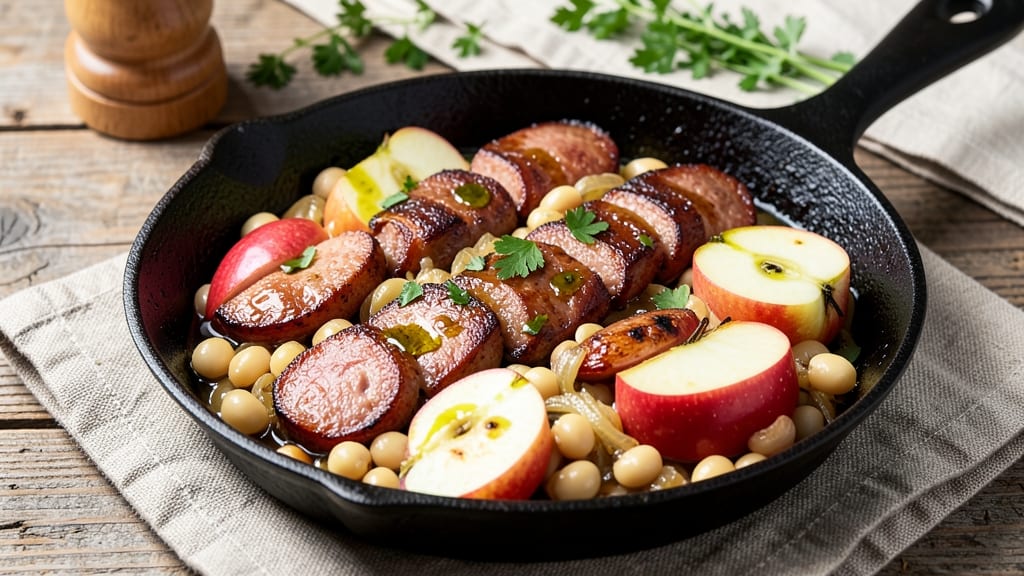
This apple sausage and bean skillet recipe transforms humble ingredients into a hearty, smoky-spiced masterpiece that belongs on any dinner table. The perfect balance of sweet apples, savory sausage, and tender beans creates a dish that's both comforting and sophisticated—all in one cast-iron pan.
I developed this recipe after realizing how often simple weeknight meals could be elevated with just the right combination of textures and flavors.
The magic happens when you caramelize the apples and sausage together, creating a rich, aromatic base before adding the beans and simmering everything into a cohesive, flavorful skillet. With just 30 minutes of active time and minimal cleanup, this recipe delivers restaurant-quality results without the fuss.
The smoky notes from the sausage pair beautifully with the natural sweetness of the apples, while the beans add hearty substance that keeps everyone satisfied.
What you'll end up with is a skillet filled with tender, caramelized apples, perfectly browned sausage, and creamy beans—all infused with warm spices that make every bite irresistible.
The dish is hearty enough to serve as a main course but flexible enough to pair with crusty bread or a simple salad. The flavors deepen as it sits, making it even better the next day for leftovers.
This recipe works equally well for busy weeknights or weekend gatherings, and it's easy to customize with your favorite spices or additional vegetables. Whether you're feeding a family or just treating yourself to a satisfying meal, this apple sausage and bean skillet delivers on both flavor and convenience.
Let's get cooking!
Ingredients for apple sausage and bean skillet
Sweet apples, smoky sausage, and creamy beans—this skillet delivers hearty flavor with minimal effort.
| Ingredient | Amount | Notes |
|---|---|---|
| Smoked Apple Sausage 🍖 | 1 lb | Kielbasa-style, sliced into half-moons |
| Honeycrisp Apples 🍎 | 3 medium | Peeled, cored, sliced into wedges |
| Canned Cannellini Beans 🌾 | 2 cups | Drained and rinsed, or 1 can |
| Yellow Onion 🧅 | 1 whole | Thinly sliced, about 1 cup |
| Garlic Cloves 🧄 | 3 cloves | Minced, or 1 tsp pre-minced |
| Extra-Virgin Olive Oil 🫒 | 2 tbsp | For caramelizing apples |
| Brown Sugar 🍯 | 2 tbsp | Light or dark, packed |
| Apple Cider Vinegar 🍶 | 1 tbsp | For tangy depth |
| Dried Thyme 🌿 | 1 tsp | Or 1 tbsp fresh, chopped |
| Smoked Paprika 🌶️ | 1 tsp | For smoky flavor |
| Ground Black Pepper 🌶️ | ½ tsp | Freshly cracked |
| Kosher Salt 🧂 | 1 tsp | Diamond Crystal preferred |
| Fresh Parsley 🌿 | ¼ cup | Chopped, for garnish |
The apples are the star here, so Honeycrisp or Fuji are your best bets—they hold up to caramelizing without turning mushy. I grab mine at Whole Foods when they're in season, but the regular grocery store usually has them too. Look for firm apples with bright skin—those bruised ones won't caramelize right. For the sausage, Johnsonville or Applegate are my go-tos, but any good-quality smoked sausage will work. Slice it into half-moons before cooking so it browns perfectly.
No smoked paprika? Regular paprika plus a pinch of liquid smoke gets you close. Fresh thyme? Use it—it's worth the extra minute to chop it. The beans can be any white variety (cannellini, great northern, or even black beans), but rinse them well to cut down on saltiness. Short on apples? Substitute with 1 cup diced pear—it adds a different sweetness that still works. The brown sugar is non-negotiable though—it balances the tartness of the apples and adds caramel depth that you just can't skip.
This skillet reheats beautifully—honestly tastes better the next day once everything melds. Keeps for 4-5 days in the fridge, freezes for 3 months. I always make a double batch because leftovers make the best lunches. Store it in a shallow container so it reheats evenly—microwave or stovetop, both work great. The parsley adds freshness, but it's just for garnish—don't skip it though, it makes the dish look restaurant-worthy.
Why You'll Love This Recipe
- One-Pan Magic: I swear by this recipe when I’m too tired to wash extra dishes. Slice the sausage, dice the onion, toss it all in one skillet—no pots, no fuss. The apples caramelize right alongside the beans while the sausage crisps up perfectly.
- Sweet-Savory Balance: That first bite? It’s like autumn in a skillet. The smoky sausage meets the crisp sweetness of Honeycrisp apples, and the creamy beans soak up all the garlic-onion goodness. Honestly, I’ve never met a flavor combo I didn’t love.
- Lunchbox Hero: Between us, this is my go-to for meal prep. The leftovers reheat beautifully—warm or cold—and it’s hearty enough to pack for work or school. My kids actually eat their veggies (well, beans) when they’re hiding in this dish.
- Budget-Friendly Feast: Canned beans and a few apples stretch this recipe far without breaking the bank. Plus, smoked sausage feels fancy but costs less than takeout. I’ll be real: it’s the kind of meal that makes me feel like I’m feeding a crowd without the grocery bill.
Step-by-step instructions for apple sausage and bean skillet
This one-pan wonder brings together smoky sausage, sweet apples, and hearty beans in under 45 minutes.
Caramelize the Onions and Apples
Heat a large cast-iron skillet over medium heat and add the 2 tablespoons extra-virgin olive oil. Once shimmering, add the thinly sliced yellow onion and cook for 5-6 minutes until softened and translucent. I like to give them a stir every minute or so to prevent browning.
Add the sliced Honeycrisp apples and 2 tablespoons brown sugar, stirring to coat evenly. Cook for another 8-10 minutes until the apples begin to soften and release their juices, and the mixture takes on a golden hue. This caramelization builds the sweet base that balances the smoky sausage later. If the pan starts to dry out, add a splash of water and let it evaporate before continuing.
Cook the Sausage and Build the Spice Base
Push the apple-onion mixture to one side of the skillet and add the 1 lb smoked apple sausage to the empty space. Cook for 4-5 minutes until the sausage develops a deep golden crust on all sides. Real talk: don't skip this browning step—it's where all the smoky flavor concentrates.
Once the sausage is nicely browned, break it into bite-sized pieces and mix it back into the apple-onion mixture. Add the 3 minced garlic cloves, 1 teaspoon smoked paprika, 1 teaspoon dried thyme, 0.5 teaspoon ground black pepper, and 1 teaspoon kosher salt. Stir everything together and cook for another 2 minutes to let the spices toast slightly and infuse the mixture with their aromatic oils.
Add the Beans and Simmer Together
Pour in the 2 cups drained cannellini beans and the 1 tablespoon apple cider vinegar, stirring to combine. The vinegar adds a bright tang that cuts through the richness of the sausage and sweetness of the apples. Reduce the heat to medium-low and let the mixture simmer for 10-12 minutes until everything is heated through and the flavors meld together.
Here's the thing—you want the beans to absorb some of the caramelized apple mixture, creating a thick, saucy consistency. If it looks too dry, add 2-3 tablespoons water and let it simmer another minute. The dish should be moist but not soupy. Taste as you go and adjust seasoning if needed—sometimes the smoked sausage needs a little extra salt to stand out.
Finish and Garnish
Once everything is heated through and the flavors have melded (you'll know it's ready when the aroma is irresistible), remove the skillet from heat. Stir in the 0.25 cup chopped fresh parsley and give it one final taste. The parsley adds a fresh contrast to the smoky, sweet, and savory flavors.
Let the skillet sit off the heat for 2-3 minutes to allow the flavors to settle. Serve immediately in the cast-iron skillet for that rustic presentation, or transfer to bowls if preferred. Each bite should deliver a perfect balance of smoky sausage, sweet apples, hearty beans, and that bright vinegar tang. This dish tastes even better the next day, so make extra if you can—it keeps well in the fridge for up to 3 days.
Pro Tips For Making Apple Sausage And Bean Skillet
- CUT SAUSAGE LENGTHWISE: Slice the smoked apple sausage into ½-inch thick rounds before cooking—this guarantees even browning and faster crisping. I used to leave it whole and ended up with undercooked centers every time, especially with thicker links.
- PEEL APPLES AFTER COOKING: Skip peeling those Honeycrisp apples raw—their skin softens beautifully in the skillet and adds subtle texture. Save yourself 5 minutes of fussing and let the heat do the work; just slice them evenly for consistent cooking.
- DRAIN BEANS WELL: Rinse and drain the cannellini beans twice before adding them to the pan—this cuts the excess starch that makes your skillet turn into glue. I learned this after a batch turned into a sad, clumpy mess that wouldn’t release from the pan.
- SWEAT ONIONS LOW AND SLOW: Cook the diced onion over medium-low heat until it’s translucent but not browned—this builds flavor without burning. Cranking it up high just burns the edges and wastes time waiting for the garlic to cook later. Patience here makes all the difference.
Essential equipment for perfect results
Cast-Iron Skillet
The 10-inch cast-iron skillet is my non-negotiable tool for this recipe—it distributes heat evenly and develops a natural crust that enhances flavor. I prefer Lodge Pre-Seasoned for its durability and reliable seasoning.
If you don’t have cast iron, a heavy stainless steel or enameled Dutch oven works too, but monitor heat more carefully to prevent sticking. Preheat your skillet over medium heat for 3-5 minutes before adding oil to ensure proper caramelization. 🔥
Sharp Chef's Knife
A high-quality 8-inch chef’s knife (I use Wüsthof) is essential for slicing apples and onions uniformly—this ensures even cooking and prevents soggy spots. For the apples, cut into ¼-inch wedges for perfect caramelization. The sausage should also be sliced into ½-inch half-moons for consistent browning.
A dull knife crushes apples, releasing moisture that steams instead of caramelizing. Keep your knife sharp with a honing steel before prepping ingredients. ✨
Wooden Spoon
Use a heat-resistant wooden spoon (like OXO Good Grips) to stir the skillet without scratching the seasoning or damaging nonstick pans. Wood gently folds ingredients while scraping up browned bits from the bottom—this is where flavor lives!
Avoid metal utensils during caramelization, as they can cause uneven heating. A silicon spatula works too, but wood adds that rustic touch and better heat distribution. 🌟
Measuring Spoons
Precision matters with spices: 1 teaspoon smoked paprika or ½ teaspoon black pepper can make or break the balance. I recommend stainless steel measuring spoons (like Farberware) for accuracy—avoid plastic, which can degrade with heat.
For the brown sugar, pack it firmly into your spoon to ensure the right amount. A small offset spatula helps level off spices in jars for consistent measurements. Every pinch counts in this dish! 💡
Mixing Bowl
A sturdy stainless steel mixing bowl (I use Le Creuset) keeps chopped ingredients organized while you prep. Toss the sliced apples with a splash of apple cider vinegar in the bowl before cooking to prevent browning.
For the sausage, break it into pieces in the bowl after browning—this keeps your workspace tidy. A large bowl (at least 2-quart capacity) ensures enough room to stir without spills. 💫
Tongs for Serving
Serve directly from the skillet using heat-resistant silicone tongs (like OXO Good Grips) to maintain the dish’s rustic appeal. Tongs let you portion without breaking up the caramelized bits at the bottom.
For extra flair, transfer to a wooden board or slate platter and garnish with fresh parsley. If serving family-style, keep the skillet on a trivet to protect surfaces from heat. 🍽️
Nutrition facts
Frequently asked questions
Can I use frozen apples instead of fresh?
Frozen apples work in a pinch, but they won't caramelize the same way. Thaw them first, then pat completely dry with paper towels to prevent excess moisture in your skillet. For best results, stick with fresh Honeycrisp or Fuji apples—their texture holds up perfectly during cooking.
What's the best way to store leftovers?
Store in an airtight container in the fridge for up to 4-5 days. The flavors actually deepen overnight! For longer storage, freeze portions for up to 3 months. Reheat gently on the stovetop with a splash of water to restore moisture. Never microwave directly from the skillet—transfer to a bowl first.
Can I make this vegetarian?
Swap the sausage for smoked tofu or tempeh (marinate in liquid smoke and spices first) or vegetarian sausage links. For extra protein, add white beans or lentils. Keep the apple and bean ratio the same to maintain the dish's hearty texture. The smoky flavor is key—don't skip the paprika!
Why did my apples turn mushy?
Overcooking or using soft apples (like McIntosh) causes mushiness. Stick to firmer varieties and cook apples over medium heat for no more than 8-10 minutes. Also, make sure your skillet isn't too hot—it should be shimmering, not smoking. If your pan gets too dry, add 1 tablespoon water and let it evaporate before continuing.
What's the best way to reheat this dish?
For best results, reheat in the same skillet over medium-low heat for 5-7 minutes, stirring occasionally and adding 1-2 tablespoons water if needed. If using the microwave, cover loosely and heat in 30-second intervals, stirring between each. The cast iron retains heat beautifully, so never reheat directly from frozen—thaw first.